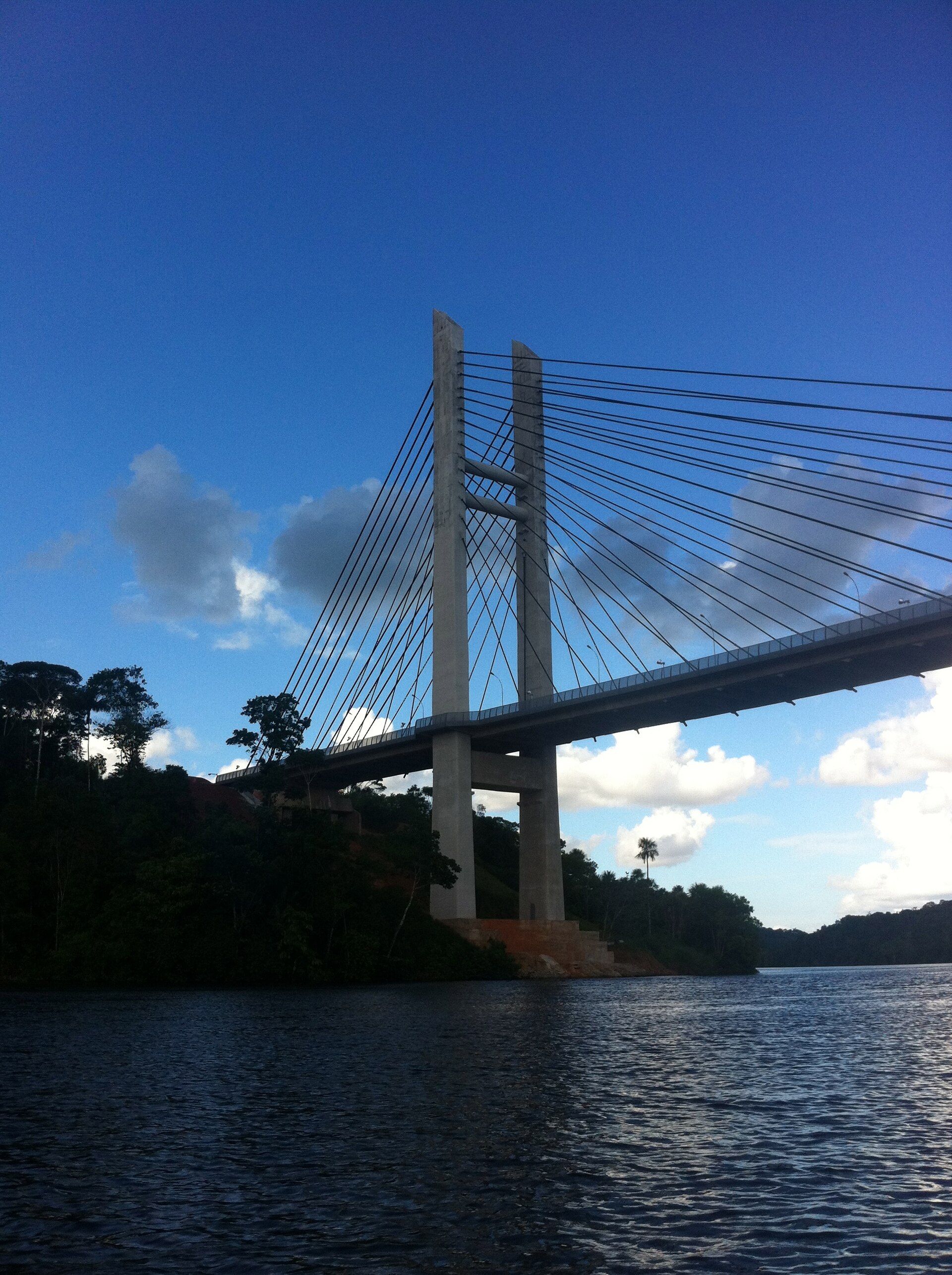
The bridge over the Oiapoque River connects two worlds divided by water. It spans the dark currents of one of northern Brazil’s major rivers, linking the Brazilian town of Oiapoque with the French Guianese settlement of Saint-Georges. For locals, it’s part of daily life. For travelers, it offers a rare experience: crossing from one country to another in seconds.
Built in the early 2000s, the bridge was designed for function, not spectacle. Its pillars anchor into the riverbed, supporting a roadway that carries trucks, buses, and cars. At dusk, lights reflect on the water, especially vivid during the rainy season when the river swells.
Before the bridge, crossing meant relying on boats and ferries—slow, unpredictable, and dependent on the river’s mood. Now, trade moves freely. Brazilians cross into French Guiana for European goods; French Guianese visit Brazil for Amazonian life. Families reunite, workers commute, and weekend trips have become routine. The bridge hasn’t erased differences, but it has made them easier to manage.
Yet it also symbolizes the balance between cooperation and tension. Disputes over customs, goods, and borders have arisen. Still, the bridge remains a place of movement. No fences, no barriers—just a sign marking the shift from Brazil to France.
The area around the bridge feels lived-in. Mornings bring fishermen with their catches, vendors setting up stalls, and schoolchildren hurrying to class. Evenings shift the energy—teenagers gather, tourists take photos, and music sometimes drifts from spontaneous gatherings.
On weekends, the Brazilian side buzzes with markets selling handmade crafts, fresh fish, and tropical fruits. The French side offers a quieter pace, with cafés serving coffee and pastries.
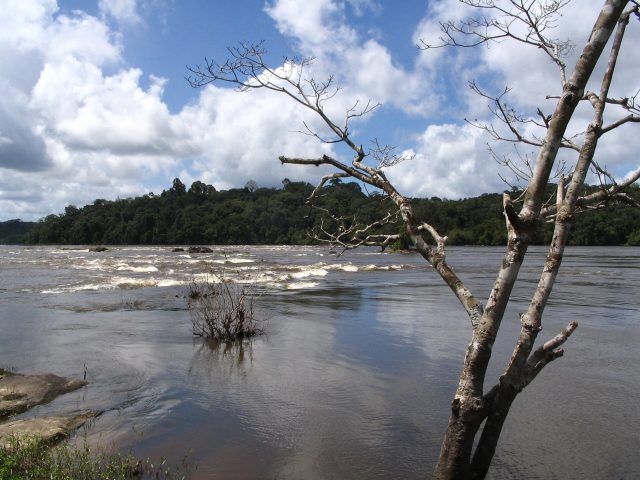
The Oiapoque River itself is worth watching. Its dark waters, rich with organic matter, flood during the rainy season, reshaping the landscape. Locals talk about the arapaima, one of the world’s largest freshwater fish. From the bridge, you might see birds circling or a caiman resting on the bank.
The bridge isn’t grand or historic. It’s ordinary, yet it shows how life moves between two countries. No monuments, no fanfare—just the quiet rhythm of people crossing paths. If you’re in Oiapoque, stop on the bridge. Look at the river, listen to the sounds, and feel how one step can take you somewhere new.