Chenonceau is often called the ladies’ château, and for good reason. Its story is woven from the lives of the women who owned it, reshaped it, and left their mark on its stones. But while the château itself embodies the elegance of the Renaissance, its most striking feature—the bridge spanning the River Cher—stands as something more than architecture. It is a testament to vision, resilience, and the quiet power of those who dared to imagine it. This graceful stone passage doesn’t just connect two banks; it bridges centuries, destinies, and even nations, carrying the weight of history with effortless grace.
The bridge wasn’t part of the original design. When Chenonceau first rose on the left bank of the Cher, its owners relied on a simple crossing, unremarkable and functional. Everything changed in the 16th century when the château passed to Diane de Poitiers, the favored mistress of King Henry II. Ambitious and refined, she dreamed of expanding the estate into something worthy of royalty. Under her direction, the architect Philibert de l’Orme began work on a stone bridge, intended to link the château to sprawling gardens on the opposite shore. But progress was slow, and the political winds in France grew increasingly turbulent. When Henry II died in a jousting accident, Diane was forced from Chenonceau, and the bridge remained unfinished, its arches stretching toward the far bank like an unanswered question.
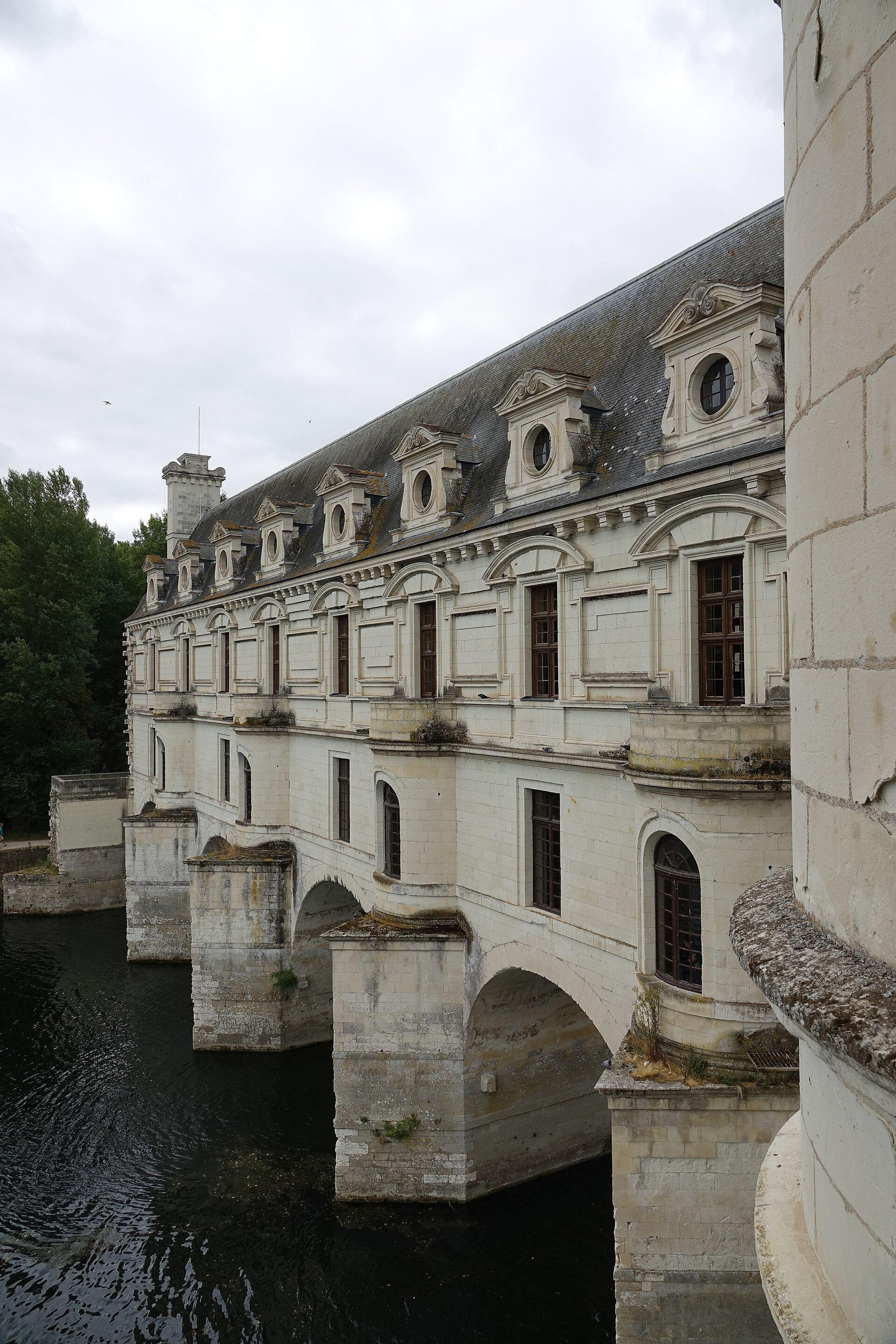
It was Catherine de’ Medici, the king’s widow, who saw the project through. But she didn’t merely complete what Diane had started—she transformed it. Where Diane had envisioned a simple crossing, Catherine added a second story, turning the bridge into a grand gallery. These covered walkways, adorned with intricate frescoes and grand fireplaces, became an extension of the château itself, a space for lavish receptions and discreet diplomacy. It was here, beneath the vaulted ceilings, that Catherine entertained foreign dignitaries, using the bridge not just as a passage but as a stage for power. The Cher flowed beneath, indifferent to the schemes unfolding above, while the stones bore silent witness to the decisions that shaped a kingdom.
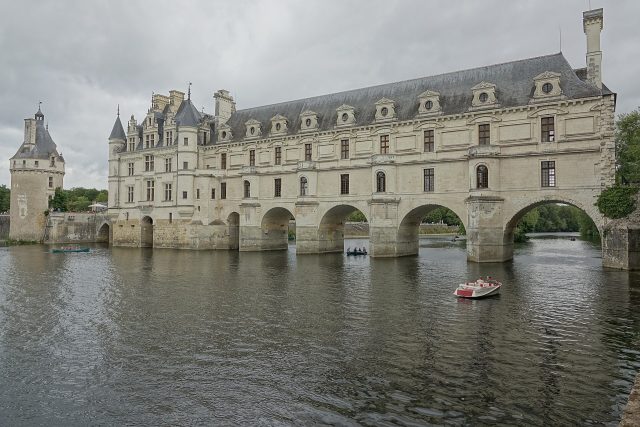
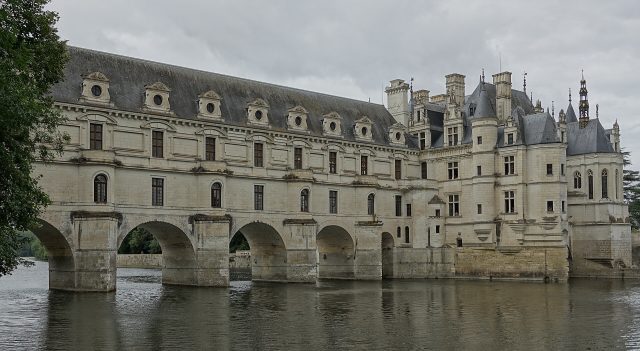
The bridge’s design is deceptive in its lightness. Three broad arches, resting on sturdy piers, create the illusion of something almost weightless, as if the structure might lift from the water at any moment. On clear days, the river mirrors the arches perfectly, doubling their presence in a shimmering reflection. Inside, the galleries feel airy, yet every detail is deliberate. Tall windows flood the space with light, while the high, vaulted ceilings lend an air of solemnity. There is no excess here—just stone, wood, and the occasional gilded touch—yet this restraint is what gives the bridge its quiet power. It doesn’t demand admiration; it simply exists, timeless and unshaken.
Over the centuries, the bridge outgrew its original purpose. During the First World War, it served as a hospital, its galleries filled with the wounded. In the Second World War, it became a path to freedom, its shadows hiding those fleeing occupation. Locals still speak of nights when the bridge was alive with whispered footsteps, when the river below carried more than just water. These stories cling to the stones, adding layers to its identity. It is no longer just a part of Chenonceau; it is a monument in its own right, a place where history lingers in the cool air and the echo of footsteps on worn floors.
Today, walking the bridge is like stepping into another era. On one side lie Diane de Poitiers’ meticulously tended gardens, their geometric precision a reflection of her disciplined taste. On the other, Catherine de’ Medici’s park unfolds, where once the sounds of royal festivities filled the air. The galleries still hold the fireplaces where courtiers warmed themselves, and the windows frame the same views that have stretched across the Cher for centuries. The river moves slowly, as it always has, and the arches stand firm, their silence broken only by the murmur of visitors.
Chenonceau is often compared to other Loire châteaux, but its bridge sets it apart. Unlike the imposing fortresses or gilded palaces of the region, this structure feels almost alive. Perhaps because it was never built for war or ostentation, but for beauty and purpose. It doesn’t overawe; it invites. You can linger in the galleries, pause by a window, and imagine the figures who once stood there—women who shaped not just a château, but the course of a nation.
Visiting Chenonceau is a reminder that history isn’t just about grand events; it’s in the details. The bridge over the Cher is one of those details. It doesn’t announce its significance, and that is its strength. It simply endures—like the river, like the sky over the Loire Valley, like the memories of those who left their mark here. And maybe that’s why it draws the eye, why it lingers in the mind long after you’ve left. It doesn’t need to shout. It has already said everything.