Blarney Bridge isn’t just a way to cross a small river near Blarney Castle—it’s a place where time seems to slow, where history feels alive, and where a simple act of leaning backward over a wooden railing has become one of Ireland’s most enduring traditions. Tucked in the village of Blarney, just a short drive from Cork, the bridge leads visitors toward the castle’s famous stone, a slab of limestone said to grant the gift of eloquence to anyone bold enough to kiss it. The bridge itself is unassuming, its planks worn smooth by generations of footsteps, yet it carries the weight of centuries of stories, superstitions, and the quiet charm of rural Ireland.
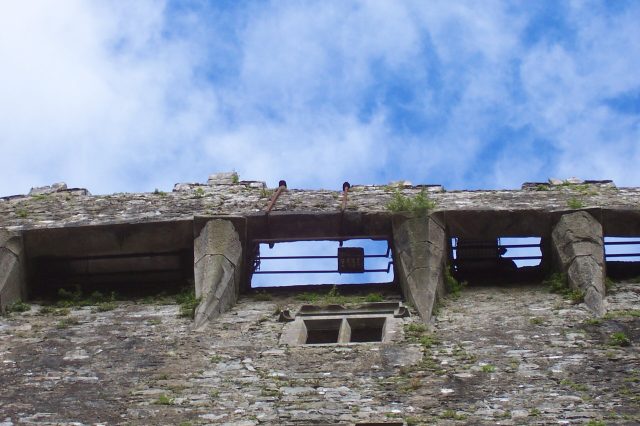
The bridge as it stands today was built in the mid-1800s, a practical solution by the castle’s owner to make the stone more accessible. Before its construction, those determined to kiss the Blarney Stone had to navigate steep slopes or climb a ladder propped against the castle walls—a far more precarious endeavor. The new bridge made the ritual easier, though it didn’t strip away the sense of adventure. The act of leaning backward, gripping the iron railings while someone holds your ankles, remains just as deliberate as it was in the past. No one knows exactly when or why the tradition began, but it has become as much a part of visiting Blarney as the castle itself. Some say the stone was a gift from a witch, others claim it’s a relic from biblical times, but the truth is lost to time. What remains is the ritual, a moment of trust and a little bit of daring that has drawn everyone from poets to politicians.
The castle looming above the bridge is a fortress of dark stone, built in the 15th century by the MacCarthy dynasty, one of the most powerful families in Munster’s history. Its walls have withstood sieges, rebellions, and the slow march of time, their rough texture and narrow windows hinting at a past filled with intrigue and conflict. Inside, the castle is a maze of spiral staircases, grand fireplaces, and hidden chambers, each corner holding echoes of the people who once lived and ruled here. Yet for all its grandeur, the castle’s most famous feature is the stone embedded in its battlements, a piece of rock that has somehow become more legendary than the fortress itself.
The park surrounding the castle and bridge is a place of quiet beauty, where manicured lawns give way to wild woodland and winding paths lead to secluded ponds. It’s easy to spend hours wandering here, especially in autumn when the trees blaze with color or in spring when the gardens burst into bloom. Among the more unusual attractions is the Poison Garden, a collection of toxic plants that serves as a stark reminder of the darker side of medieval herbalism. Peacocks strut freely across the grounds, their iridescent feathers adding a touch of the exotic to the Irish countryside. The park feels like a world apart, a place where the past lingers in the rustle of leaves and the distant murmur of the river.
What makes Blarney Bridge special isn’t just the stone or the castle, but the way the place weaves together history, myth, and the natural world. There’s something undeniably Irish about it—the way a simple act like kissing a stone can become a rite of passage, the way a medieval fortress can feel both imposing and inviting, the way the landscape seems to hold its breath as if waiting for the next visitor to step onto the bridge. Even if you don’t believe in the stone’s magic, it’s hard not to feel the weight of the stories here. The bridge, the castle, and the park all exist in a kind of suspended time, where the past isn’t just remembered but still felt.
For many, the journey to Blarney is about more than ticking off a tourist attraction. It’s a chance to step into a story that began long before they arrived and will continue long after they leave. The bridge, with its creaking planks and sturdy railings, is a threshold between the ordinary and the legendary. On one side, the modern world hums in the distance; on the other, the castle stands as a silent witness to centuries of human hopes, fears, and the occasional leap of faith. The ritual of kissing the stone might seem silly to some, but it’s also a reminder of how much we still crave connection—to history, to each other, to the idea that some things, no matter how small, can carry meaning beyond what we see.
The village of Blarney itself is quiet, a place where the pace of life slows to match the rhythm of the countryside. There are no grand hotels or bustling streets, just a handful of pubs, a few shops selling local crafts, and the kind of unhurried hospitality that makes visitors feel like they’ve stumbled into a place where time moves differently. The bridge, the castle, and the park are the main attractions, but the real draw is the sense of stepping into a living postcard of Ireland—one where the past isn’t just preserved but still very much alive.
In the end, Blarney Bridge is more than just a way to reach a stone. It’s a reminder of how places can take on lives of their own, how stories can outlast the people who tell them, and how a simple act can become a tradition that spans generations. Whether you come for the legend, the history, or just the chance to stand in a place where so many others have stood before, the bridge offers something rare: a moment of quiet connection in a world that often feels too loud. And if you leave with a little extra charm or a way with words, well, that’s just a bonus.