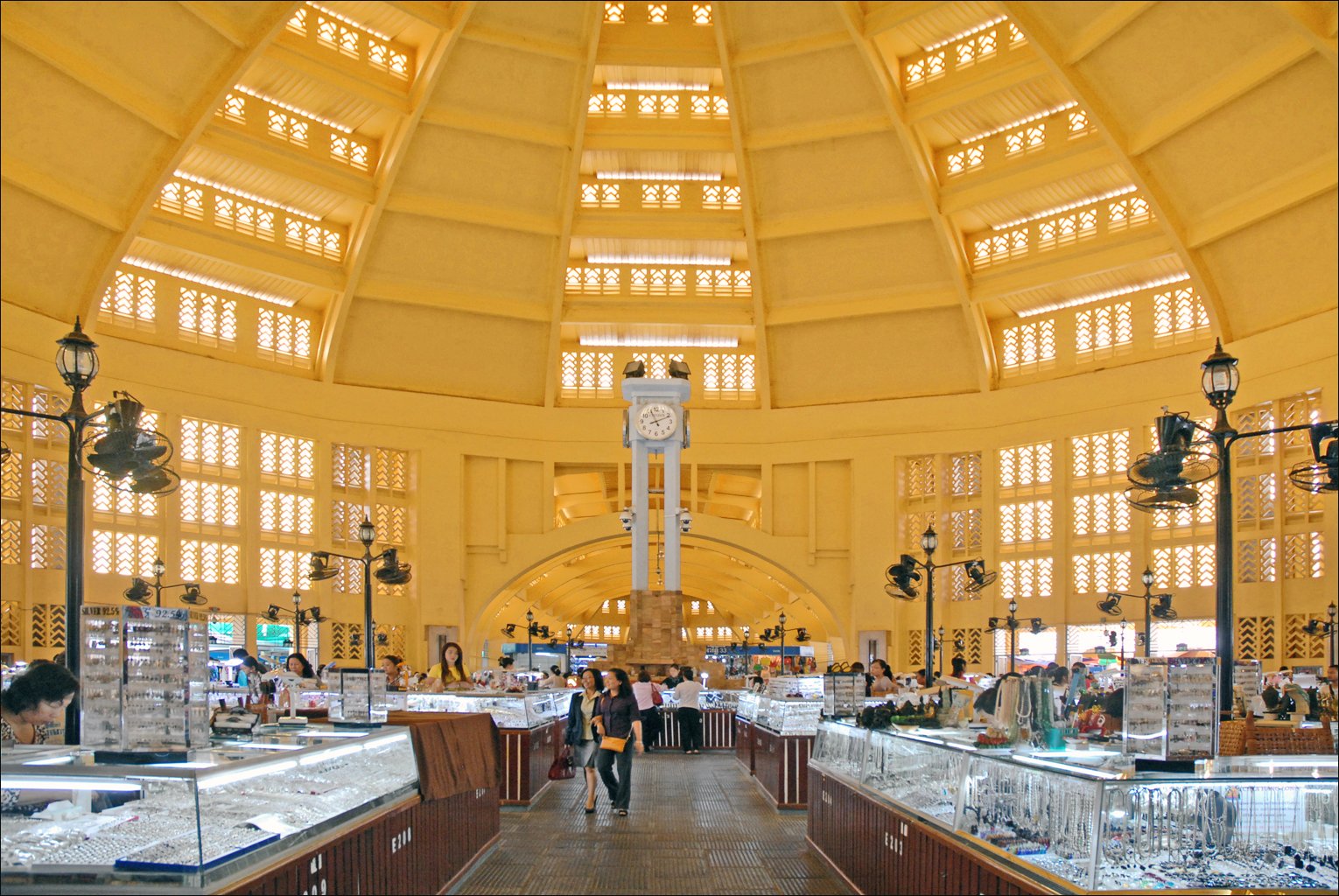
Phnom Penh’s Central Market, known locally as Psar Thmei, is one of those places where the city’s past and present collide in the most ordinary yet fascinating way. Built in 1937 during the French colonial era, the market was designed by French architects and stands as a striking example of Art Deco influence in Cambodia. Its massive yellow dome, with four wings radiating outward like the spokes of a wheel, dominates the surrounding streets, making it impossible to miss even from a distance. The structure was intended to be more than just a marketplace—it was a symbol of modernity, a statement that Phnom Penh was stepping into the 20th century with ambition. Today, it remains one of the city’s most recognizable landmarks, not just for its architecture but for the role it plays in daily life.
Stepping inside, the first thing that hits you is the sheer scale of the place. The central dome rises high above the stalls, its arched windows allowing streams of light to filter through, casting a soft glow over the bustling activity below. The market is divided into sections, each with its own rhythm and character. The outer wings are where you’ll find fresh produce—piles of tropical fruits like mangosteen, rambutan, and dragon fruit, their vibrant colors contrasting with the muted tones of the building. Vendors arrange their goods with care, stacking durians in neat pyramids or hanging bunches of bananas from hooks. The air is thick with the scent of herbs, spices, and the occasional whiff of something less pleasant, a reminder that this is a place where life unfolds in all its messy, unfiltered reality.
Beyond the produce, the market sprawls into a labyrinth of stalls selling everything from household goods to electronics. One section is dedicated to fabrics—bolts of silk in rich jewel tones, patterned cotton, and synthetic blends, all piled high or draped over mannequins. Tailors sit at sewing machines, ready to turn a length of fabric into a custom-made shirt or dress while you wait. Another area is a treasure trove of jewelry, with gold and silver pieces displayed in glass cases, their designs ranging from traditional Khmer motifs to more contemporary styles. The market isn’t just a place to shop; it’s a place where you can watch craftspeople at work, where the line between commerce and culture blurs.
For many locals, Psar Thmei is more than just a market—it’s a social hub. Early mornings are the busiest, with vendors setting up their stalls before dawn and shoppers arriving in droves to get the best selection. By midday, the pace slows slightly, but the market never truly quiets. Groups of friends gather at the food stalls, sharing plates of *nom banh chok* (Khmer rice noodles) or *bai sach chrouk* (pork and rice), the steam rising from the bowls mingling with the humid air. Old men sit on plastic stools, sipping iced coffee and chatting about everything from politics to the latest football match. The market is a microcosm of Phnom Penh itself—loud, chaotic, and full of energy, but with a warmth that makes it feel like home.
The market’s history is as layered as the city it serves. During the Khmer Rouge regime, Psar Thmei, like much of Phnom Penh, fell into disrepair. The regime emptied the city, forcing its residents into the countryside, and the market was left abandoned, its once-grand structure deteriorating under neglect. When the city began to repopulate in the 1980s, the market slowly came back to life, though it took years for it to regain its former vitality. In 2011, a major renovation restored the building’s Art Deco features, reinforcing its dome and updating its infrastructure while preserving its original character. The result is a space that feels both timeless and contemporary, a place where the past is always present.
For visitors, the market offers a glimpse into the everyday rhythms of Cambodian life. It’s not the kind of place where you’ll find polished tourist experiences or curated displays. Instead, it’s raw and unfiltered, a place where the transaction of buying and selling is secondary to the human connections that happen in between. Bargaining is expected, but it’s done with a smile and a sense of humor, a dance between buyer and seller that often ends with both parties laughing. The prices are low by Western standards, but the real value lies in the experience—the chance to wander through a space that has been at the heart of Phnom Penh for nearly a century.
Outside the market, the surrounding streets are just as lively. Motorbikes weave through the traffic, their drivers navigating the chaos with practiced ease. Street vendors set up makeshift stalls, selling everything from grilled corn to fresh coconut water. The area around Psar Thmei is also home to a number of small shops and cafes, where you can take a break from the market’s hustle and enjoy a quiet moment. Nearby, the colonial-era Post Office building stands as another reminder of Phnom Penh’s layered history, its faded grandeur a contrast to the market’s vibrant energy.
Psar Thmei isn’t just a place to shop—it’s a place to observe, to engage, and to get lost in the flow of life. It’s where you’ll find the best deals on souvenirs, but also where you might strike up a conversation with a vendor who’s been selling the same wares for decades. It’s where the city’s past and present coexist, where the grand ambitions of the colonial era meet the everyday realities of modern Cambodia. Whether you’re there for the architecture, the food, or the people, the market offers something that few other places in Phnom Penh can—a sense of authenticity that’s hard to find in a world that’s increasingly polished and sanitized. It’s not always pretty, and it’s certainly not quiet, but that’s exactly what makes it worth experiencing.