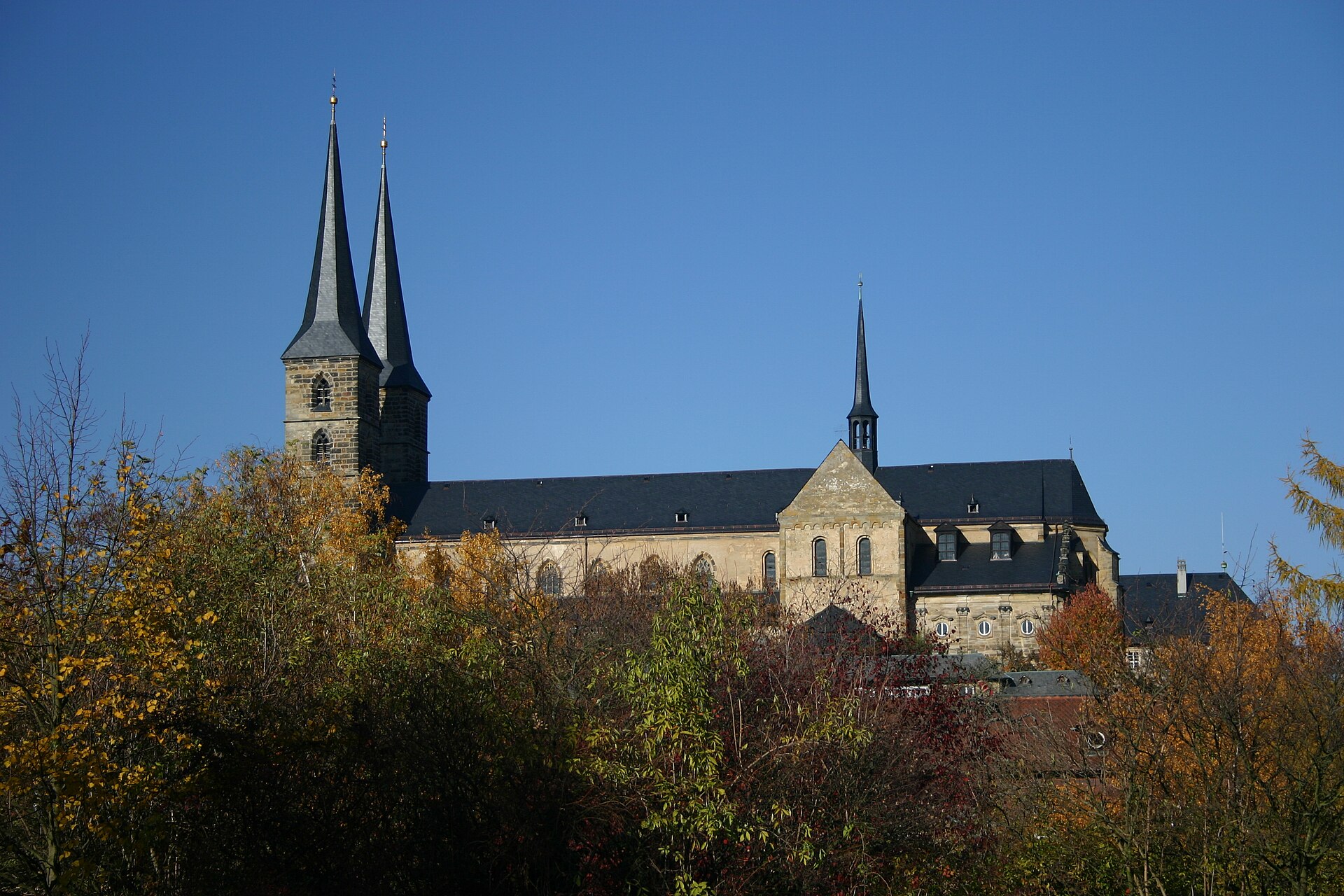
From its hill above Bamberg, the abbey’s tower and walls stand where they have for nine hundred years. The Benedictine monks who founded it in the 12th century chose the site for its view over the Regnitz River. They built more than a church: a scriptorium where scribes copied manuscripts, a school where boys learned Latin and logic, and a chronicle room where the history of Franconia was written down.
The church of St. Michael mixes three styles. Romanesque arches support the nave; Gothic ribs curve across the vaults; Baroque scrolls frame the altar. The ceiling is a grid of 600 painted shields—each one the coat of arms of a Bamberg bishop. Frescoes from the 1500s show Christ healing the sick and saints preaching to crowds. The altar, added later, is gilded and ornate, but the rest of the space feels plain by comparison.
The abbey once owned fields, forests, and villages across Upper Franconia. Its abbots sat on the city council and advised the prince-bishops. Then, in 1803, secularization arrived: the state took the land, the monks left, and the buildings became a barracks. A century later, the army moved out, and the abbey was turned into a hospital. Only in the 1950s did the church regain control, and today a small community of monks lives here again.
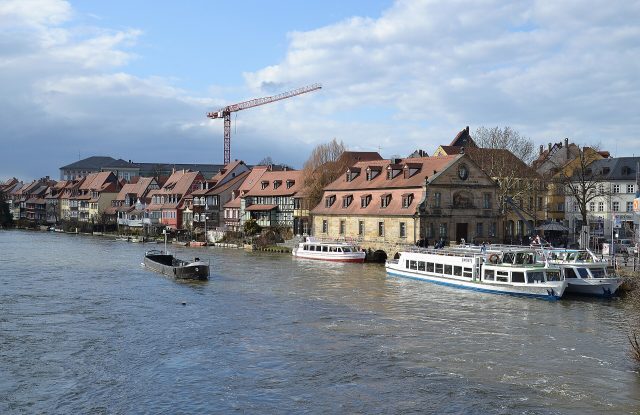
The gardens still grow what the monks once needed. Medieval herb beds supplied the infirmary; later, Baroque landscapers added flowerbeds and fruit trees. A vineyard on the south slope produces wine for the abbey’s cellar. From the terrace, you can see the red roofs of Bamberg, the river winding below, and the hills beyond. In summer, the only sounds are leaves moving in the breeze and the occasional bell from the city.
The abbey’s museum fills the old monks’ cells. Glass cases hold manuscripts, some dating to the 1100s, their pages still bright with red and blue ink. There are also medical instruments from the hospital years and photographs of the abbey before restoration. The tower is open to visitors; climbing it takes you past the bells and up to a narrow balcony where the whole city is visible.
Locals come here for Sunday mass or to walk their dogs in the gardens. Tourists arrive, look around, and leave—usually within an hour. There are no lines, no ticket scanners, no gift shop selling postcards. You can sit on a bench by the herb beds and watch the light change on the stone walls.
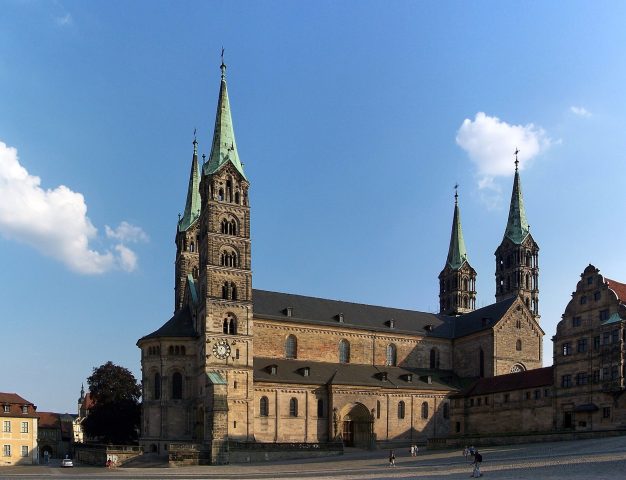
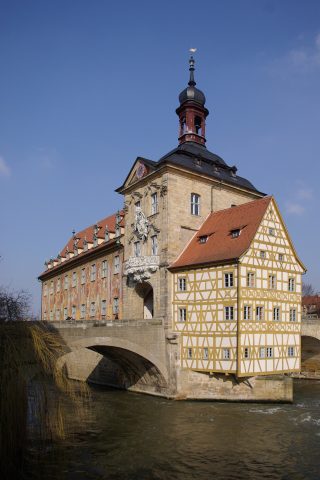
Bamberg has other sights: the cathedral, the old town hall on an island in the river, the smoked-beer breweries. But the abbey is quieter. It doesn’t compete for attention. It simply stands, as it has since the Middle Ages, and lets you decide what it means to you.