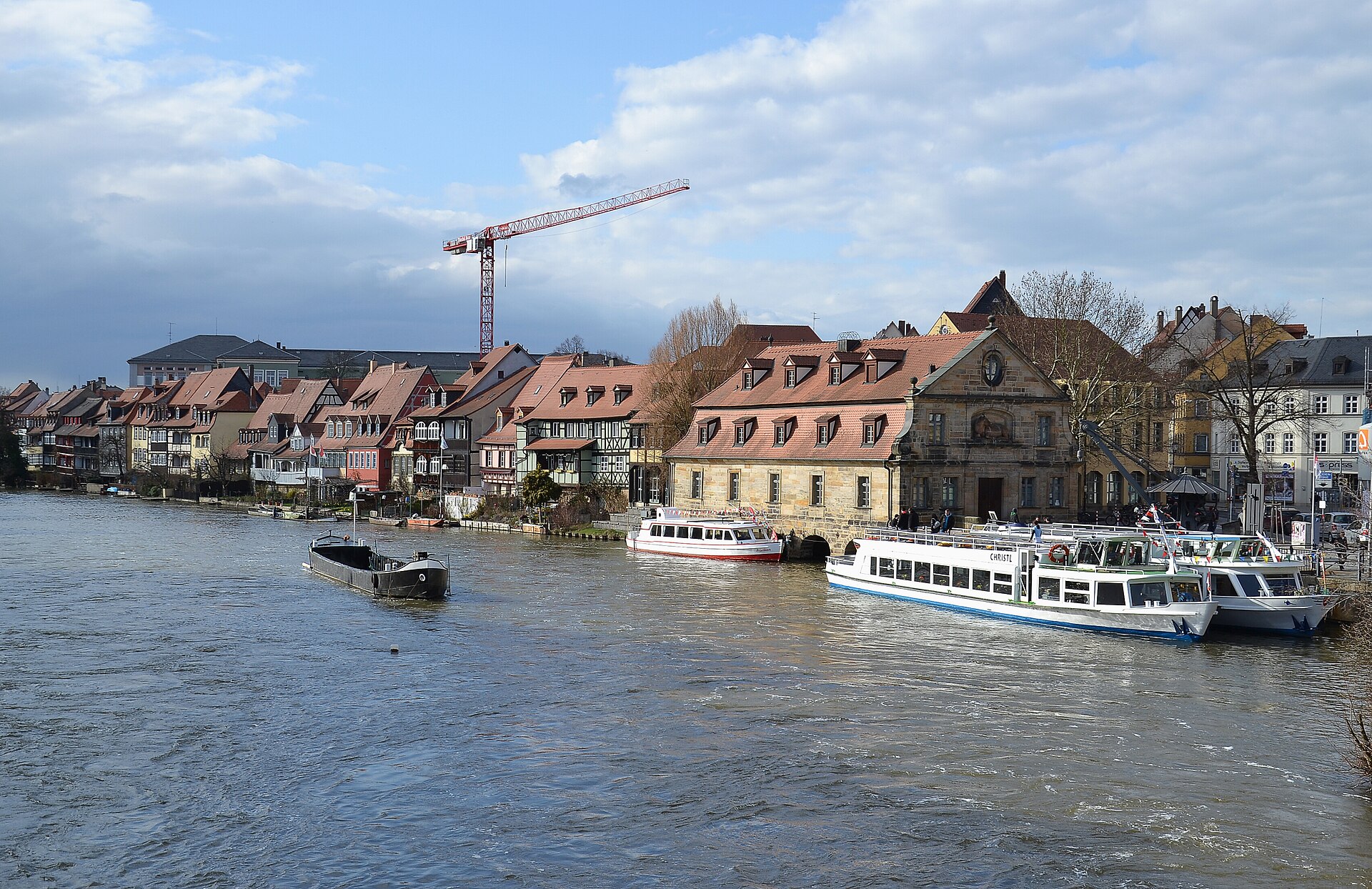
Bamberg rises on seven hills, but its pulse beats where the Regnitz River bends. Here, on the left bank, fishermen’s cottages and boatmen’s houses lean over the water like figures in an old print. No palaces, no cathedrals—only the slow, steady rhythm of a river that has shaped lives for centuries. The only sounds are the dip of oars and the cry of gulls, and for a moment, the eighteenth century lingers.
The Regnitz was Bamberg’s highway long before roads existed. In the Middle Ages, it carried goods between Franconia and Bohemia, fed the town, and gave shelter to those who worked its waters. Fishermen, boatmen, and craftsmen built their homes on narrow strips of land, their wooden walls pressed close to the current. Over time, timber frames were replaced with stone, balconies appeared, and shutters were painted in bright colors. Around thirty of these houses still stand, now home to cafés, guesthouses, or families. The river’s mark is still visible—on the foundations, the docks, the way the alleys twist to meet the water.
The houses seem to grow from the river itself. Their foundations rest on wooden piles, their ground floors raised against floods. Narrow alleys lead to small docks where boats bob, though today they carry tourists instead of nets. Spring brings cherry blossoms along the banks; autumn turns the water gold with fallen leaves. In winter, mist clings to the rooftops, and the only movement is a swan gliding past or a lone figure walking the embankment.
Little Venice moves at its own pace. No tour groups, no hurried footsteps—just the quiet routines of daily life. In the mornings, locals walk their dogs, fishermen mend nets, and cafés serve trout fresh from the Regnitz. Summer evenings bring picnics on the banks, lanterns casting reflections on the water. The street names tell the story: Fishermen’s Lane, Boatmen’s Alley, Miller’s Quay. History isn’t locked behind glass here—it’s lived in, touched, and passed down.
The Fisherman’s House is one of the few that hasn’t changed. Low ceilings, exposed beams, a corner stove—it’s now a small museum. Inside, you’ll find old fishing tools, model boats, and diaries filled with accounts of daily life. The river shaped Bamberg, and this house shows how. Without the Regnitz, the city might never have grown into what it is.
From the Oberau Bridge, Little Venice looks like a miniature. The houses appear small, the river wide and calm. From here, you can see Bamberg’s layers—the medieval Old Town, the industrial edges where breweries once stood. The view isn’t staged; it’s simply how the city has grown. Artists and photographers come here because the light falls just right, the water and weathered walls creating something worth capturing.
Little Venice has survived fires, floods, and wars. Each time, it was rebuilt, its character unchanged. In the nineteenth century, travelers began to visit, drawn to the river’s quiet beauty. Today, it’s more than an architectural landmark—it’s proof that some places endure.
Visitors often return to Little Venice. In summer, concerts and festivals bring life to the embankment; in winter, a Christmas market offers mulled wine and local food. But even on a quiet weekday, the quarter draws you in. The stillness, the scent of wood and water, the soft glow of lanterns—it all feels like stepping outside of time.
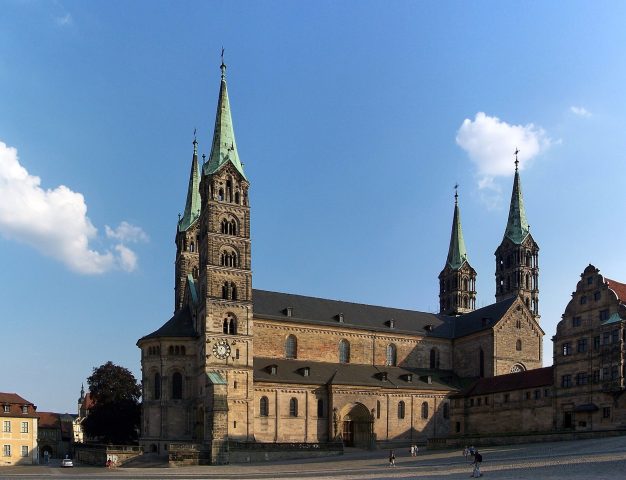
Bamberg is a city of contrasts—Gothic spires beside Baroque facades, medieval alleys next to modern streets. But in Little Venice, those contrasts fade. There’s only the river, the houses, and the sky. Maybe that’s why locals love it. Beauty isn’t always in grand cathedrals or palaces—sometimes, it’s in the quiet moments: water rippling against the shore, old floorboards creaking underfoot, the hush of a morning when the city is still half-asleep.