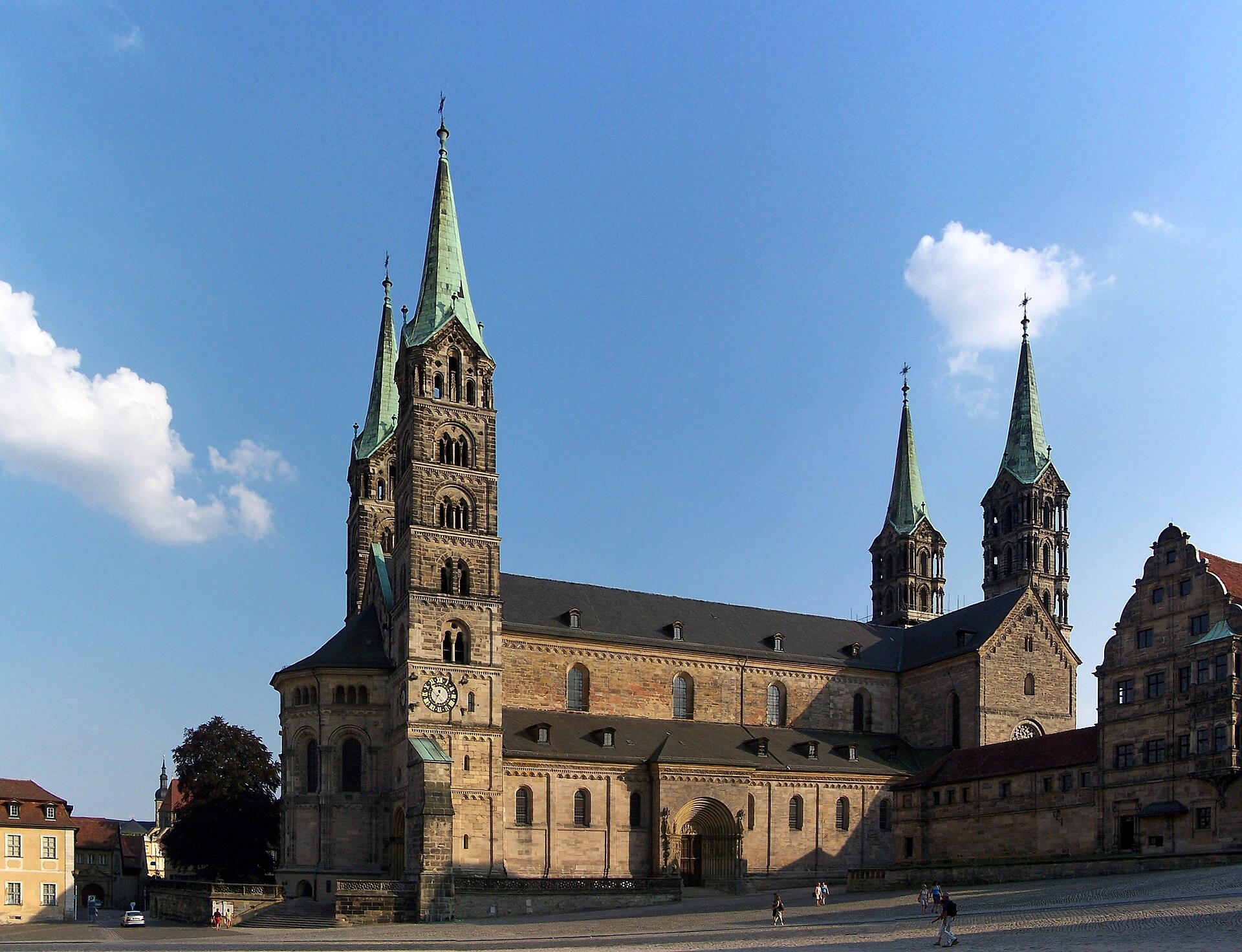
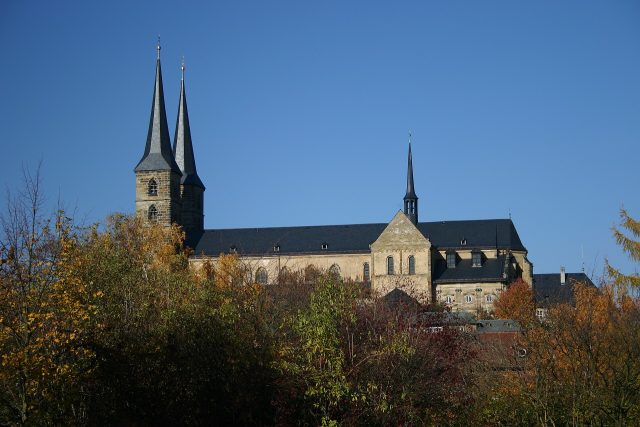
Bamberg Cathedral isn’t just a building—it’s a quiet witness to centuries of history, perched on a hill overlooking the town like a guardian of time. While the world below has changed, the cathedral has stood firm, its stones holding stories of emperors, popes, and pilgrims who have passed through its doors.
Construction began in the early 1200s and stretched over nearly 150 years, blending Romanesque solidity with Gothic elegance. The massive towers and pointed arches create a striking contrast, while the twin spires of the western façade reach toward the sky as if trying to bridge earth and heaven. Inside, the space feels vast yet intimate—high vaulted ceilings, slender columns, and stained glass that filters light into soft hues. There’s grandeur here, but it’s understated, as if the building itself knows its own worth without needing to shout.
The most famous treasure inside is the Bamberg Rider, a 13th-century stone statue that has puzzled historians for generations. Is it an emperor, a saint, or an idealized knight? The figure sits astride his horse with quiet authority, as if frozen mid-motion, ready to step down from his pedestal. Nearby, the tomb of Pope Clement II, carved from red marble, and the intricately detailed altar showcase the craftsmanship of medieval artisans, where every curve and line tells a story.
The cathedral is deeply tied to the Holy Roman Empire. It was here that Emperor Henry II, the cathedral’s founder, and his wife, Kunigunde, were crowned. Both were later canonized, and their relics still rest within these walls, drawing visitors who come to pay their respects. Their presence lingers, not just in the relics but in the very atmosphere of the place.
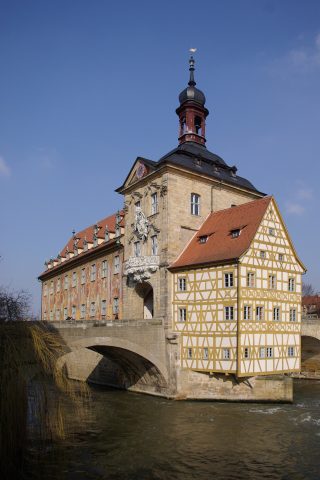
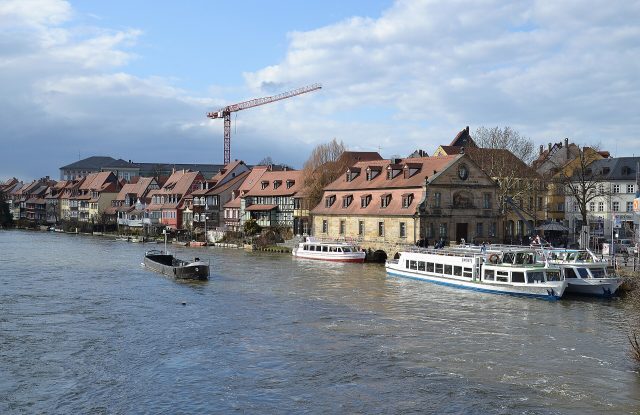
Bamberg itself was once a powerful religious center, and the cathedral was its heart—a symbol of faith and authority around which the city’s life revolved. Even today, it remains a place of pilgrimage, though now the pilgrims include tourists as well as the devout.
Climbing one of the towers offers a sweeping view of Bamberg, its rooftops and winding streets unfolding below. The inner courtyard is a peaceful retreat, where the rustle of leaves and the murmur of visitors are the only sounds. In the evenings, the strains of organ music drift through the air, and for a moment, it’s easy to imagine stepping back in time.
The cathedral has survived fires, wars, and restorations, yet its essence remains unchanged. Every stone, every carving, every archway carries meaning. When you visit, there’s no need to rush. Sit on a bench in the courtyard, watch how the light shifts across the walls, and let the weight of history settle around you. This is a place where time slows down, if only for a little while.