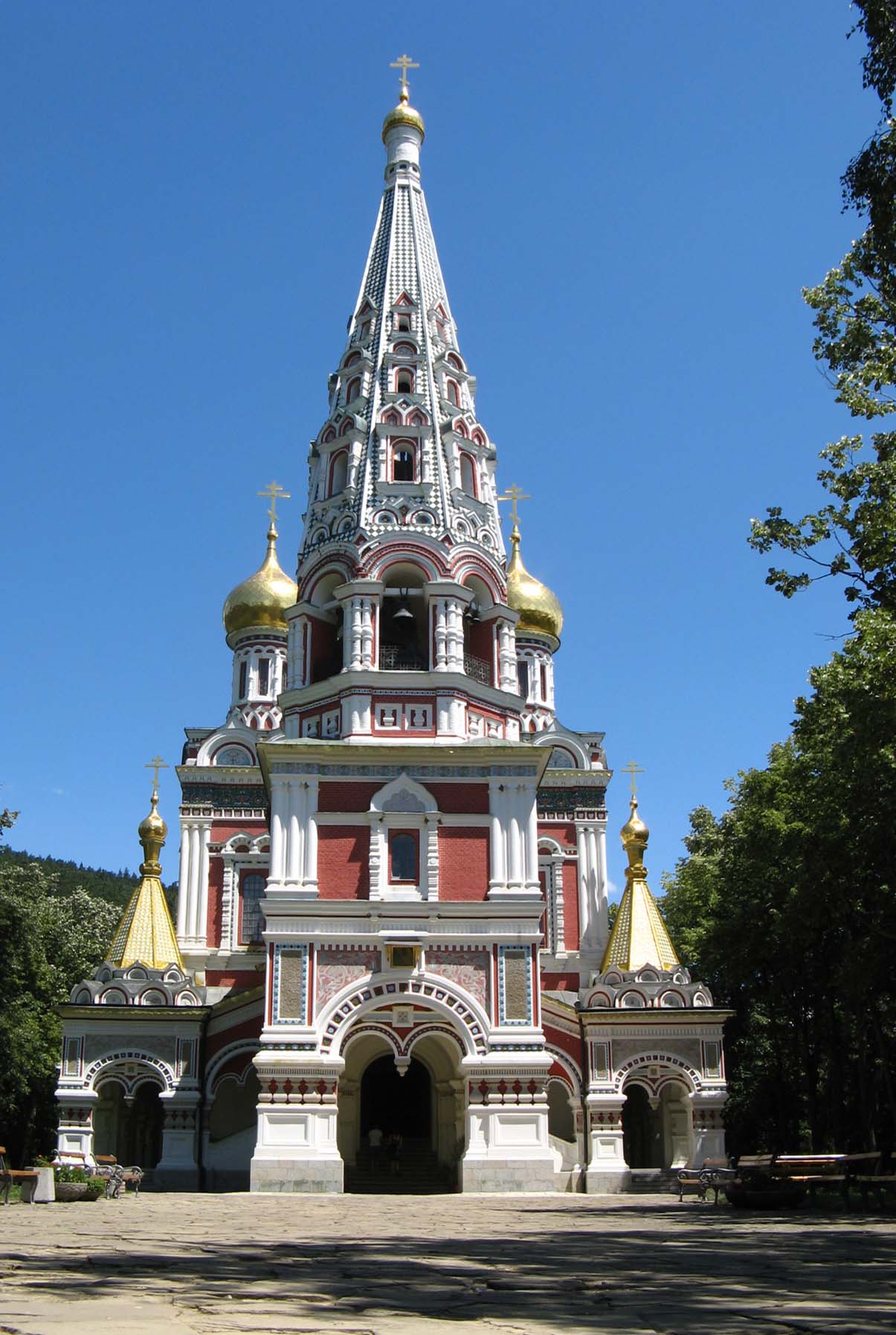
Shipka Monastery sits on a mountainside, its white walls and golden domes emerging from the dense forests like a quiet guardian of Bulgaria’s past. The air here is cooler, even in summer, carrying the scent of pine and damp earth, while the view stretches across valleys and ridges, as if the landscape itself was shaped to hold the weight of history. Built in the late 19th century, the monastery was conceived as a tribute to the Russo-Turkish War, when Bulgarian volunteers and Russian soldiers fought side by side to end centuries of Ottoman rule. The Shipka Pass, where the monastery stands, became a symbol of that struggle, and the building itself was meant to endure as a monument to those who never returned.
The architecture blends Bulgarian Orthodox traditions with Russian influences, creating something both familiar and distinct. The exterior is simple yet striking—white stone, gilded domes, and arched windows that catch the light at different angles throughout the day. Inside, the main church feels intimate despite its grandeur. Frescoes cover the walls, depicting scenes from the war alongside religious figures, their expressions solemn and deliberate. The iconostasis is carved with intricate patterns, and the floors are laid with mosaic tiles that have worn smooth over time. There’s no excess here, just a sense of reverence in every detail, as if the craftsmen who built it understood that beauty should serve memory, not overshadow it.
The monastery remains an active place of worship, home to a small community of monks who maintain its daily rhythms. Services are held regularly, and pilgrims arrive to pray before the relics of saints or light candles in the dim glow of the church. A modest museum within the monastery preserves artifacts from the war—rifles, uniforms, faded photographs, and personal letters. These items aren’t displayed for spectacle; they’re kept with care, as if the past is still present in their touch. Visitors can spend time here without the pressure of crowds, moving at their own pace, absorbing the silence that seems to settle deeper the longer you stay.
Beyond the monastery, the Shipka Pass offers its own stories. The area is steeped in history, not just from the 19th century but from earlier conflicts and migrations that shaped the Balkans. Hiking trails wind through the forests, leading to memorials and mass graves where soldiers were buried where they fell. One path climbs to the Freedom Monument at the summit, a towering structure visible for miles. From there, the view is vast—endless green slopes, winding roads disappearing into the distance, and the faint outline of mountains on the horizon. In winter, snow blankets the ground well into spring, muffling sound and softening the landscape into something almost dreamlike.
What makes Shipka different from other historical sites is its atmosphere. There’s no sense of performance here, no rush to see everything before the next tour group arrives. The place feels lived-in, not just preserved. You might hear the distant toll of a church bell or the rustle of leaves in the wind, but otherwise, the quiet is unbroken. It’s easy to lose track of time wandering the grounds, pausing to study a fresco or sitting on a bench to watch the light shift across the valley. The monks go about their routines, and the occasional visitor moves quietly, as if aware they’re stepping into a space that exists outside the usual pace of travel.
For Bulgarians, the monastery is more than a landmark. It’s a place of national significance, where annual ceremonies mark the anniversary of the country’s liberation. Veterans, descendants of soldiers, and ordinary citizens gather to lay wreaths, share stories, and listen to speeches. In the evening, fireworks light up the sky, their reflections dancing on the monastery’s domes. These moments are deeply personal for many, a way to connect with a past that still shapes the present. Even those who don’t attend the ceremonies often speak of Shipka with a quiet pride, as if its existence is a reminder of resilience.
If you visit, consider staying nearby. The surrounding villages offer guesthouses where locals welcome travelers with the kind of warmth that feels genuine, not rehearsed. Meals are simple—fresh bread, cheese, homemade wine—and conversations often turn to the land, the seasons, or the history that binds the region together. In the evenings, you can sit on a porch with a cup of tea, listening to the sounds of the countryside: the distant bark of a dog, the creak of a wooden gate, the occasional chime of a church bell. It’s easy to imagine the soldiers who once passed through here, weary but determined, finding a moment of peace in these same hills.
Shipka isn’t a place you visit for a quick photo or a checklist of sights. It’s somewhere you go to slow down, to let the layers of history settle around you. The monastery, the mountains, the stories—none of them demand attention, but they linger in a way that feels more meaningful than any guidebook description. Whether you come for the architecture, the hiking, or simply the chance to step away from the noise of modern travel, Shipka offers something rare: a sense that the past isn’t just remembered here, but still alive.