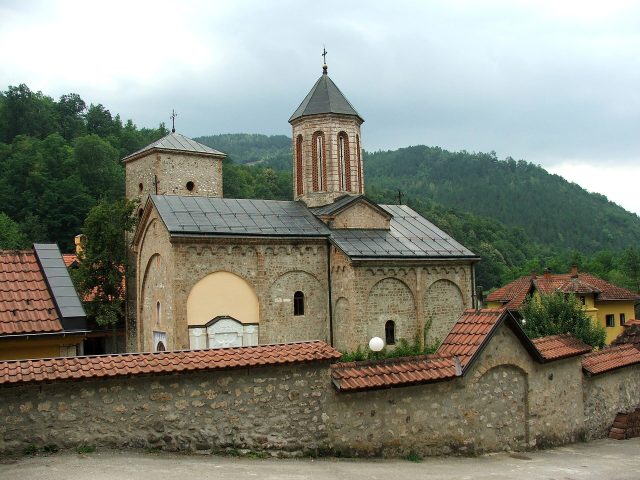
The Drina Valley Ethnographic Museum in Bajina Bašta is one of those quiet places that doesn’t announce itself with grand facades or tourist crowds, yet holds the kind of stories that linger long after you’ve left. Housed in a modest but well-preserved 19th-century building, the museum offers a glimpse into the rural life of western Serbia, where the rhythms of the Drina River have shaped communities for centuries. The structure itself is a piece of history—a former residential home built in the traditional style of the region, with thick stone walls, wooden beams, and a red-tiled roof that blends seamlessly into the town’s older neighborhoods.
Inside, the museum unfolds like a carefully arranged family album, where each exhibit tells a story of everyday existence in the Drina Valley. The collection is small but thoughtful, focusing on the tools, crafts, and customs that defined life here before modernization swept through the Balkans. You’ll find handwoven textiles, intricately embroidered garments, and wooden looms that speak to the skill of local artisans. There are farming implements, too—plows, sickles, and yokes—evidence of a time when the land dictated the pace of life. The museum doesn’t romanticize the past; instead, it presents these objects with a quiet dignity, letting them speak for the people who once relied on them.
One of the most striking aspects of the museum is its attention to domestic life. The reconstructed interiors of traditional homes reveal how space was used in a way that feels both foreign and familiar. Low wooden benches, hand-carved furniture, and cast-iron stoves occupy rooms where families gathered, worked, and slept. The hearth was the heart of the home, and the exhibits show how food was prepared, stored, and shared—from the wooden troughs used for kneading bread to the copper pots for making ajvar, the region’s beloved pepper relish. These details might seem mundane, but they’re the kind that make history feel tangible, as if the people who lived here have only just stepped out for a moment.
The museum also sheds light on the cultural traditions that bound communities together. Festivals, weddings, and religious ceremonies were central to life in the Drina Valley, and the exhibits include everything from folk costumes to musical instruments like the gusle, a single-stringed instrument used to accompany epic poetry. There’s a sense of continuity here, too—many of these traditions are still alive in the region, though perhaps in altered forms. The museum doesn’t just preserve the past; it shows how the past is still present, woven into the fabric of modern life.
What makes the Drina Valley Ethnographic Museum special is its lack of pretense. It’s not a grand institution with flashy displays or interactive exhibits, nor does it try to be. Instead, it feels like a labor of love, a place where someone has taken the time to gather and preserve the ordinary things that often get overlooked. The building itself is part of the story—its creaking floorboards and narrow staircases add to the sense of stepping into another era. There’s no need for dramatic narratives or over-the-top presentations; the objects here carry their own weight, their simplicity making them all the more compelling.
Bajina Bašta isn’t a town that most travelers seek out, which makes the museum all the more rewarding for those who do. It’s the kind of place that reveals itself slowly, where the real value lies in the details—the way a wooden spoon is worn smooth from use, or how a child’s toy is carved from a single piece of wood. The Drina River flows just a short walk away, and it’s easy to imagine how the museum’s exhibits once fit into the daily lives of people who lived along its banks. The river has always been a lifeline, a source of both sustenance and danger, and the museum captures that duality in the way it presents the past.
Visiting the museum is a reminder that history isn’t just about kings and battles; it’s also about the quiet, unrecorded moments that make up most of human experience. The people of the Drina Valley were farmers, weavers, and storytellers, and their lives were shaped by the land and the river in ways that are still visible today. The museum doesn’t offer grand conclusions or sweeping narratives, but that’s part of its charm. It invites you to look closely, to imagine the hands that shaped these objects, and to consider how much of the past is still alive in the present.
If you find yourself in Bajina Bašta, the museum is worth a visit—not because it’s a must-see attraction, but because it offers something rare: a chance to connect with a place on a human scale. There’s no rush here, no crowds, no pressure to take the perfect photo. Just a quiet space where the past feels close enough to touch. And in a world that often moves too fast, that’s a kind of magic in itself.