On the outskirts of Nyeri, where the hills roll gently beneath dense forests and tea plantations, there’s a quiet place that carries the legacy of a man whose name became synonymous with adventure and service. Here, on the slopes of Mount Kenya, lies Robert Baden-Powell, the founder of the Scout movement. His life took him across continents, but it was in this corner of Kenya that he chose to spend his final years, surrounded by the kind of landscape that had shaped his ideals.
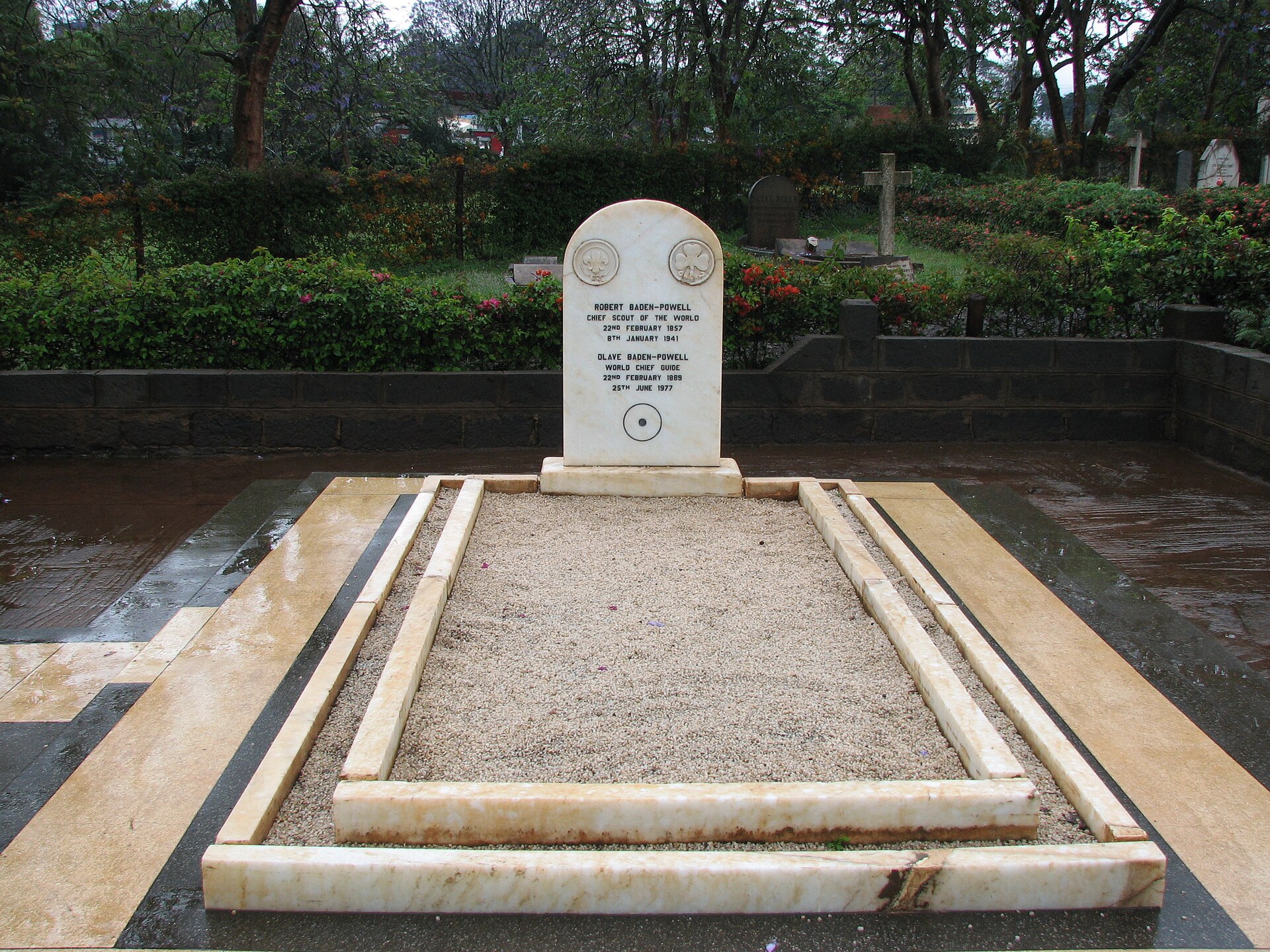
The grave itself is unassuming, almost blending into the surroundings. A simple granite stone, framed by a low fence, marks the spot where Baden-Powell rests. Nearby, a memorial plaque reminds visitors of the man whose ideas inspired millions of young people worldwide. The trees around the site were planted by him, their branches swaying softly in the breeze, as if time moves slower here than in the bustling towns below.
Baden-Powell arrived in Kenya in 1938, already in his eighties but still full of energy and a deep love for the outdoors. He chose Nyeri deliberately—the climate was mild, the scenery reminiscent of the places where he had spent his youth. The house he built, Pax Tu, meaning "Peace to You" in Latin, was more than just a home. It was a retreat where he continued to write, welcomed friends, and lived simply, in harmony with nature. After his death in 1941, the house became a memorial, and his grave a place of pilgrimage for Scouts from around the world.
The architecture of the house and its garden reflects Baden-Powell’s character—practical yet thoughtful. Built from local stone and wood, the home features large windows that frame views of the mountains. Inside, the furnishings remain much as they were during his lifetime: handcrafted furniture, books, photographs, and personal belongings that tell the story of a man devoted to serving others. There’s no grandeur here, just a sense of warmth and comfort, as if he might walk through the door at any moment.
For Scouts, this place holds deep significance. Every year, groups from different countries visit to honor Baden-Powell’s memory, share traditions, and reflect on the values he championed—friendship, mutual aid, a love for nature, and personal growth. Even those who aren’t part of the Scouting movement often find something meaningful here: a moment of quiet, a chance to think about what truly matters, or simply the realization of how a single idea can leave a lasting mark on the world.
Nyeri’s surroundings add to the atmosphere of the place. The town sits at an elevation of around two thousand meters, where the air is crisp and scented with eucalyptus and tea. On clear days, the snow-capped peaks of Mount Kenya rise in the distance, a silent sentinel over the landscape. The locals treat the memorial with respect but without ceremony—it’s part of their history, a reminder that even remarkable lives can find peace far from the noise of cities.
Visiting Baden-Powell’s grave isn’t just about paying respects; it’s also a chance to see Kenya from a different perspective. There are no crowded tourist trails or extravagant attractions here, just silence, nature, and a story that speaks for itself. You can walk the paths leading to the house, sit on a bench with a view of the mountains, or stand quietly by the grave, pondering how one person’s vision could shape the lives of so many.
Time seems to stand still in this corner of Nyeri. The birds sing softly, the wind barely rustles the leaves, and the world feels a little slower, a little kinder. It’s a place that draws people in—not because of what it offers, but because of what it allows you to leave behind. Whether you’re a Scout, a traveler seeking quiet, or simply someone passing through, there’s something here for everyone. Perhaps it’s just the sense of peace that lingers long after you’ve left.