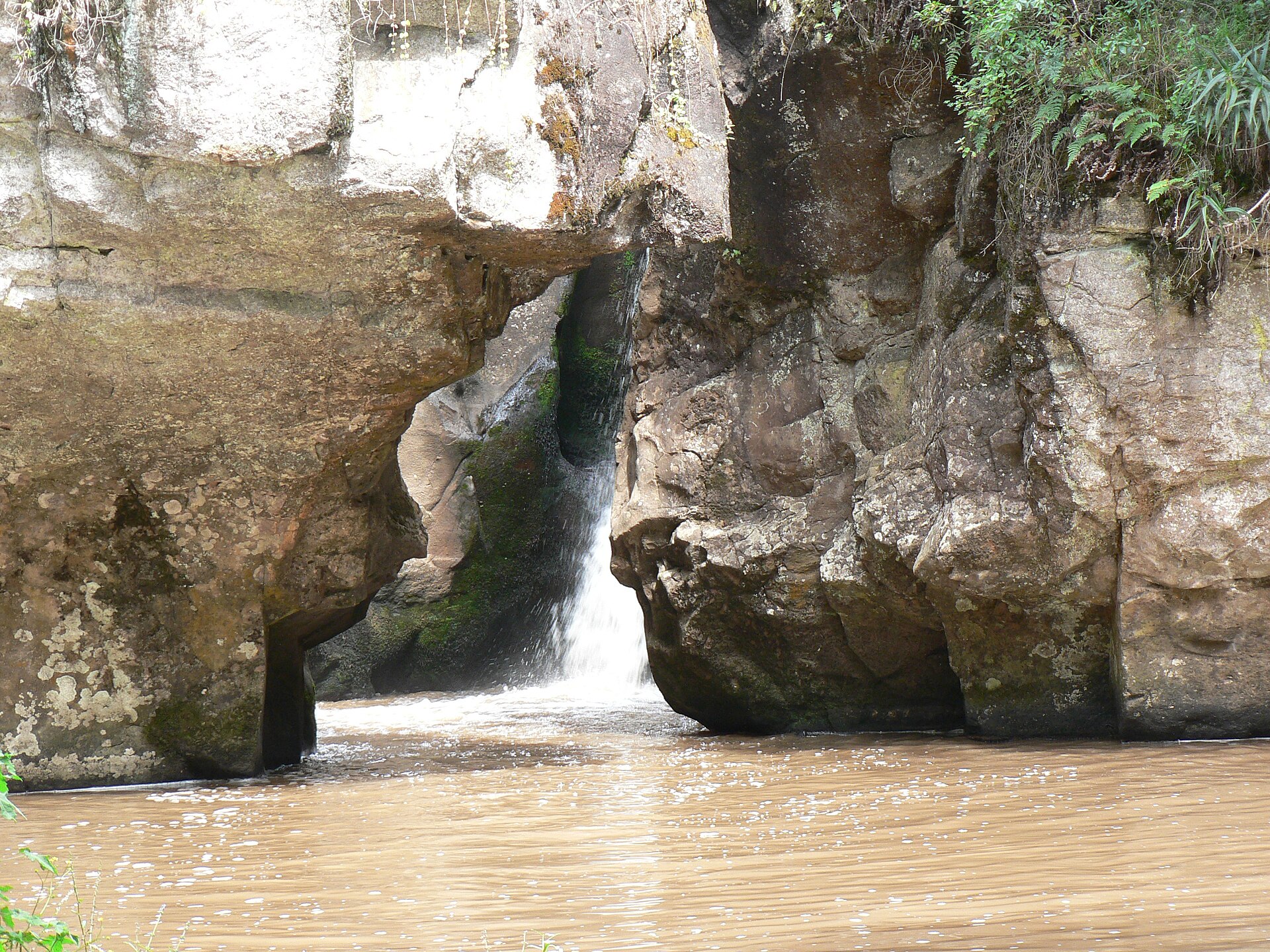
Mau Mau Caves sit quietly in the foothills of the Aberdare Range, a short drive from Nyeri, where the past lingers in the damp air and the shadows of volcanic rock. These caves are more than just a natural formation—they are a place where history feels immediate, where the struggle for Kenya’s independence was fought not on open battlefields but in the dark, cramped spaces beneath the earth. For many Kenyans, they remain a powerful symbol of resistance, a reminder of the sacrifices made during one of the most turbulent chapters in the country’s history.
The caves themselves are a labyrinth of tunnels and chambers, carved over time by volcanic activity. Long before they became a refuge for fighters, local communities knew of their existence, though they were never a place of frequent visitation. It was only during the Mau Mau uprising in the 1950s that they gained wider significance. For years, these underground passages served as a hideout for guerrillas, a place to store supplies, and even a makeshift workshop where weapons were repaired and strategies discussed. Life here was harsh—cold, damp, and always under the threat of discovery. Yet for those who sought shelter within these walls, it was a necessary refuge, a last stronghold in a fight that defined a nation.
Reaching the caves today is part of the experience. The road winds through rolling hills, past dense thickets and scattered boulders, where the landscape feels untouched by time. The entrance is easy to miss—a narrow fissure in the rock, barely wide enough for a person to slip through. Inside, the air is thick with the scent of earth and moisture, and without a light source, the darkness is almost absolute. The walls glisten with dampness, and in some places, moss clings to the stone, softening the rough edges of the rock. The tunnels twist and turn, opening into small chambers where the faint echoes of footsteps seem to carry whispers of the past.
Some traces of human presence remain. Charred stones mark where fires once burned, and in a few spots, crude markings on the walls hint at messages left behind—whether by fighters or later visitors, no one can say for certain. The caves were not just a hiding place but a living space, where people cooked, slept, and planned their next moves. The conditions were far from comfortable, yet for those who called this place home, even briefly, it was a sanctuary. The silence now is a stark contrast to the tension that once filled these spaces, when every sound could mean discovery and every shadow might hide danger.
For Kenyans, the Mau Mau Caves are more than a historical site—they are a place of memory. The uprising was a brutal and complex conflict, one that shaped the country’s path to independence. These caves witnessed secret meetings, desperate decisions, and moments of both courage and tragedy. Today, small plaques and displays near the entrance offer fragments of that history, recounting the stories of key figures and the tactics used by both the rebels and the colonial forces. But the real weight of the place lies not in the words on a sign but in the atmosphere—the way the air feels heavier here, the way the past seems to press in from all sides.
There are no crowds at Mau Mau Caves, no tour buses or souvenir stands. The experience is quiet, almost intimate. If you’re lucky, you might find a local guide, someone whose family has ties to the area or even to the events that unfolded here. Their stories are personal, passed down through generations, and they speak of the caves not just as a relic of war but as a part of their own heritage. The land around the caves has long since returned to peace. Farmers tend to tea and coffee plantations on the slopes, herders graze their livestock, and children play in the fields. Yet the memory of what happened here remains, woven into the landscape itself.
Visiting the caves is not just about learning history—it’s about feeling it. There are no grand monuments or polished exhibits, just the raw, unfiltered presence of the past. The cold stone walls, the damp air, the way the light barely reaches the deeper chambers—all of it serves as a reminder of what it meant to fight for something greater than oneself. It’s a place that demands reflection, where the absence of modern comforts forces you to slow down and consider the weight of what happened here.
If you come, be prepared for simplicity. There are no cafes or gift shops, no paved paths or neatly labeled exhibits. What you’ll find instead is a sense of solitude, a chance to step away from the noise of the present and into a quieter, more contemplative space. For those who take the time to explore, the caves offer more than just a glimpse into Kenya’s past—they offer a connection to the resilience of the people who once sought shelter within these walls. In a country where history is often told through grand narratives, Mau Mau Caves stand as a quiet testament to the ordinary individuals who shaped it.