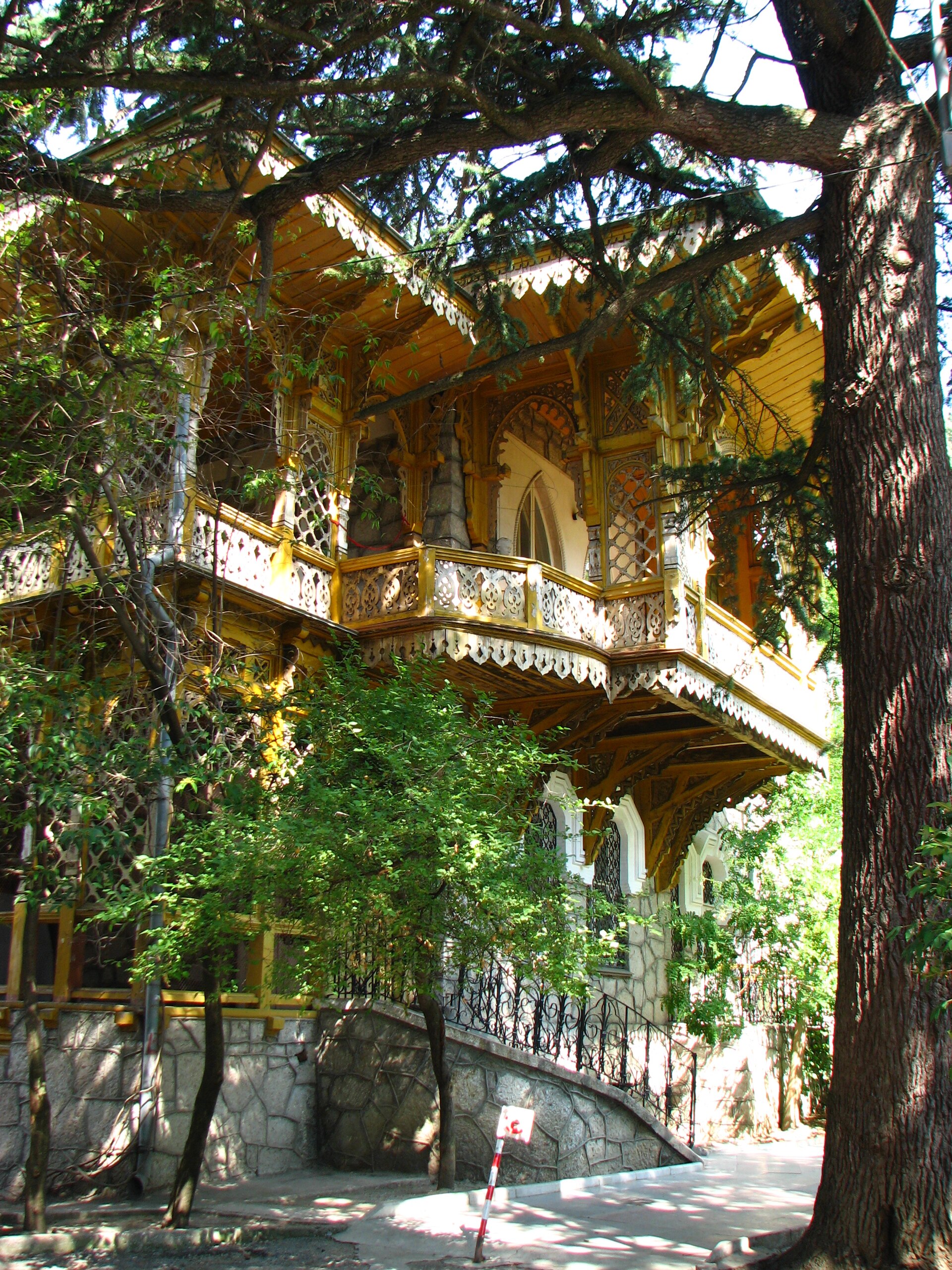
The house where Lesya Ukrainka spent her final winter stands on a quiet street in Yalta, set back from the bustle of the seaside promenades. Built in the late 1800s, it was originally the home of a local landowning family before the poet and her husband, the ethnographer Klyment Kvitka, rented it in 1913. The architecture is unassuming—whitewashed walls, tall windows, and high ceilings—typical of the grand yet understated villas that dotted the Crimean coast at the time. Inside, the rooms feel suspended in another era, with their original wood paneling, antique furniture, and the faint scent of aged paper lingering in the air.
Lesya Ukrainka arrived in Yalta on the advice of doctors, hoping the mild climate would ease the tuberculosis that had plagued her for years. By then, she was already one of Ukraine’s most celebrated literary figures, known for her poetry, plays, and sharp intellect. The winter she spent here was productive but difficult. She worked on revisions of her most famous work, *The Forest Song*, a lyrical drama inspired by the landscapes of Crimea, while her health steadily declined. The house became both a refuge and a place of quiet struggle, where she wrote by the light of an oil lamp and received visitors in the small sitting room.
The museum’s collection centers on personal artifacts that offer a glimpse into her daily life. Her writing desk remains in the study, still set with an inkwell and pen, surrounded by the books she read—volumes of philosophy, folklore, and literature in several languages. On the walls hang photographs of the poet at different stages of her life, her expression often serious, her gaze direct. There are also portraits of her contemporaries, writers and thinkers who shaped the cultural and political debates of the early 20th century. Among the most striking items are early editions of her works, translated into Russian, German, and other languages, a testament to her influence beyond Ukraine’s borders.
Yalta in those years was a crossroads for artists, intellectuals, and revolutionaries. Anton Chekhov had lived nearby, Maxim Gorky wrote here, and the city’s cafes and salons buzzed with discussions about art, politics, and the future of the Russian Empire. For Ukrainian writers and activists, Crimea offered a temporary escape from the growing tensions in Kyiv and St. Petersburg. Lesya Ukrainka, though deeply engaged with Ukrainian national identity, was also part of this broader world. Her letters from Yalta reveal a mind still sharp with ideas, even as her body weakened.
The garden surrounding the house is as much a part of the museum as the rooms inside. Planted with cypresses, magnolias, and roses, it was a place where she walked in the afternoons, taking in the scent of the sea and the warmth of the southern sun. Today, it feels like a private retreat, with benches tucked beneath the trees and a small bust of the poet standing near the entrance. The flowers bloom in cycles, just as they did when she was alive, and the view of the distant mountains remains unchanged.
What makes this museum different from many others is its lack of grandeur. There are no elaborate displays or dramatic reconstructions, just the quiet presence of a life lived with intensity. The rooms are small, the furniture modest, and the atmosphere intimate. Visitors often remark on the sense of stillness here, as if the house itself is holding its breath, preserving the moments when Lesya Ukrainka sat by the fireplace, wrote at her desk, or looked out at the garden from her window.
For those unfamiliar with her work, the museum offers a way to understand the era in which she lived—a time when literature was not just an art form but a means of resistance, a way to assert identity in the face of oppression. Her writings, whether poetry or political essays, carried weight because they spoke to something deeper than personal expression. In Yalta, she was both an observer and a participant in the cultural currents of her time, even as her own life was drawing to a close.
The house on Yekaterininskaya Street is one of those rare places where history feels tangible. It’s not just a museum; it’s a fragment of the past that has survived almost by accident. The walls don’t tell a dramatic story of triumph or tragedy, but something more subtle—the story of a woman who wrote until the very end, who loved her country and her language, and who left behind words that still resonate. When you leave, the quiet of the garden stays with you, along with the sense that some places, no matter how small, carry the weight of memory in a way that can’t be easily explained.