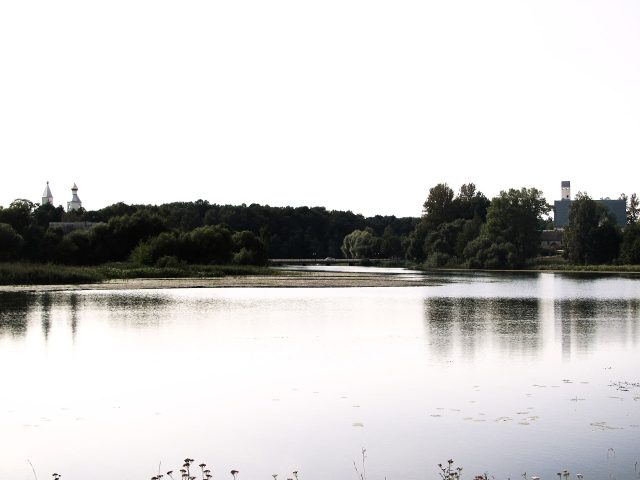
Logoychyna Memorial Complex sits quietly on the outskirts of Logoysk, a small town in Belarus. Few travelers make it this far, and the place blends into the landscape—low hills, mixed forests, the kind of quiet that makes you slow down without realizing why.
The complex was built in 1969 to honor the residents of Logoysk District killed during World War II. It marks the site of mass executions where Nazi forces murdered over two thousand people—civilians, partisans, prisoners of war. Many bodies were never identified. The memorial wasn’t just for the families of the dead; it was for anyone who might walk these hills decades later, trying to piece together what happened here.
The architecture is simple. A gray granite stele stands on a slight rise, its surface etched with words about memory and grief. Nearby, an eternal flame flickers at dusk, small but steady. Granite slabs list the names of those identified—some worn smooth, others half-covered in moss, but all carrying the same weight.
The sculpture *Mother* shows a woman in a long dress, her head bowed over her son’s body. She doesn’t weep or cry out. She just holds him, as if even in death, she could protect him. The figure isn’t dramatic. It’s quiet, because war isn’t just numbers—it’s people.
Logoychyna isn’t like the polished memorials in big cities. There are no paved walkways or manicured flowerbeds. The hills roll naturally, trees sway in the wind, and narrow paths have been worn into the earth by visitors over the years. When it rains, the ground softens underfoot. In spring, wildflowers bloom across the site, as if the land itself is trying to heal.
People visit for different reasons. School groups come on field trips. Locals bring flowers. Sometimes, travelers find the place by accident. There are no formal ceremonies—just quiet moments, flowers left at the stones, and then silence.
In recent years, there’s been talk about restoring the memorial. Some say it needs it. Others argue it should stay as it is—unpolished, real. There are no signs telling you how to behave, no guards watching. Just the land, the stones, and the past.
Logoysk isn’t a tourist destination, and the memorial doesn’t try to be one. But those who visit often leave feeling like they’ve touched history, not just read about it. That’s why Logoychyna matters—not just to Belarus, but to anyone who understands what peace costs.
There’s nothing here to entertain. Only remembering. And for this place, that’s enough.