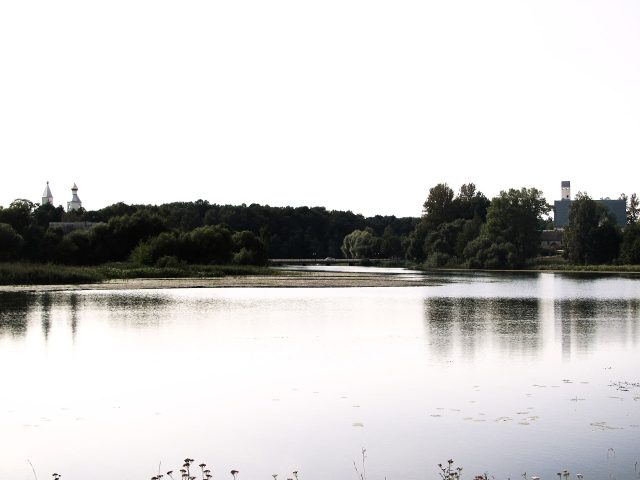
Lenin Park in Logoysk is one of those quiet places that doesn’t demand attention but quietly earns it over time. Tucked away in the center of this small Belarusian town, it feels like a well-kept secret, the kind of spot where locals go not because they have to, but because it’s simply part of their daily rhythm. There’s nothing grand about it—no towering monuments, no flashy attractions, no crowds jostling for the best photo. Instead, it offers something far more subtle: a sense of stillness, a place where the hours seem to stretch just a little longer.
The park took shape in the mid-20th century, when Logoysk, like many Soviet towns, was being reshaped by urban planning initiatives. The centerpiece, a bronze statue of Lenin, was installed during this period, and it remains the most recognizable feature of the space. For some, it’s a relic of history; for others, just another familiar landmark. Either way, the statue has become woven into the fabric of the park, as much a part of its identity as the trees that line the pathways. It’s not the kind of monument that draws crowds, but it does give the place a sense of continuity, a quiet nod to the past that doesn’t overshadow the present.
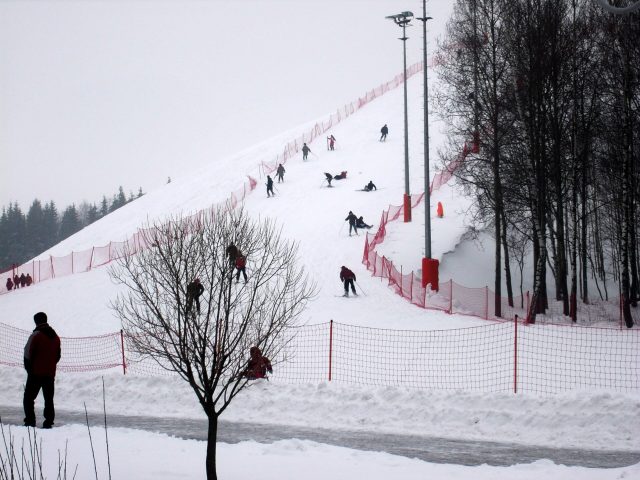
What makes Lenin Park special is how effortlessly it fits into the life of Logoysk. It’s small enough to feel intimate but large enough to offer a sense of escape. In summer, the canopy of linden and maple trees provides shade, while in autumn, the crunch of fallen leaves underfoot marks the changing seasons. Winter brings a different kind of beauty—snow-cleared paths where families stroll or children sled down gentle slopes. Spring arrives softly, with blooming flowerbeds and the return of birdsong. The park doesn’t fight the seasons; it simply adapts, offering a different kind of comfort in each one.
The design is unassuming, almost understated. There are no ornate fountains or elaborate sculptures, just neat pathways, well-tended lawns, and a scattering of benches. A small central plaza with flowerbeds serves as a focal point, while lampposts cast a warm glow in the evenings. Everything is arranged for practicality rather than spectacle—no grand gestures, just a space that works. It’s the kind of place where you can walk without thinking, where the mind is free to wander because the surroundings don’t demand anything in return.
For the people of Logoysk, the park is more than just a patch of green in the middle of town. It’s where neighbors meet, where parents push strollers, where elderly couples take their evening walks. There’s no need for an agenda here—no tickets to buy, no itineraries to follow. You can come to read a book, to chat with a friend, or to sit in silence, watching the world go by. It’s a place that doesn’t ask for much, but gives back in small, meaningful ways: a moment of quiet, a breath of fresh air, the simple pleasure of being outside.
Logoysk itself is one of Belarus’s oldest settlements, with roots stretching back to the 11th century. Over the centuries, it has seen wars, fires, and shifting borders, yet it has remained a quiet, unassuming town where life moves at its own pace. Lenin Park, with its Soviet-era origins, feels like a natural extension of that history—a bridge between the past and the present. It doesn’t try to rewrite the town’s story; it simply reflects it, in all its unpretentious charm.
What’s striking about the park is how little it has changed over the years. There are no tourist traps, no souvenir stands, no attempts to dress it up for outsiders. It remains stubbornly, authentically local. That’s part of its appeal. Here, you won’t find the polished veneer of a destination designed for visitors; instead, you get the real Logoysk—the one where people live, work, and go about their days. The park is just one piece of that, but it’s an important one, a place where the town’s character reveals itself without pretense.
Perhaps that’s why Lenin Park feels so genuine. It doesn’t set out to impress or entertain. It doesn’t need to. Instead, it offers something far more valuable: a sense of belonging, a reminder that beauty and meaning can be found in the ordinary. You don’t come here for spectacle; you come for the quiet moments—the rustle of leaves, the laughter of children, the way the light filters through the trees in the late afternoon. It’s a place where time slows down, where the weight of the world feels a little lighter. And in a way, that’s more than enough.