The Hill of Glory stands on the Belarusian land as a silent witness to the days when the fate of not just a country, but all of Europe, was decided here. This is no ordinary memorial—it is a man-made mound, raised in memory of the soldiers who liberated Belarus from Nazi occupation. Located near Smilavichy, a quiet and unassuming settlement, the hill has become inseparable from the town’s identity, turning a place once known only to locals into a landmark of national significance.
The idea for the memorial took shape in 1969, when it was decided to honor the Soviet soldiers who fought in the Minsk offensive during the summer of 1944. That was the time of Operation Bagration, one of the largest military campaigns of World War II, which led to the liberation of much of Belarus. The hill was built with earth brought from every corner of the republic, as well as from Russia, Ukraine, and Kazakhstan. Each handful of soil carried the weight of memory—of those who never returned from the war, of the lives lost in the struggle for freedom.
The design of the memorial is deliberate and symbolic. At its heart is the hill itself, rising thirty-five meters high. At the summit, four bayonet-shaped obelisks reach toward the sky, representing the four fronts that took part in Belarus’s liberation. Below, a granite platform holds the Eternal Flame, while a ring of bronze reliefs encircles the base, depicting the bravery of soldiers, partisans, and underground resistance fighters. The entire composition feels like a tribute not just to victory, but to the endurance of those who fought for it.
Climbing the hill is more than just a walk—it’s almost a ritual. The staircase leading to the top has two hundred steps, each one said to symbolize a day of Minsk’s occupation. The ascent isn’t easy, but the view from the summit makes the effort worthwhile. On a clear day, the horizon stretches endlessly—fields, forests, and roads that once carried the columns of liberators. At the base, visitors gather: some take photos, others stand in quiet reflection, and many read the names inscribed on the memorial plaques.
The Hill of Glory is more than a monument to the past; it’s a place where history meets the present. Ceremonies are held here every year—wreath-laying on Victory Day, veterans’ gatherings, and commemorative events. In recent years, the memorial has also become a destination for younger generations. School groups visit to learn about the war not from textbooks, but through the tangible weight of history. The surrounding alleys and trees give the place a sense of life, even in winter, when the cold might otherwise make it feel abandoned.
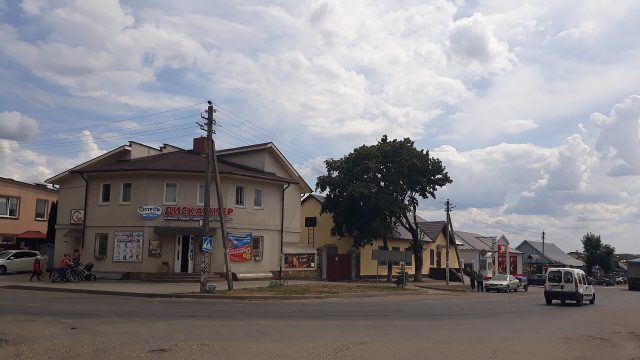
Smilavichy itself is an ordinary Belarusian settlement, unremarkable at first glance. There’s no tourist bustle here, no crowds rushing from one attraction to another. Instead, the town exudes a quiet charm—narrow streets, old wooden houses, and a small river flowing nearby. For locals, the Hill of Glory isn’t just a landmark; it’s part of their own story. Many families here remember the war not through stories, but through the memories of grandfathers and great-grandfathers who lived through it. The hill is where they come to connect with that past.
Time passes, and those who experienced the war firsthand are growing fewer. Yet the Hill of Glory continues to serve its purpose—reminding visitors of the cost of victory, of the fact that the peace we live in today was not won without sacrifice. There’s no grandiosity here, no lofty speeches—just silence, broken only by the rustle of wind in the grass or the distant whistle of a train. The place doesn’t need pomp; it speaks for itself through its stones, its earth, and the memory embedded in every inch.
Visiting the Hill of Glory isn’t about seeking entertainment or spectacle. It’s a place for contemplation, for a quiet conversation with history. You might come here at dawn, when mist still lingers over the fields, or in the evening, when the setting sun turns the granite golden. You could stand by the Eternal Flame, watching the flickering light, and think about the lives cut short on this land. Or you could climb to the top and imagine the battles that raged here over seventy years ago, the soldiers advancing, knowing it might be their last stand.
The Hill of Glory doesn’t need to be called majestic or grand. It simply exists—as memory exists, as history exists, unchangeable and unforgettable. This is a place where everyone finds something personal: for some, it’s a symbol of courage; for others, a reminder of how fragile peace can be; for a few, just a quiet corner to be alone with their thoughts. But no one leaves unchanged. The hill doesn’t just stand in the earth—it leaves its mark on those who visit.