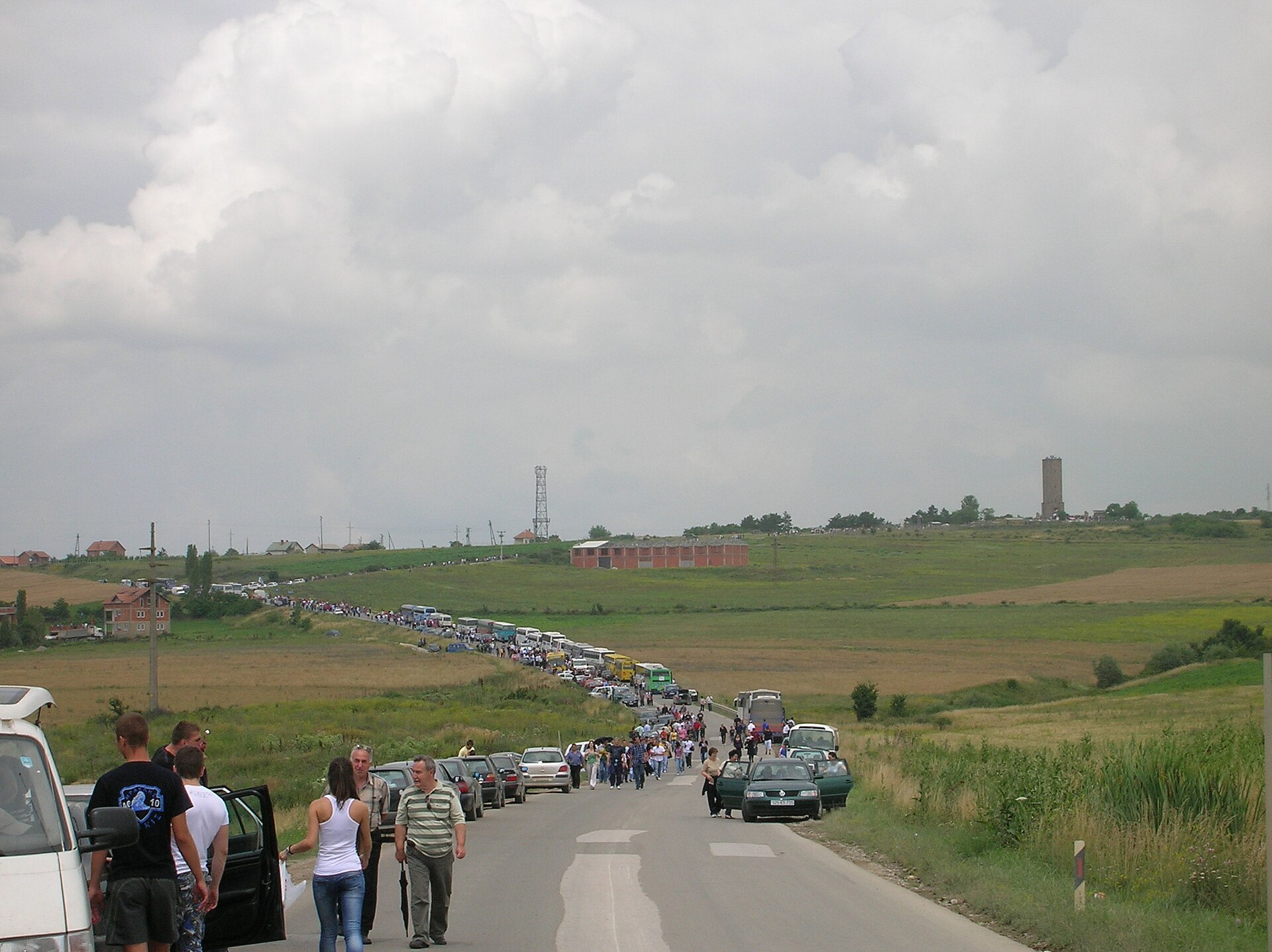
Gazimestan stands on a low hill a short distance from Pristina, a place where the course of Balkan history was once decided. This is the site of the Battle of Kosovo Field, where in 1389 the forces of Serbian Prince Lazar clashed with the Ottoman army led by Sultan Murad I. Today, Gazimestan is more than just a monument to a distant past—it remains a living symbol, one that continues to stir debate, legend, and national memory.
The memorial complex itself is a relatively recent addition, built in the mid-20th century when Yugoslavia sought to honor medieval battles as part of a shared history for its peoples. At its heart is the tower-monument, designed by architect Aleksandar Deroko and completed in 1953. Tall and austere, constructed from pale stone, it evokes both a medieval fortress and a modern memorial. Carved into its walls are words from the famous Kosovo Oath, attributed to Prince Lazar—a text that has inspired Serbian folklore and literature for centuries.
Surrounding the tower is a spacious park dotted with memorial plaques and markers, not only commemorating the 1389 battle but also other events tied to Kosovo’s history. Nearby lies the tomb of Sultan Murad I, who fell that day at the hands of the Serbian warrior Miloš Obilić. The Ottoman mausoleum, known as Mezar-e Sultan, is a modest structure with a dome, enclosed by a low fence. Its presence on this field serves as a reminder that history is rarely straightforward—what some see as heroism, others view as tragedy, and still others as part of a complex legacy that defies simple interpretation.
Gazimestan is deeply woven into Serbian cultural identity. In folk songs and epic poetry, the Battle of Kosovo Field became a symbol of resistance and sacrifice, while figures like Prince Lazar and Miloš Obilić took on almost mythic status. Every year on June 28, Vidovdan, thousands gather here—pilgrims, historians, politicians, and ordinary Serbs, both from the homeland and the diaspora. The ceremonies are solemn, with church services, wreath-laying, and speeches, yet the atmosphere remains charged, for this is a place where memory and modern tensions intersect.
The architecture of the complex reflects its dual nature. Deroko’s tower, with its clean lines and severe proportions, echoes medieval fortifications without excessive grandeur. Nearby, newer elements added in the 21st century cater to visitors, with informational panels displaying battle maps, excerpts from historical chronicles, and photographs of archaeological finds. The effect is one of a past that isn’t frozen in stone but continues to evolve alongside those who come here.
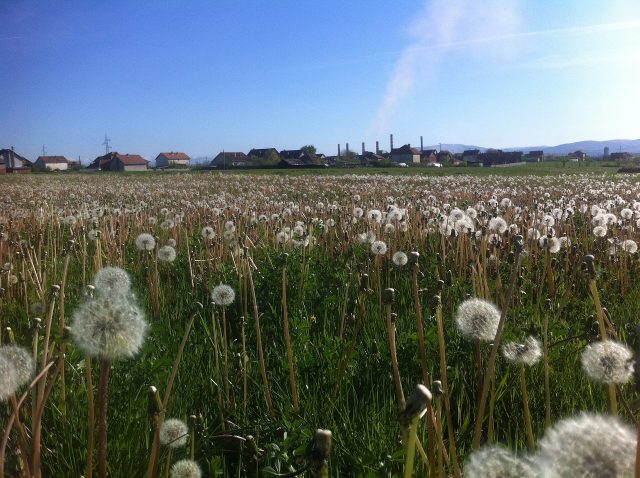
The Kosovo Field itself is a vast plain surrounded by gentle hills. On clear days, the view from the top of the tower stretches for miles—fields, villages, and roads fading into the horizon. Summers here are hot and dry, the grass bleached to straw, while winters bring a thin layer of snow. Locals say the land was once considered sacred, and even after the battle, people avoided settling here, as if preserving its untouched quality. That might explain why the landscape remains free of modern intrusions—no towering buildings, factories, or highways disrupt the view.
Today, Gazimestan draws not only pilgrims but also those curious about Balkan history. Visitors from around the world come to see the field they’ve heard so much about, trying to grasp what really happened here over six centuries ago. Archaeological excavations in the area occasionally uncover new details, but many questions remain unanswered. The exact location of the battle is still debated, and estimates of the number of combatants vary widely.
A visit to Gazimestan leaves a mixed impression. On one hand, it’s a deeply symbolic place, heavy with history and emotion. On the other, it serves as a reminder of how difficult it is to separate myth from reality, especially when dealing with events that have shaped national identity. There are no bright colors or ornate decorations here—everything is restrained, almost austere, as if the site itself invites reflection rather than awe. That might be why Gazimestan remains significant not just for Serbia but for the entire region, a quiet testament to the fact that the past is never simple.