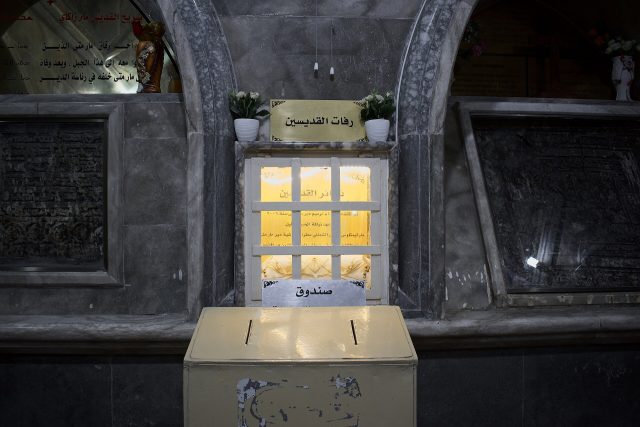
Bashika is a small town in northern Iraq, often reduced to little more than a dot on a map—a place mentioned in passing during news reports about conflict and instability. Yet nestled among its rolling hills and olive groves lies a quiet memorial that serves as a reminder of the human stories behind the grim statistics of war. The Memorial to the Victims of Terrorist Attacks in Bashika is not just a monument; it is an attempt to preserve the memory of those who lost their lives to the violence that has gripped the region in recent decades.
The memorial’s origins are tied to the tragedies that have shaped Bashika’s history. Like many towns in Iraq, it found itself on the front lines of the fight against extremist groups. In 2014, when ISIL seized large parts of the country, Bashika became a critical point of resistance. Local residents, Kurdish militias, and Iraqi security forces fought street by street to defend the town, but the cost of victory was devastating. The memorial was created to honor those who did not live to see liberation—civilians, soldiers, and volunteers whose lives were cut short by the conflict.
The design of the memorial is understated, free of grandeur or spectacle. There are no towering statues or elaborate structures, just a simple wall etched with the names of the dead. Some plaques nearby offer brief accounts of how they were killed, where details are known. A few names are accompanied by photographs, but many remain anonymous—faces and stories lost to time. Around the wall, a small park with trees and benches provides a space for reflection, where families and friends can sit in quiet remembrance.
This place holds meaning far beyond its local significance. Bashika became a symbol of resistance against terror, and the memorial stands as a testament to the fact that even in the darkest times, humanity endures. There is no glorification of war here, no attempt to romanticize the struggle. Instead, the memorial speaks to the senselessness of violence—the ease with which lives are destroyed and the difficulty of rebuilding them. For the people of Bashika, it has become part of everyday life: a site for vigils, flower-laying ceremonies, and moments of silent contemplation.
The atmosphere of the memorial is not oppressive, but it is impossible to leave unmoved. There are no crowds of tourists, no hurried footsteps. Visitors come for different reasons—some search for a relative’s name, others simply want to understand what this town has endured. Occasionally, groups of schoolchildren arrive on field trips, listening as teachers recount the events of those years, explaining why remembering matters, even when it hurts.
Bashika is not a tourist destination, and the memorial is not marketed as an attraction. Yet for those interested in Iraq’s modern history, it offers a rare and sobering perspective. There are no grand spectacles or distractions here, just an opportunity to reflect on the human cost of war. This is not a place for abstract discussions about geopolitics; instead, it grounds the conflict in real names, real stories, real grief.
In recent years, Iraq has been slowly recovering from decades of conflict. Bashika, like many other towns, is trying to return to normalcy. The memorial remains a reminder that the past cannot be erased, but its lessons can be carried forward. It does not call for vengeance or hatred, only for an appreciation of the fragile peace that has been restored. Perhaps that is why even those weary of war find something meaningful here—a quiet acknowledgment of loss without bitterness.
Visiting the memorial requires no special preparation. There are no rigid rules, no formal ceremonies. You can come at any time, sit on a bench, or flip through the memorial book if it’s available. Sometimes, locals approach visitors to share their own stories—how they survived the occupation, how they lost loved ones, how they are trying to move forward. These conversations are not always easy, but they offer a glimpse of war not through headlines, but through the eyes of those who lived it.
Bashika and its memorial are not places for fleeting emotions. But if you ever find yourself here, it might be worth pausing for a few moments in front of the wall of names. Not to check off another site on a list, but to stand in silence and consider the lives behind each one—lives that ended too soon. In that quiet, there is both memory and the faint hope that someday, such places will no longer be necessary.