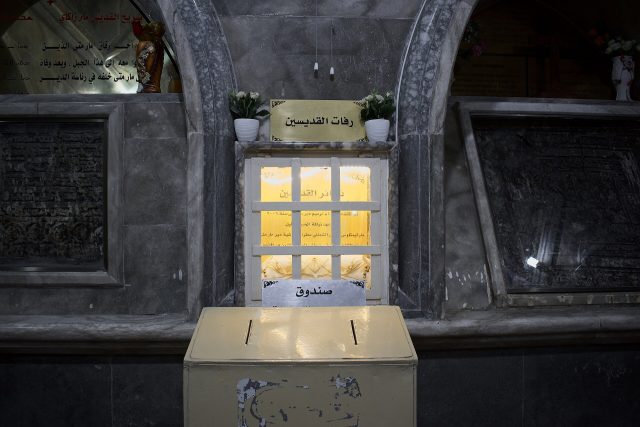
Al-Askari Mosque in Bashika is one of those places that doesn’t reveal itself at first glance but lingers in the mind long after you’ve left. This small town in northern Iraq, just a short distance from Mosul, rarely appears on tourist itineraries, yet it holds a quiet history woven into its stones and the lives of those who have passed through. The mosque itself is unassuming, its walls built from local stone that has weathered into warm, golden hues, especially striking in the late afternoon light. The slender minaret, slightly tilted as if leaning into the wind, is a familiar sight in this part of the world. Inside, the space is modest, free of ornate decoration but rich with the kind of warmth that comes from worn carpets, wooden beams, and the soft glow filtering through narrow windows. Unlike the crowded shrines of Najaf or Karbala, Al-Askari offers something rarer: silence.
The mosque’s story is inseparable from Bashika’s own, a town that has long been a crossroads of cultures and faiths. Over the centuries, this land saw caravans pass through, while Kurds, Arabs, and Yazidis lived side by side, sharing traditions and beliefs. Al-Askari likely dates back to the Ottoman era, though its exact origins are lost to time. For the people here, the mosque’s age matters less than its role as a place of gathering, prayer, and reconciliation—a constant in a region where borders and rulers have shifted endlessly.
Bashika has seen its share of upheaval. During the war with ISIS, the town found itself on the front lines, and many of its buildings, including mosques, were damaged. Al-Askari survived, though not unscathed. After the city’s liberation, locals restored it with their own hands, brick by brick, as if rebuilding not just a structure but a sense of normalcy. Today, the mosque is open again, a quiet testament to the resilience of those who refused to let conflict erase everything they held dear.
The surrounding landscape is just as compelling. Bashika is nestled among low hills, their sparse vegetation giving way to distant mountains where ancient settlements once hid. The town itself retains old quarters with narrow streets and houses built from the same stone as the mosque. There’s no grandeur here, just the quiet rhythm of life carrying on, undeterred by the weight of history.
Visiting Al-Askari offers a different perspective on Iraq—one far removed from the images often seen in the news. There’s no opulence like in Najaf or Karbala, no bustle like in Baghdad. Instead, there’s a town where time seems to slow, where people greet strangers with cautious but genuine hospitality. The mosque, in this context, is more than a place of worship; it’s a symbol of endurance, a reminder that life persists even in the hardest of times.
If you find yourself in Bashika, take your time. Wander the streets, step into the small shops selling spices and dried fruits, and if you can, strike up a conversation with the locals. Someone might share a story about the mosque that you won’t find in any guidebook. Then, step inside, sit on one of the carpets, and listen. In the stillness, you’ll hear the echoes of those who prayed here before you—and those who will long after you’re gone.