Perched on the slopes of Mount Maqlub, a short distance northeast of Mosul, the Monastery of Mar Mattai feels like a place where time has settled into stillness. It is one of the oldest active Christian sanctuaries in the Middle East, its origins stretching back to the fourth century. According to tradition, the monastery began as a refuge for a Syrian monk named Mattai, who fled persecution in the Roman Empire. Over the centuries, his humble cell grew into a monastic complex, becoming a spiritual heart for the Syriac Orthodox community. Today, Mar Mattai stands not just as a pilgrimage site but as a rare surviving example of early Christian architecture in this part of the world.
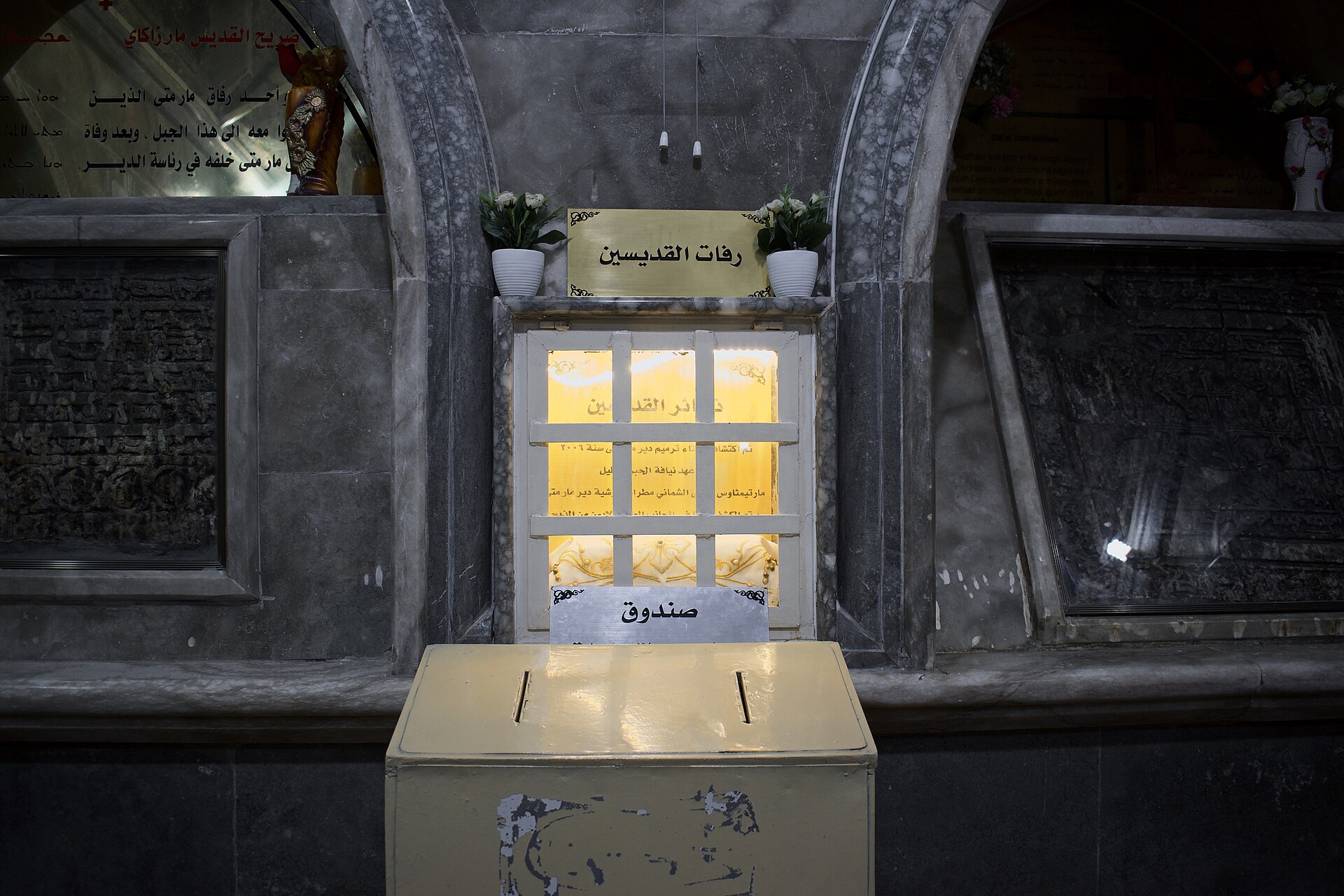
The church itself is unassuming, its rough stone walls blending into the rocky hillside as if carved from it rather than built upon it. The thick masonry, low vaulted ceilings, and narrow windows speak of an era when monasteries served as both places of worship and fortresses. Inside, faded frescoes depict scenes from the lives of Christ and the saints, their colors softened by centuries of dust and neglect. Some have been damaged, their details lost to time or human hands, yet the atmosphere remains undiminished. The quiet, the dim light filtering through small openings, and the scent of ancient stone create a sense of stepping into another age.
For much of its history, Mar Mattai was far from isolated. During the Middle Ages, it thrived as a center of Syriac Christian scholarship, where monks copied and translated religious texts, maintaining ties with other monasteries across the region. Even under Ottoman rule, when its influence waned, the monastery endured. Local Christian families, though dwindling in number, continued to visit, preserving its legacy even as the world around it changed. In recent decades, the monastery has faced wars and occupation, yet each time, it has been reclaimed, if not fully restored to its former prominence.
Reaching Mar Mattai is not a journey for the faint-hearted. The road winds through the mountains, passing half-abandoned villages and the occasional Yazidi settlement. Bashika, the nearest town, moves at its own unhurried pace. The market bustles with vendors selling fresh produce and spices, old men sip tea beneath the shade of plane trees, and children chase each other through the dusty streets. Few tourists make the trip, and those who do are usually drawn not by the promise of photographs but by something less tangible—a connection to a history older than most nations.
Inside the church, a handful of icons and ancient manuscripts are displayed, but the true draw is the place itself. In summer, the thick stone walls keep the interior cool despite the heat outside. In winter, snow often blankets the paths leading to the monastery, turning the journey into a quiet pilgrimage. On feast days, particularly Easter, the church comes alive with worshippers arriving from Mosul, Baghdad, and even farther afield. Services are conducted in Syriac, a language that has echoed within these walls for over fifteen hundred years. For many, attending is less about ritual and more about reconnecting with a past that feels both distant and deeply personal.
Mar Mattai is more than an architectural relic; it is a testament to how Christianity took root in these lands long before the rise of Islam. There is no gilded opulence here, no soaring domes or grand mosaics like those found in European cathedrals or Byzantine churches. Instead, there is a quiet authenticity. Every stone, every crack in the wall carries a story—of faith, survival, and continuity. In a region where so much has been lost or transformed, the monastery endures as a reminder that some things outlast empires, wars, and the relentless march of time. It is a place where the past is not just remembered but still very much alive.