- Home
- Mesopotamia
- Bashika

Bashika
Mesopotamia · 7 places
Photo: Jumaaluqman, CC BY-SA 4.0
Bashika is one of those quiet places that rarely makes it into guidebooks, and that’s precisely what makes it special. Tucked into the foothills of northern Iraq, where rolling green slopes give way to rocky ridges, the air carries the scent of wild herbs and woodsmoke from kitchen fires. There are no crowded tourist trails here, just the occasional call of a shepherd or the distant jingle of sheep bells. Life moves at its own unhurried pace, where days blend into one another in a way that feels almost timeless. It’s the kind of place where you can sit on a low stone wall and watch the light change over the hills without anyone rushing you along.
The land around Bashika is a patchwork of vineyards and olive groves stretching toward the horizon. Farming has shaped life here for generations, and you can still find old stone presses where olives are crushed the way they have been for centuries. Winemaking is just as much a part of the rhythm of the place—grapes grown on the sun-drenched slopes produce rich, full-bodied wines that find their way beyond Iraq’s borders. When harvest season arrives, the streets fill with the sweetness of ripe fruit, and the markets overflow with figs, pomegranates, and walnuts still warm from the sun.
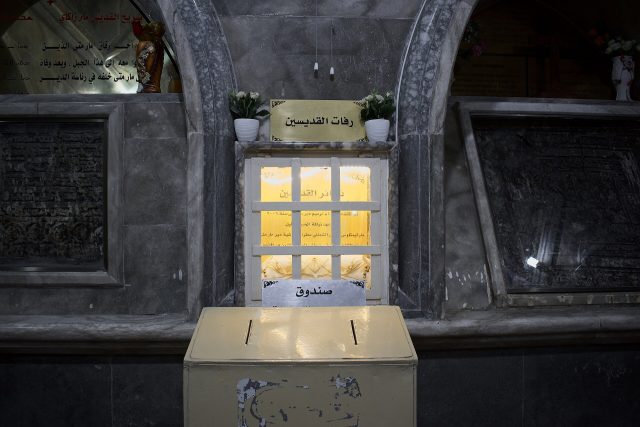
What sets Bashika apart is the way different communities have lived side by side for so long. Assyrian Christians, Yazidis, and Muslims share the same streets, the same markets, the same quiet routines. The town is dotted with ancient churches and shrines, some dating back to the early Middle Ages. One of the most striking is the monastery of Mar Mattai, perched on a hill where the valley unfolds below. It’s said that a Christian hermit lived here in the 4th century, and standing in the cool stone silence of the church, it’s easy to believe that time has barely moved forward since then.
Evenings in Bashika are slow and unassuming. The central square fills with people—some sipping cardamom-spiced coffee, others hunched over backgammon boards, children darting between them. Small cafés serve fresh bread still warm from the oven, and in the side streets, potters shape clay or weavers work at their looms. There are no luxury hotels or high-end restaurants, but there’s a kind of warmth here that doesn’t come with a price tag. Strangers are offered tea before they’ve even asked for directions, and conversations start easily, whether you speak the language or not.
For all its quiet, Bashika carries the weight of history in its bones. The surrounding hills are scattered with the ruins of ancient settlements, and the local museum holds artifacts that whisper of civilizations long gone. But the town doesn’t try to be anything other than what it is—a place where life is lived simply, where the past lingers without demanding attention. It’s not the Iraq you see in headlines. It’s the one that exists beyond them, where the days pass like the slow turning of pages in a book no one’s in a hurry to finish.
See & Do
7 places

Places on the map
Marker colour follows the categoryClimate and weather
Detailed weather: Bashika- Average temperature
- 21 °C
- Precipitation per year
- 419 mm
Average air temperature
°C
8
9
13
19
25
31
34
34
29
22
14
9
Jan
Feb
Mar
Apr
May
Jun
Jul
Aug
Sep
Oct
Nov
Dec