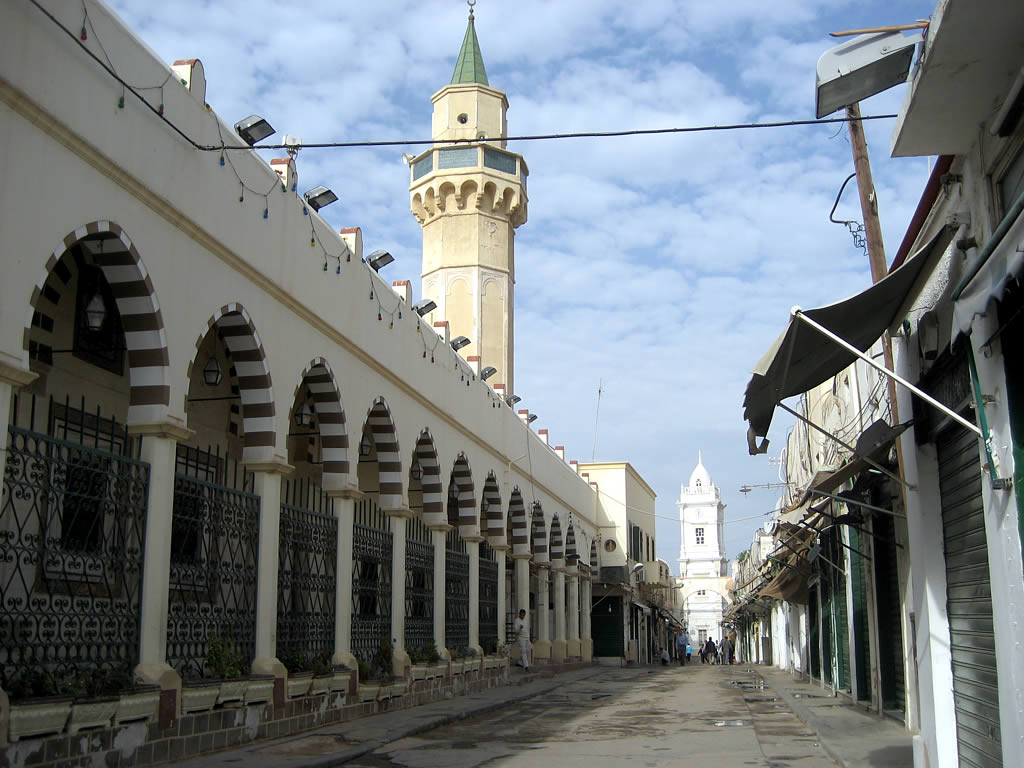
Tripoli’s old city is a maze of narrow alleys where the past lingers in the shadows of crumbling walls and arched doorways. Among these quiet corners stands the Karamanli Madrasa, a building that carries the weight of centuries without drawing much attention to itself. Unlike the grand mosques or fortified palaces that dominate the skyline, this modest structure tells a quieter story—one of learning, patronage, and the slow passage of time in a city that has seen empires rise and fall.
The madrasa was built in the 18th century under the rule of the Karamanli dynasty, a family that governed Tripoli for over a century, balancing Ottoman authority with local ambitions. The dynasty’s founder, Ahmad Karamanli, had seized power in 1711, and his descendants ruled until the Ottomans reasserted control in 1835. During this period, Tripoli flourished as a center of trade and culture, and the Karamanlis, eager to legitimize their rule, invested in public buildings that would reflect their piety and generosity. The madrasa was one such project, designed not just as a place of education but as a symbol of the dynasty’s commitment to Islamic scholarship.
Architecturally, the Karamanli Madrasa is unassuming compared to the ornate mosques of the same era. Its facade is simple, with a plain stone entrance framed by a modest arch, though closer inspection reveals the careful craftsmanship typical of Ottoman-influenced design. Inside, the courtyard is the heart of the building—a rectangular space open to the sky, surrounded by a two-story arcade of pointed arches supported by slender columns. The walls are lined with small rooms, once used as student cells, where young men would have lived and studied under the guidance of scholars. The mihrab, the niche indicating the direction of Mecca, is set into the qibla wall of the prayer hall, its design understated but precise, a reminder of the building’s primary purpose.
For much of its history, the madrasa functioned as an institution of religious education, following the traditional Islamic curriculum that included Quranic studies, jurisprudence, grammar, and logic. Students from Tripoli and beyond would have gathered here, some traveling great distances to study under respected teachers. The madrasa was more than just a school; it was part of a broader network of learning that connected Tripoli to other centers of Islamic thought, from Cairo to Fez. The Karamanlis, like many rulers before them, understood that supporting such institutions was a way to cultivate loyalty, spread influence, and ensure the continuity of their legacy.
Over time, the madrasa’s role evolved. By the 19th century, as Ottoman rule tightened and European powers began to exert greater influence in North Africa, the old systems of patronage and education faced new challenges. The madrasa continued to operate, but its significance waned as modern schools and administrative reforms took hold. When Libya gained independence in the 20th century, the building was no longer a center of learning but a relic of a bygone era, its classrooms empty, its courtyard quiet. Today, it stands as a testament to a time when Tripoli was a crossroads of trade and ideas, a place where merchants, scholars, and rulers shaped the city’s identity.
Walking through the madrasa today, it’s easy to imagine the sounds that once filled its spaces—the murmur of students reciting texts, the call to prayer echoing from the minaret, the footsteps of scholars pacing the courtyard. The building has survived wars, colonial rule, and the passage of time, though not without scars. Some of the stonework is worn, the plaster peeling in places, and the once-vibrant tiles that may have adorned the walls are long gone. Yet there’s a resilience in its simplicity, a sense that the madrasa has endured not because it was grand, but because it was necessary.
The Karamanli Madrasa is not a place that draws crowds. There are no guided tours, no gift shops, no grand restorations to attract visitors. It exists quietly, almost unnoticed, in the shadow of more famous landmarks. But for those who take the time to step inside, it offers a glimpse into Tripoli’s layered history—a history that isn’t just about conquests and empires, but about the everyday lives of people who studied, prayed, and lived within these walls. In a city that has seen so much change, the madrasa remains a steady presence, a reminder of the enduring power of learning and faith.