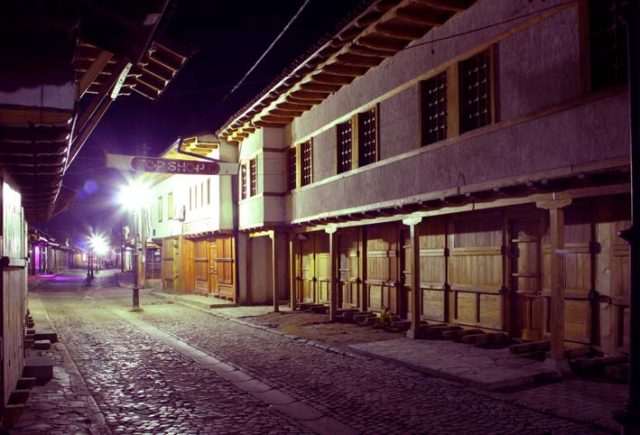
Đakovica’s Hadum Mosque stands quietly in the heart of the old town, a place where time seems to move at its own pace. Built in the late 16th century, it’s one of the oldest surviving Ottoman structures in Kosovo, though its history hasn’t always been peaceful. The mosque has witnessed centuries of change—from the rise and fall of empires to the more recent upheavals that reshaped the Balkans. Its walls, made of local stone, carry the marks of time, with patches of worn plaster and weathered carvings that hint at the hands of craftsmen long gone.
The architecture is classic Ottoman, with a single domed prayer hall and a slender minaret rising above the surrounding rooftops. Inside, the space is simple but carefully proportioned, with a mihrab niche pointing toward Mecca and a wooden mimbar where the imam once delivered sermons. The ceiling is painted in soft, faded patterns, a reminder of the mosque’s former grandeur before years of neglect and damage took their toll. During the Kosovo War in the late 1990s, the building suffered significant harm, but restoration efforts have since brought it back to a state where visitors can still sense its original purpose.
What makes Hadum Mosque particularly interesting is its role in the community beyond just a place of worship. For centuries, it was part of a larger complex that included a madrasa, a library, and a public fountain—all now gone, but their absence leaves traces in the layout of the surrounding streets. The mosque once stood at the center of Đakovica’s social and cultural life, a gathering point for scholars, merchants, and travelers passing through. Even today, the square in front of it remains a lively spot, especially in the evenings when locals sit on benches or in nearby cafés, watching the world go by.
The minaret, though modest in height, offers a vantage point over the town if you’re allowed to climb it. From above, Đakovica unfolds in a patchwork of red-tiled roofs, narrow alleys, and the occasional glimpse of the Accursed Mountains in the distance. The view is unassuming but telling—a town that has seen empires come and go, yet retains a quiet resilience. The mosque itself is no longer the grand centerpiece it once was, but its presence is still felt, especially during prayer times when the call to prayer echoes through the streets.
Visiting Hadum Mosque isn’t just about admiring its architecture; it’s about stepping into a layer of Kosovo’s past that isn’t always visible in guidebooks. The town around it is a mix of Ottoman-era houses, communist-era apartment blocks, and newer construction, reflecting the many phases of its history. Nearby, the old bazaar area still hums with activity, though much of it has shifted to modern shops. The mosque sits at the edge of this transition, a quiet witness to the changes that have swept through Đakovica over the centuries.
For those interested in history, the mosque offers a glimpse into the Ottoman period in Kosovo, a time when the region was a crossroads of cultures. The craftsmanship in the stonework and the remnants of the original decorations speak to a level of artistry that was once common in the empire’s provincial centers. While much of the original interior has been lost, the structure itself remains a testament to the durability of these buildings, even in the face of conflict and neglect.
Today, the mosque is open to visitors, though it’s worth remembering that it’s still an active place of worship. Dressing modestly and being respectful of prayer times is appreciated. There’s no grand entrance fee or tourist infrastructure—just a simple wooden door leading into a space that feels both sacred and lived-in. The caretaker, if you’re lucky enough to meet him, might share a few stories about the mosque’s past, though much of its history is left to the imagination.
Hadum Mosque isn’t the kind of place that draws crowds, and that’s part of its charm. It’s a reminder that history isn’t always about grand monuments or dramatic events; sometimes, it’s about the quiet persistence of a building that has seen generations come and go. In a region where the past is often overshadowed by more recent conflicts, places like this offer a chance to pause and consider the layers of time that shape a place. Đakovica may not be on every traveler’s itinerary, but for those who wander its streets, the mosque is one of those small discoveries that lingers in the memory.