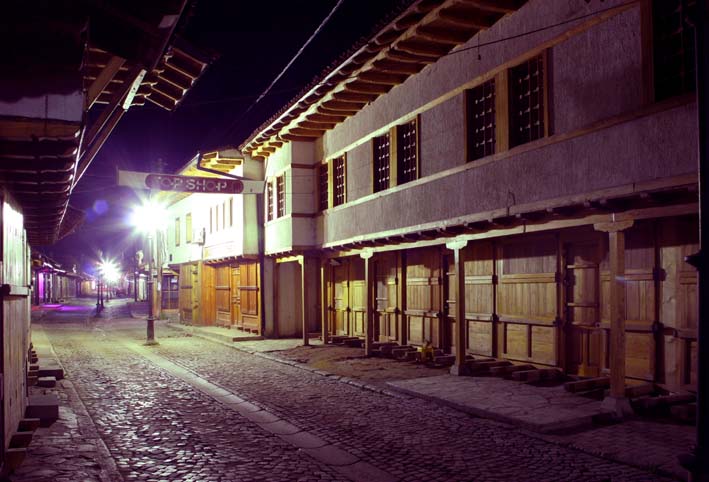
Đakovica’s bazaar is one of those places where time seems to move at its own pace, untouched by the rush of modern life. Nestled in the western part of Kosovo, this market has been the heart of the city for centuries, a place where trade, culture, and daily existence intertwine in a way that feels both ordinary and deeply significant. Unlike the polished tourist spots that often dominate travel guides, the bazaar in Đakovica is unpretentious—it doesn’t exist to impress visitors but to serve the people who have relied on it for generations. Walking through its narrow lanes, you get the sense that this is where the city’s soul resides, in the quiet persistence of tradition amid the hum of everyday activity.
The origins of the bazaar stretch back to the Ottoman era, when Đakovica was a small but strategically important town along trade routes connecting the Adriatic coast with the interior of the Balkans. The Ottomans, who ruled the region for over four centuries, left an indelible mark on its architecture and urban layout, and the bazaar is one of the most visible remnants of that period. The low, whitewashed buildings with their wooden shutters and overhanging eaves were designed to provide shade in the summer and shelter from the rain, creating a microclimate that made the market a comfortable place to linger even in harsh weather. Some of these structures have been standing for hundreds of years, their walls bearing the weight of countless transactions, conversations, and stories.
What makes Đakovica’s bazaar distinct is its role as a living archive of the city’s social and economic life. Unlike larger, more commercialized markets in the region, this one has retained its local character. Here, you won’t find rows of identical souvenir stalls or vendors hawking mass-produced trinkets. Instead, the bazaar is a patchwork of small shops and workshops where artisans and traders sell goods that reflect the needs and tastes of the community. Blacksmiths still shape iron in open-air forges, tailors stitch clothing by hand, and cobblers repair shoes with the same tools their grandfathers used. The scent of freshly baked bread mingles with the sharp tang of spices, while the rhythmic clatter of metalwork and the murmur of bargaining voices create a soundtrack that feels both timeless and immediate.
The market is also a place where the past and present coexist in unexpected ways. While some trades have faded—like the once-thriving trade in handwoven textiles or the production of traditional copperware—others have adapted to changing times. You might still find a shop selling handmade filigree jewelry, a craft that dates back to the Ottoman period, but next door, a vendor could be selling mobile phone accessories or cheap plastic goods imported from elsewhere. This blend of old and new is part of what gives the bazaar its character. It’s not a museum piece but a place where life is lived in real time, where the demands of modernity brush up against the weight of history without either fully erasing the other.
One of the most striking aspects of the bazaar is its layout, which has remained largely unchanged for centuries. The market is organized around a central thoroughfare, with smaller alleys branching off like veins, each dedicated to a particular trade. The butchers’ row, the spice sellers’ quarter, the area where farmers bring their produce—all of these have their designated places, a spatial logic that reflects the way the market has grown organically over time. This organization isn’t just practical; it’s a reflection of the social order that has governed the bazaar for generations. Certain families have controlled specific trades for decades, passing down skills and customer relationships from one generation to the next. Walking through these lanes, you can almost sense the invisible threads of kinship and tradition that hold the place together.
The bazaar isn’t just a place for commerce; it’s also a social hub where people gather to exchange news, gossip, and opinions. In a region where community ties run deep, the market serves as an informal town square, a place where the rhythms of daily life unfold in public view. Old men sip strong Turkish coffee at tiny cafés tucked into the corners of the market, debating politics or reminiscing about the past. Women in headscarves haggle over the price of vegetables, their voices rising and falling in a dance of negotiation. Children dart between stalls, their laughter adding a layer of energy to the scene. Even in the quieter moments, when the midday sun drives most people indoors, the bazaar retains a sense of latent vitality, as if waiting for the next wave of activity to sweep through.
For outsiders, the bazaar offers a glimpse into a way of life that is increasingly rare in a globalized world. There’s no grand spectacle here, no carefully curated experience designed to entertain tourists. Instead, what you find is something far more authentic: the unvarnished reality of a place where people work, trade, and live much as they have for centuries. The market’s charm lies in its imperfections—its uneven cobblestones, its slightly crooked buildings, the way the light filters through the gaps in the awnings to cast shifting patterns on the ground. It’s a place that rewards patience and observation, where the most interesting discoveries often come from simply wandering without a fixed destination.
That said, the bazaar isn’t frozen in time. Like any living place, it has had to adapt to the challenges of the modern era. The wars of the 1990s left their mark on Đakovica, and the bazaar was not spared. Some buildings were damaged, and the market’s role as a center of trade was disrupted for a time. Yet, in the years since, it has slowly rebuilt itself, much like the city around it. The resilience of the bazaar is a testament to the people who depend on it, who have worked to restore not just its physical structures but its spirit. Today, it stands as a symbol of Đakovica’s ability to endure, a place where the past is honored but not allowed to overshadow the present.
Visiting the bazaar is less about ticking off a list of sights and more about immersing yourself in the flow of daily life. There’s no single attraction to seek out, no must-see monument that defines the experience. Instead, the market reveals itself gradually, through small moments—a shared joke between a vendor and a customer, the way a shopkeeper carefully wraps a purchase in brown paper, the sight of an elderly woman pausing to rest on a bench, her basket of groceries beside her. These are the details that make the bazaar feel real, that connect it to the broader story of Đakovica and the people who call it home.
If you do find yourself in Đakovica, the bazaar is worth exploring not because it’s grand or famous, but because it offers something far more valuable: a sense of place. It’s a reminder that the most meaningful travel experiences often come from engaging with the ordinary, from stepping into a world that operates on its own terms. The market doesn’t ask for your admiration; it simply exists, as it has for centuries, a quiet but enduring presence at the center of the city’s life. And in that quiet persistence, there’s a kind of beauty that’s hard to find anywhere else.