The Sinan Pasha Mosque in Banská is one of those places that doesn’t immediately demand attention but lingers in the mind long after you’ve left. It sits quietly on a small rise, as if watching over the unhurried life of the town below, where the streets are rarely loud and time moves at its own pace. Built in the early 17th century, the mosque carries the echoes of the Ottoman era, when this land was part of an empire stretching from the Balkans to the Middle East. Today, it’s less a center of worship and more a monument to the layered history of a region where cultures, religions, and human stories have intertwined over centuries.
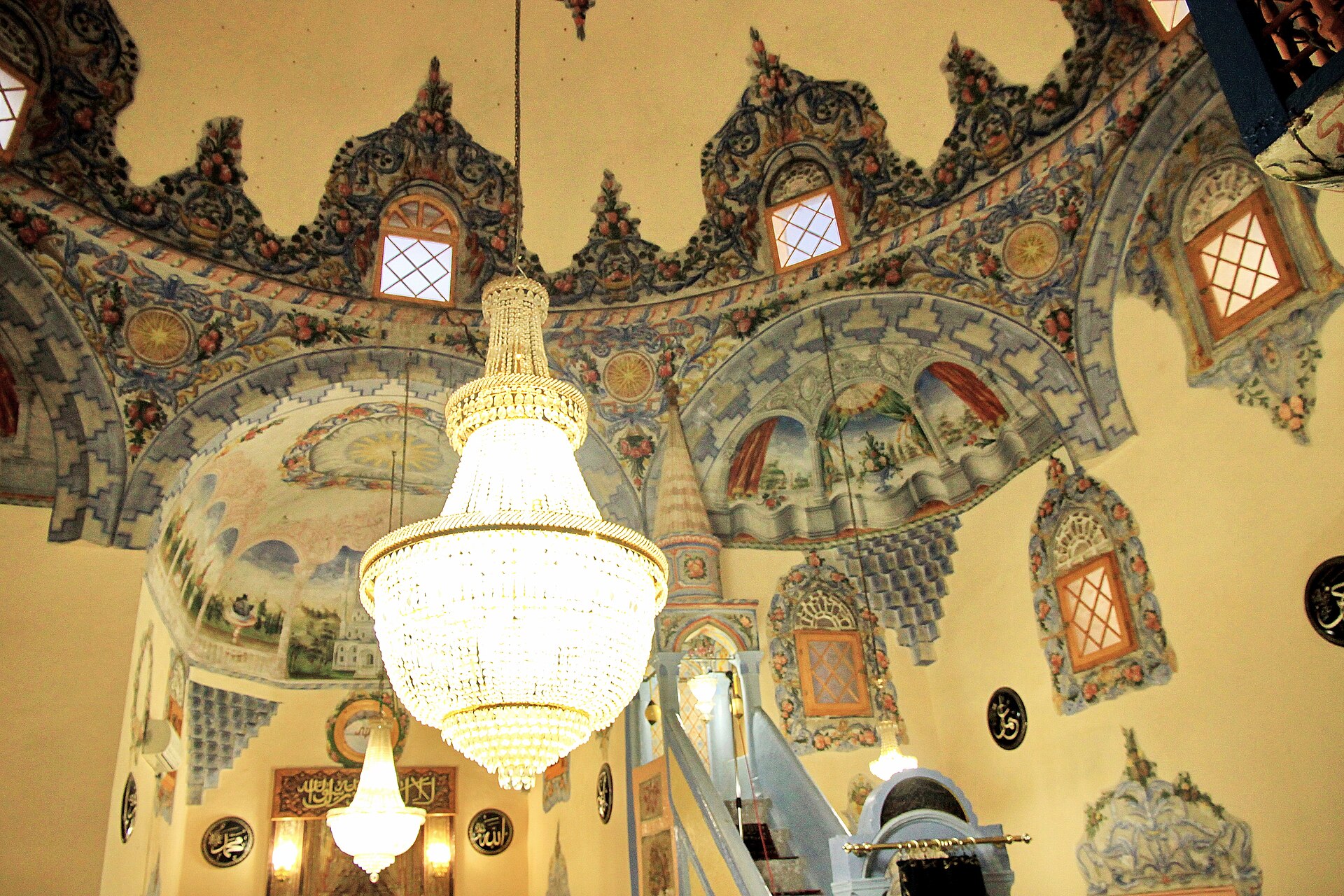
The architecture is simple and functional, much like many Ottoman provincial mosques of its time. A square building with a low dome, a single minaret rising from the side—these are the familiar elements of a style designed for practicality rather than grandeur. Inside, the space is unadorned: the walls bear only a few Arabic calligraphic inscriptions, and the floor is covered with worn carpets that have likely seen generations of worshippers. Light filters through narrow windows, casting a soft, muted glow that invites quiet reflection. There’s none of the opulence of Istanbul’s great mosques here, but there’s something more intimate, as if the building has always been a natural part of daily life rather than a spectacle.
The mosque takes its name from Sinan Pasha, an Ottoman military leader and statesman, though little is known about his direct connection to this place. His name serves more as a symbol than a personal legacy, a reminder of the empire’s reach into these lands. What matters more is the mosque’s role as a silent witness to the changes that have swept across the Balkans over the centuries. It has endured wars, shifting borders, economic upheavals, and periods of relative peace. When Kosovo was part of Yugoslavia and later when it gained independence, the mosque remained, a constant presence for the local Muslim community, adapting without fanfare to each new chapter of history.
Banská itself is a small town where life moves slowly. The Sinan Pasha Mosque isn’t a tourist attraction in the conventional sense—it’s simply part of the landscape, woven into the fabric of everyday existence. On Fridays, worshippers gather for midday prayers, but on other days, the area is quiet. Occasionally, you might see elderly men sitting on a bench by the entrance or children playing in the nearby street. This is the quiet charm of such places: they don’t try to impress, they just exist, a living reminder that history isn’t always dramatic or loud, but it’s always present.
For visitors to Banská, the mosque might seem unremarkable compared to Kosovo’s more famous landmarks. But that’s precisely its appeal. There are no crowds, no souvenir stalls, no guides vying for attention. You can stand at the entrance, listen to the silence, and look at the weathered stones that have held this building together for centuries. It’s a place to think about the countless people who have passed through its doors, the prayers offered under its dome. In an age where travel often becomes a race to capture the perfect photo for social media, places like this remind us that sometimes the most meaningful experiences aren’t about seeing, but about feeling.
Kosovo’s history is complex, and the Sinan Pasha Mosque is one of its quiet symbols. It represents a part of the Balkan heritage where Muslim and Christian cultures have coexisted for centuries, sometimes in harmony, sometimes in conflict, but always leaving traces that can’t be erased. In that sense, the mosque is more than just a building—it’s a thread in a much larger historical tapestry, where every detail matters. It shows how even in small towns, far from capital cities and tourist trails, there are places that hold the memory of the past.
If you find yourself in Banská, take a moment to pause. Step inside if the door is open, or simply sit on the bench nearby and watch the sun dip behind the minaret. Maybe here, in this unassuming place, you’ll feel what so many travelers seek: a connection to history, to the people who came before us, and to those who will come after. The Sinan Pasha Mosque won’t change your view of the world, but it might make you reflect on how fragile and enduring human memory can be.