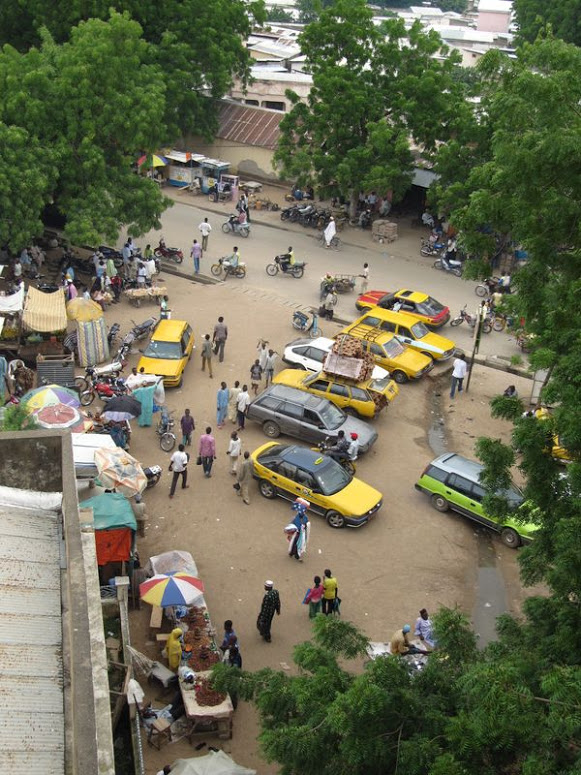
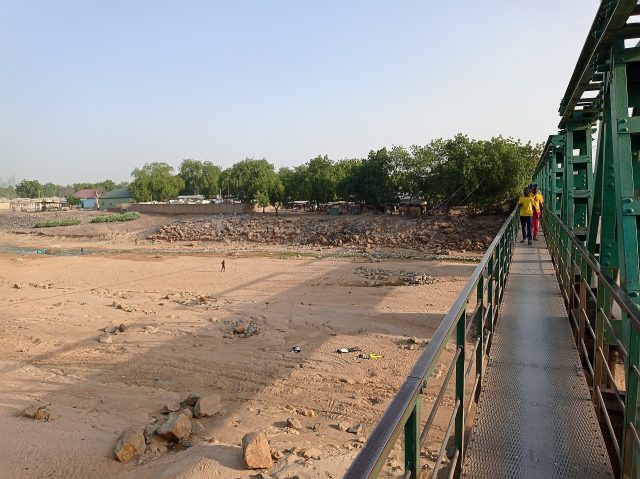
Maroua’s central mosque doesn’t stand out with domes or marble. It sits on a low hill in the city’s heart, surrounded by clay-walled houses and streets where life moves at the pace of northern Cameroon. The building is made from local earth and stone, its minaret resembling a watchtower. It doesn’t demand attention—it belongs here, part of daily life for those who pray within its walls.
The mosque’s history is tied to Maroua’s past. The city began in the 18th century as a Fulani settlement, a nomadic people who brought Islam and their building traditions to the region. Maroua grew as a trading hub, connecting the Sahel with Central Africa’s forests. The mosque likely appeared soon after the city’s founding. Clay is fragile, so the structure has been rebuilt many times, always keeping its original form. Today, it looks much as it did two centuries ago.
Its architecture is Sahelian: a rectangular building with a flat roof and a square minaret. Inside, the packed-earth floor is covered with woven mats, and the walls bear simple geometric patterns. These designs come from Fulani art, where shapes carry meaning—triangles for mountains, diamonds for fertility. The mosque has no electricity; light enters through small, high windows. On hot days, the clay walls keep the interior cool. During rain, the sound of droplets fills the space.
For locals, the mosque is the center of community life. On Fridays, men gather for midday prayers, staying afterward to talk or negotiate. Women pray in the courtyard or designated areas. During Ramadan, the mosque comes alive at night with special prayers and communal iftar meals. The surrounding area becomes a market, with vendors selling dates, flatbreads, and tea. Children play between the stalls, waiting for food.
This mosque reflects how Islam arrived here—not through conquest, but with traders and herders. Unlike the grand mosques of North Africa, this one blends with local traditions. During festivals like Eid al-Adha or Mawlid, prayers in Arabic mix with songs in Fulfulde and Hausa. Religion here isn’t separate from daily life; it’s part of the city’s rhythm.
For travelers, the mosque shows Islam beyond guidebook images. There are no tourists, no rules about shoes or head coverings. Visit in the quiet hour before sunset, when the call to prayer has ended and the last worshippers leave. The air smells of damp earth and woodsmoke. The minaret’s shadow stretches across the square. You might sit on a bench, watching boys play football or elders move pebbles in a mancala game.
This isn’t a tourist attraction. There are no guided tours or plaques. That’s why it’s worth seeing. The mosque isn’t meant to be observed—it’s meant to be experienced. If you’re in Maroua, you’ll find it on its hill, a silent witness to centuries of life. Sometimes, the quietest places hold the deepest stories.