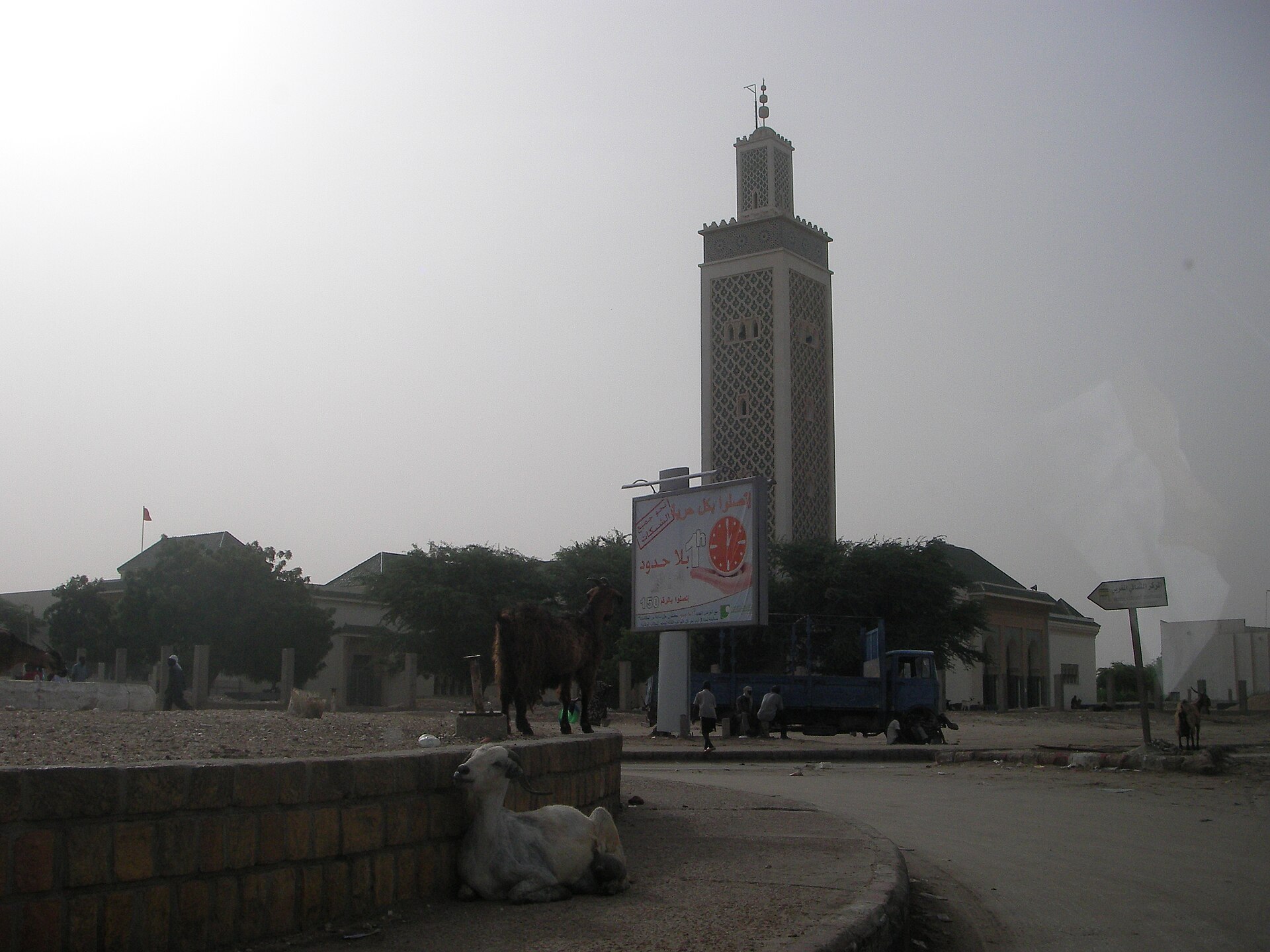
Nouakchott’s Moroccan Mosque is the kind of place that doesn’t announce itself with grand gestures. It stands quietly at the intersection of cultures, where African traditions meet Arab influences, and where simplicity carries a depth that isn’t always obvious at first glance. Built in the mid-20th century, the mosque became more than just a religious center—it grew into an architectural landmark that reflects the spirit of Mauritania’s early years of independence, a time when the country was navigating its identity between heritage and modernity.
From the outside, the building appears unassuming, especially when compared to the towering mosques of other nations. But that very modesty is what makes it distinctive. Whitewashed walls, a modest minaret, and a traditional dome—everything here serves a purpose, designed for reflection rather than spectacle. Inside, the prayer hall is spacious and uncluttered, with carpets covering the floor and a mihrab pointing toward Mecca. There are no intricate mosaics or gilded patterns like those found in North African mosques, yet the space feels authentic in a way that more ornate structures sometimes don’t.
The mosque is deeply tied to Nouakchott’s history, a city that is itself relatively young. When Mauritania gained independence in 1960, this small fishing village was chosen as the new capital. The city expanded rapidly, and the mosque became one of its first significant buildings, symbolizing a new era. Funded with support from Morocco—hence its name—the mosque’s design still leans toward local traditions. It isn’t a replica of Moroccan architecture but rather an adaptation to the realities of the Sahara, built with materials and techniques suited to the climate and the way people live here.
For the local community, the mosque is more than just a place of worship. It’s a gathering point where daily life unfolds in its own rhythm. On Fridays, when the largest crowds gather, the area around the mosque comes alive with an impromptu market. Vendors sell dates, bread, and spices, while elders sit in the shade, exchanging stories. The atmosphere is unhurried, a contrast to the busier parts of the city. Even those who don’t practice Islam sometimes visit, drawn by the sense of calm and the chance to experience a different pace of life.
Over the decades, the mosque has evolved alongside the city. It has undergone several renovations, with additions like extra rooms for ablutions, a library, and guest quarters. The minaret was once shorter, and the dome had a simpler shape. These changes reflect not just the growth of the congregation but also the transformation of Nouakchott itself, which has expanded from a provincial town into a capital city with a population of half a million.
Architecturally, the mosque is a study in practicality. Its walls are made of clay bricks, which keep the interior cool during the scorching days, while the slightly sloped roof helps with the rare but heavy rains. Narrow windows minimize the intrusion of sand and dust, and inner courtyards allow for airflow. These elements make the mosque not just a spiritual space but also a functional one, perfectly suited to the desert environment.
Today, the Moroccan Mosque remains one of the few places in Nouakchott where the city’s past is still visible. Modern neighborhoods with high-rises and shopping centers have sprung up around it, yet the mosque retains the quiet, unhurried feel of old Sahara life. For visitors, it offers a rare glimpse into the city’s authentic character—no guided tours, no souvenir stalls, just the quiet rhythm of daily life. The only sounds are the call to prayer and the rustling of palm leaves in the breeze.
But the mosque isn’t a relic. It’s a living part of the community. In the mornings, elderly men gather for prayer and conversation. During the day, children attend Quranic lessons. In the evenings, especially during Ramadan, families come together for iftar. This constant hum of activity is what gives the mosque its soul. It’s not just a building; it’s a thread in the fabric of Nouakchott, where past and present, faith and daily life, tradition and change all come together. For those who seek more than just sights, it’s a place where real stories unfold.