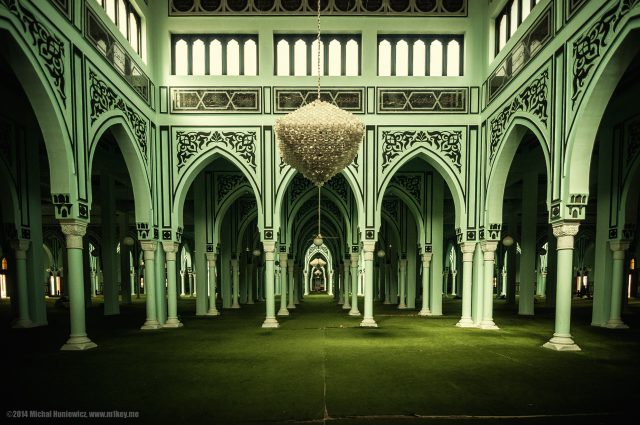
The Saudi Arabian Mosque in Nouakchott is one of those quiet places that doesn’t demand attention but lingers in the memory long after you’ve left. Tucked away at the intersection of streets where the city’s usual hum fades into the rhythm of prayer and everyday life, it stands as a subtle yet powerful presence. Funded by Saudi donors, the mosque is more than just a place of worship—it’s a symbol of Mauritania’s deep ties to the Arab world. Its architecture blends traditional Islamic elements with local influences, though the result leans more toward classic Middle Eastern styles than anything distinctly Mauritanian.
From the outside, the mosque is simple and unadorned: tall minarets, a cubic prayer hall clad in pale stone, and a spacious courtyard. There’s no excess here—no intricate tilework or ornate carvings like those found in the ancient mosques of the Maghreb. Instead, the design prioritizes space, light, and order. Inside, the walls are lined with marble, and the floors are covered in carpets, offering a cool respite from the scorching heat that often grips the city.
For locals, the mosque is far more than a religious site. It’s a gathering place where communities come together, news is shared, and conversations flow after prayers. In the courtyard, groups of men often linger, discussing everything from daily life to broader concerns. The women’s section, though separate, holds equal importance—it’s a space where women can connect, share experiences, and support one another. In a city where public life revolves around religious institutions, such places are vital.
The mosque’s history is intertwined with Nouakchott’s own transformation. When Mauritania gained independence in the mid-20th century, the city was little more than a small settlement centered around a French fort. As the population grew, so did the need for public spaces, and mosques began to appear across the city. The Saudi Arabian Mosque emerged later, during a period when Mauritania was strengthening its ties with Arab nations, and foreign-funded projects were becoming more common.
Architecturally, the mosque doesn’t stand out as unique, but that’s part of what makes it so representative of Nouakchott. The city is a patchwork of styles—modern buildings next to traditional mud-brick homes, wide boulevards giving way to narrow sandy lanes. Mosques here reflect this diversity, from Berber influences to Saudi-inspired designs. The Saudi Arabian Mosque is one such place where different eras and cultures intersect, quietly shaping the city’s identity.
Visiting the mosque offers a glimpse into the rhythm of life in a Nouakchott neighborhood. Around it, the pace slows: vendors sell dates and tea, children play in the dust, and elders sit in the shade, watching the world go by. Unlike the tourist-heavy mosques of Marrakech or Cairo, this one is free of crowds and souvenir stalls. It’s a place for locals, and that authenticity makes it all the more revealing of how the city truly lives.
While the mosque isn’t Nouakchott’s most famous landmark, it’s worth a visit if you’re already exploring the area. Time here moves differently—unhurried, deliberate, without the rush of modern cities. That might be its greatest appeal: a reminder that even in a world that’s constantly changing, there are still places where life slows down, if only for a moment.