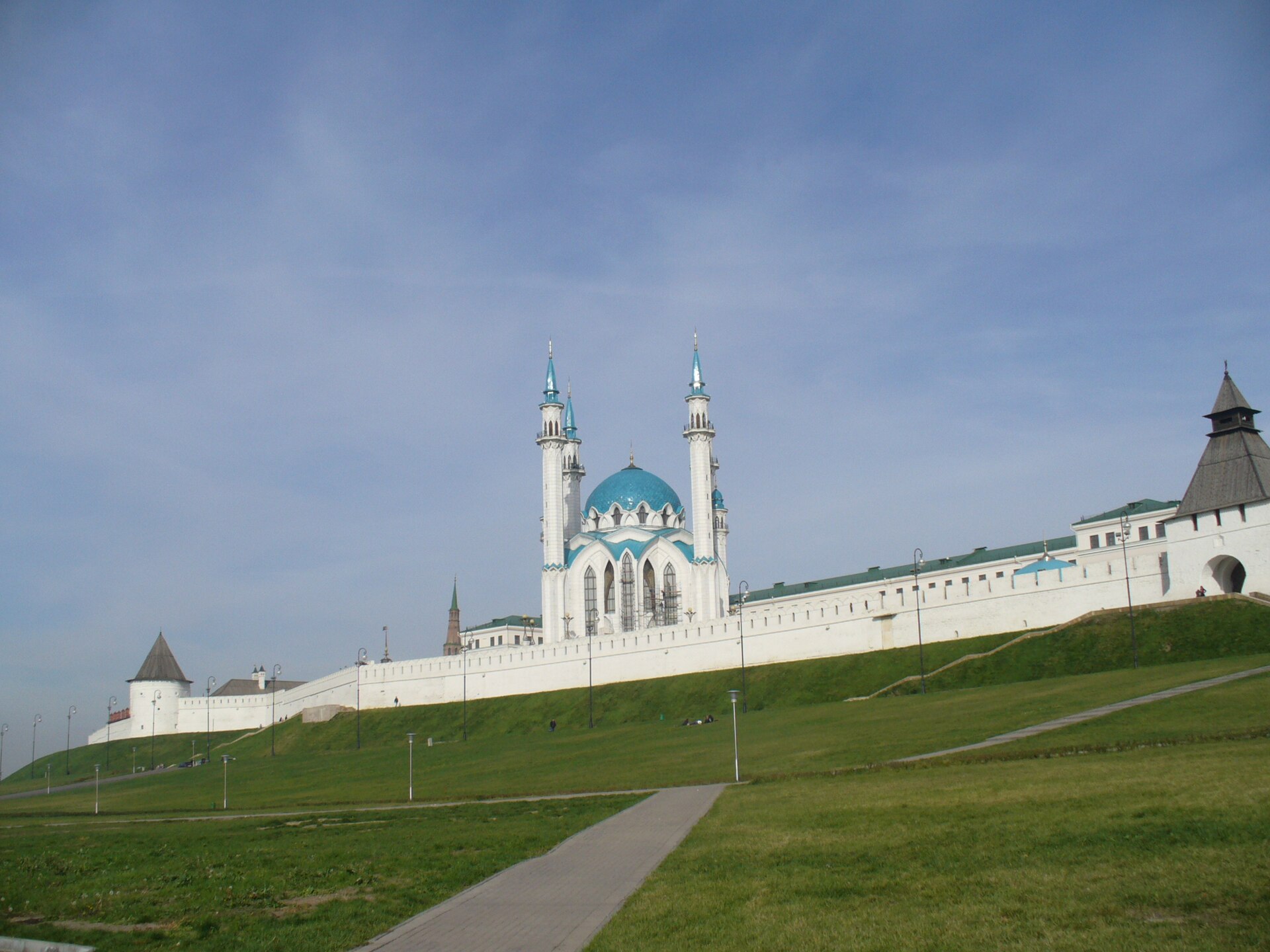
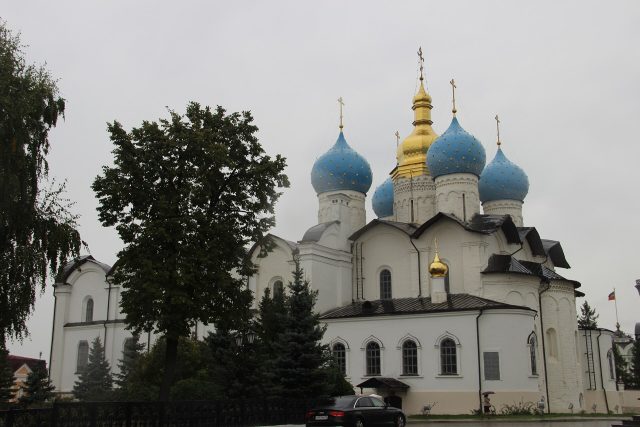
Kul Sharif Mosque stands as one of Kazan’s most recognizable landmarks, a striking presence within the city’s historic heart. Its white domes and towering minarets rise above the Kazan Kremlin, a fortress where layers of history and culture have intertwined for centuries. The mosque isn’t just a place of worship—it’s a living symbol of the city’s enduring spirit, where the past and present coexist in quiet harmony.
The story of Kul Sharif begins long before its modern incarnation. The original mosque, built in the 16th century, was named after Kul Sharif, the last imam of the Kazan Khanate, who died defending the city during Ivan the Terrible’s siege. That structure was destroyed, but its memory lingered in chronicles and local legends. When the decision was made to rebuild it in the early 2000s, architects drew from historical accounts and archaeological findings to recreate a monument that would honor that lost era. Completed in 2005, just in time for Kazan’s millennium celebrations, the mosque became a bridge to a time when the city was a thriving center of Tatar culture and Islamic scholarship.
The architecture of Kul Sharif is a blend of traditional Tatar motifs and classical Islamic design. Four slender minarets, each crowned with a dome, represent the cardinal directions, while the central dome dominates the skyline, its curves echoing the grandeur of historic mosques across the Islamic world. Inside, the space feels both vast and intimate. Delicate carvings adorn the columns, and sunlight filters through stained-glass windows, casting intricate patterns of light and shadow across the marble floors. The mihrab, the niche pointing toward Mecca, is a masterpiece of calligraphy, its verses from the Quran rendered in flowing Arabic script. The prayer hall can accommodate thousands, yet it retains a sense of warmth and reverence.
Beyond its religious significance, Kul Sharif serves as a cultural hub. The mosque hosts exhibitions on Islamic art, lectures on Tatar history, and guided tours that offer visitors a deeper understanding of the region’s heritage. Its library holds rare manuscripts in Arabic, Tatar, and Russian, some of which date back centuries. For many, the mosque is more than an architectural marvel—it’s a place where faith, history, and art converge, inviting reflection and dialogue.
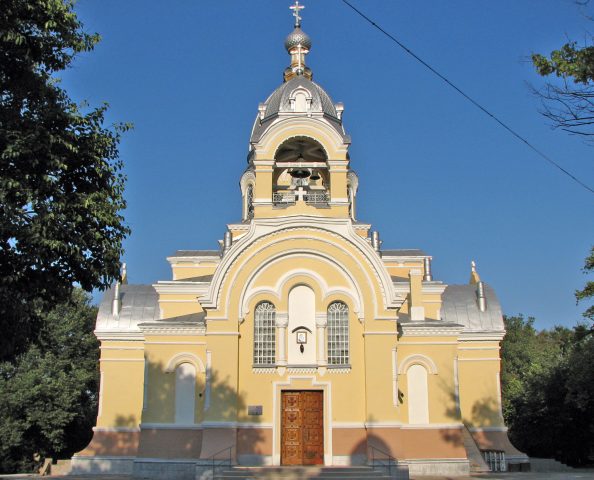
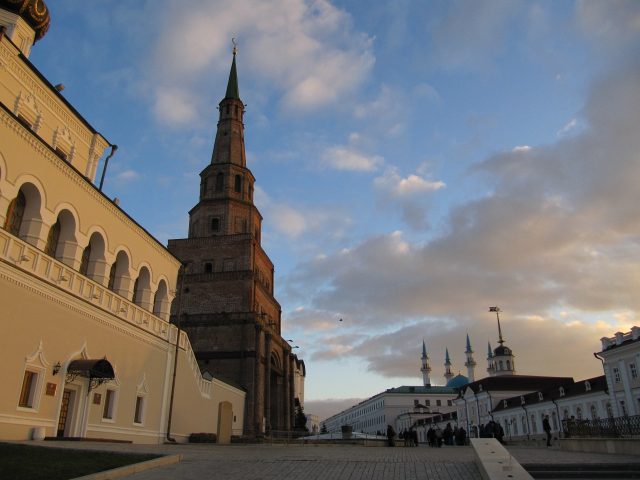
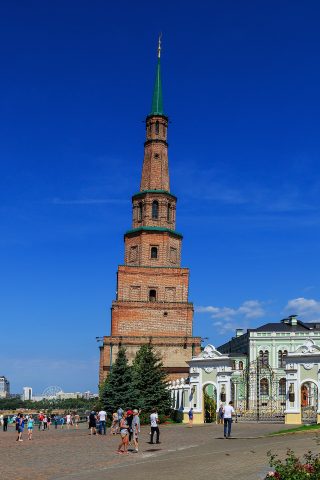
The mosque is set within the Kazan Kremlin, a sprawling complex that tells the story of the city’s evolution. Nearby stands the 16th-century Annunciation Cathedral, its golden domes a counterpoint to Kul Sharif’s white minarets. A short walk away, the leaning Süyümbike Tower, one of Kazan’s most enigmatic landmarks, adds another layer to the narrative. Together, these structures create a living museum, where every stone seems to whisper tales of conquest, resilience, and coexistence.
What makes Kul Sharif truly special is its atmosphere. Unlike many tourist sites, it doesn’t feel crowded or rushed. Instead, there’s a sense of quiet dignity, as if the building itself is breathing in the centuries of history that surround it. Even those who don’t practice Islam can appreciate the craftsmanship and the reverence embedded in every detail. The mosque doesn’t just stand in the Kremlin—it belongs to it, a seamless part of Kazan’s identity.
The seasons transform Kul Sharif in subtle ways. In winter, its white walls and domes stand out against the snow-covered Kremlin, creating a scene that feels almost otherworldly. Spring and summer soften the landscape, with greenery framing the mosque and sunlight dancing across its stained glass. Autumn turns the surrounding trees to gold, and the building seems to glow from within. No matter the time of year, the mosque remains a constant, a place that draws people back again and again.
For many in Kazan, Kul Sharif is more than a landmark—it’s a piece of their heritage. It represents the resilience of Tatar culture, the enduring power of faith, and the city’s long tradition of openness. Today, the mosque continues to play a vital role in Kazan’s life, welcoming people of all backgrounds. It’s a place where history is not just remembered but lived, where the past and present meet in quiet conversation. In that sense, Kul Sharif is more than a building—it’s a testament to the idea that a city’s soul is shaped by the stories it chooses to preserve.