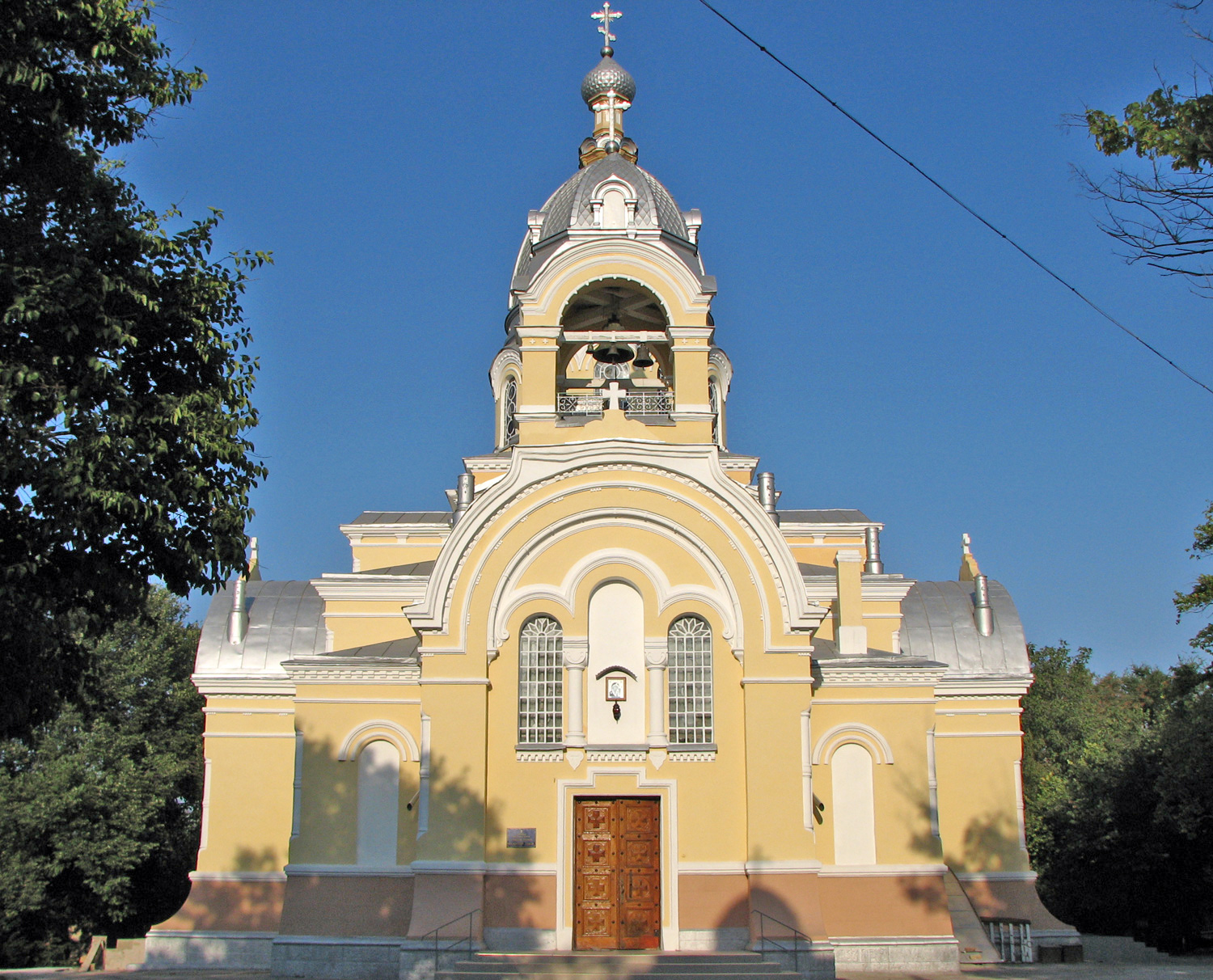
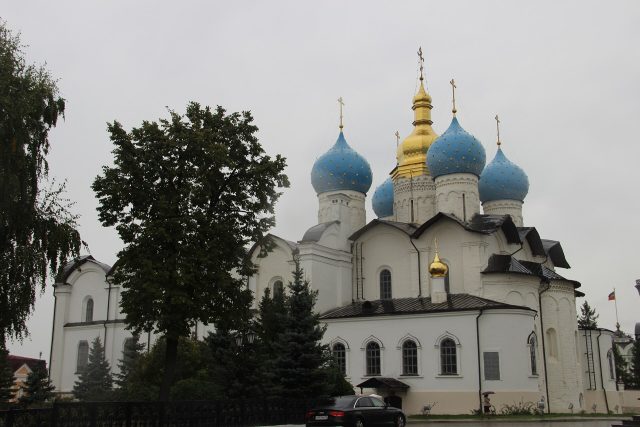
Kazan Cathedral in Feodosia is one of those rare places where history isn’t just recorded in books or remembered through dates—it lingers in the very stones, in the way light filters through the stained glass, and in the quiet that settles between the footsteps of visitors. Perched on a gentle hill, the cathedral overlooks the city and the sea beyond, as if reminding those who pass by that faith and space have always been intertwined here. Though modest in size, its silhouette is unmistakable: white walls, domes crowned with crosses, and a bell tower that once called the faithful to prayer. Today, the crowds are smaller than in its heyday, but the atmosphere remains unchanged—calm, reflective, as though the cathedral holds not just the weight of the past but a quiet anticipation of what’s to come.
The cathedral’s construction began in the mid-19th century, a time when Feodosia was flourishing as a vital trading port. Merchants, sailors, and travelers from across the region converged here, and the growing Orthodox community needed a spiritual center of its own. Funded by local residents and benefactors, some of whom were prominent figures in Crimea’s history, the cathedral was built to serve both the townspeople and those passing through. Its architecture blends neoclassical elements with traditional Russian Orthodox design—clean lines on the exterior, arched windows, and an interior marked by high vaulted ceilings supported by columns. The iconostasis, crafted in the Orthodox tradition, stands as a testament to the skill of local artisans, its icons once central to the cathedral’s spiritual life.
The 20th century brought hardship to Kazan Cathedral, as it did to many places of worship. After the revolution, it was closed, and in the Soviet era, the building was repurposed as a warehouse, a club, and even a gym. The interior suffered greatly: icons vanished, frescoes were painted over, and some architectural details were lost. But in the 1990s, restoration began, and the cathedral gradually returned to its original purpose. Services are held here now, though less frequently than before. The interior is no longer what it once was, but surviving fragments of the frescoes and the iconostasis offer a glimpse into its former grandeur.
Feodosia has always been a crossroads of cultures—Greeks, Armenians, Tatars, and Italians have all called it home—and the Orthodox community, though just one of many, played a significant role in the city’s life. Kazan Cathedral became a place where lives intersected: merchants praying for safe voyages, fishermen seeking luck at sea, and townspeople finding solace in its walls. Even now, as Feodosia has changed, the cathedral remains a living part of its fabric, a reminder that a city is more than just buildings and streets—it’s the people who lived, believed, and left their mark here.
A small park surrounds the cathedral, a favorite spot for locals and visitors alike. In summer, it’s cool and shaded; in winter, it’s quiet, the city’s noise muffled by distance. From here, the sea is always visible, the same sea that has guided Feodosia’s people for centuries. The cathedral stands as if guarding this maritime horizon, just as it did when the city was a small but important port in the Russian Empire. It no longer plays a central role in Feodosia’s daily life, but its presence is still felt—a silent witness to change, neither demanding attention nor fading into obscurity.
Inside, the air is cool and slightly damp, especially on hot days. Light from the stained glass casts soft hues across the walls, and time seems to move differently here—slower, more deliberate. In one corner, old photographs capture services from years past, faces of long-gone parishioners who still seem present within these walls. Sometimes, artists come to sketch, or people simply sit in the quiet. The cathedral asks nothing of its visitors except respect for what it holds.
Kazan Cathedral is more than just an architectural landmark; it’s a place where history becomes tangible. You can touch the stones that remember the hands of the builders, hear the echo of footsteps from a century ago, and feel the breath of time, which, though relentless, isn’t always unkind. The cathedral doesn’t strive to be Feodosia’s main attraction, and that’s part of its charm. It exists quietly, not drawing unnecessary attention but not hiding from those who seek it out. Perhaps that’s why it draws people in—not with grandeur, but with authenticity, not with spectacle, but with humanity.
In recent years, the cathedral has found a new place in the city’s cultural life. Occasionally, it hosts concerts of sacred music, exhibitions of old photographs, and small lectures on Feodosia’s history. These events don’t turn it into a museum or an entertainment venue; instead, they restore its original role as a place of gathering, reflection, and memory. The cathedral doesn’t try to be modern, nor does it cling to the past—it simply exists, much like the sea beyond its windows or the city that lives on, mindful of what came before.
Kazan Cathedral in Feodosia isn’t a place that loudly proclaims its history. It doesn’t demand admiration or seek to impress. It waits, patiently, for someone to walk in, sit on one of the benches, look at the icons, listen to the silence, and realize that history isn’t just something that happened long ago—it’s something that continues, right here and now. That’s where its strength lies, in its quiet, unassuming presence.