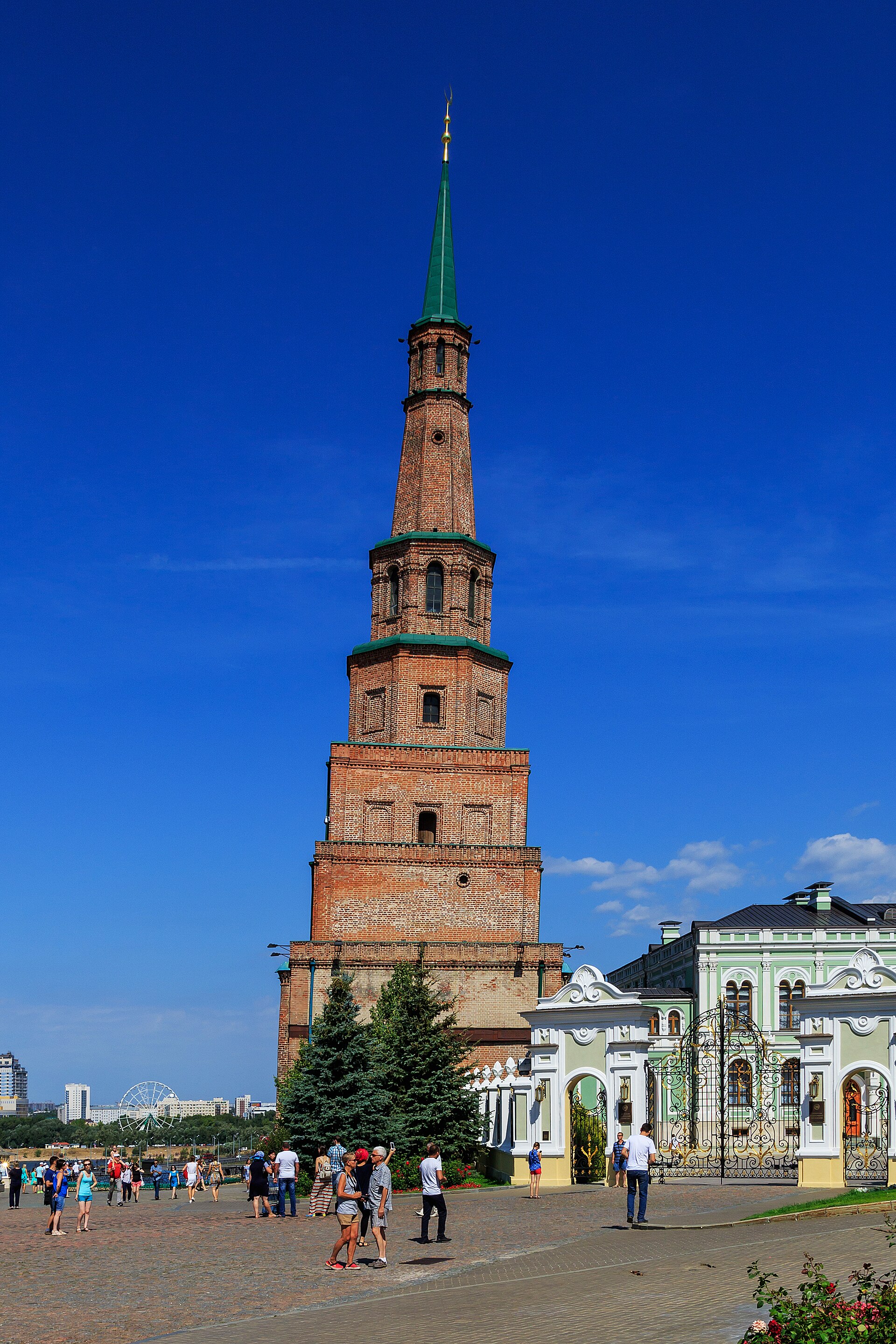
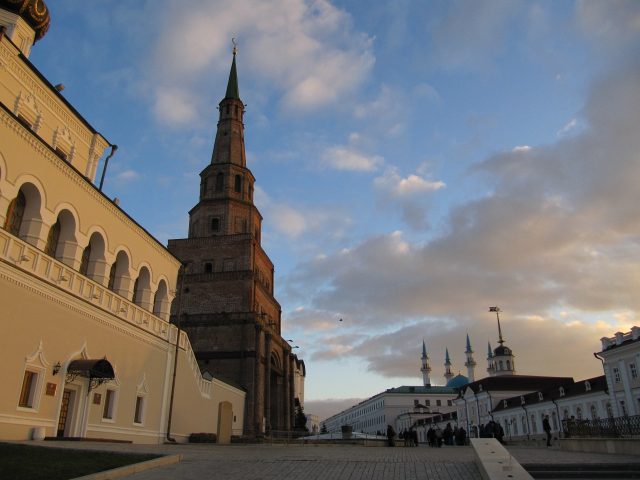
Standing tall over Kazan’s historic center, the Süyümbikä Tower is one of those rare landmarks that feels both timeless and deeply personal to the city. Its slender silhouette, rising in seven graceful tiers topped by a pointed spire, has become an unmistakable part of Kazan’s skyline. Even among the other architectural treasures of the Kazan Kremlin, the tower holds a special place—not just for its striking appearance, but for the layers of history and legend woven into its walls.
No one knows for certain when the tower was built. Historians debate whether it dates back to the 16th century, shortly after Ivan the Terrible’s conquest of Kazan, or if it emerged later, in the 17th century. The most enduring story, though, is the one tied to Süyümbikä, the last queen of the Kazan Khanate. According to legend, Ivan the Terrible, captivated by her beauty, proposed marriage, but she set an impossible condition: a tower must be built in her honor within seven days. When the structure was completed, she climbed to the top and leapt to her death rather than submit to the Russian tsar. It’s a dramatic tale, but like many legends, it’s more poetry than fact. The tower likely served a more practical purpose—perhaps as a watchtower or part of the Kremlin’s defenses.
What makes the tower’s architecture so fascinating is how it blends different cultural influences. The lower tiers, with their sturdy brickwork and narrow arrow slits, reflect traditional Russian military design. Higher up, the structure softens, with the elegant, upward-curving spire echoing the graceful forms of Tatar architecture. Another curious detail is the tower’s slight lean, visible even to the naked eye. Over time, the tilt has become more pronounced, though restoration efforts have stabilized it, ensuring the tower remains standing for generations to come.
Inside, a narrow spiral staircase winds its way up to a viewing platform. The climb is worth it. From the top, Kazan unfolds in all directions—the domes of Orthodox churches, the minarets of mosques, the rooftops of old merchant houses, and the modern city beyond. On clear days, the Volga River glints in the distance, its waters curling around the western edge of the city. The view is a reminder of how Kazan has always been a crossroads, where different cultures and histories intersect.
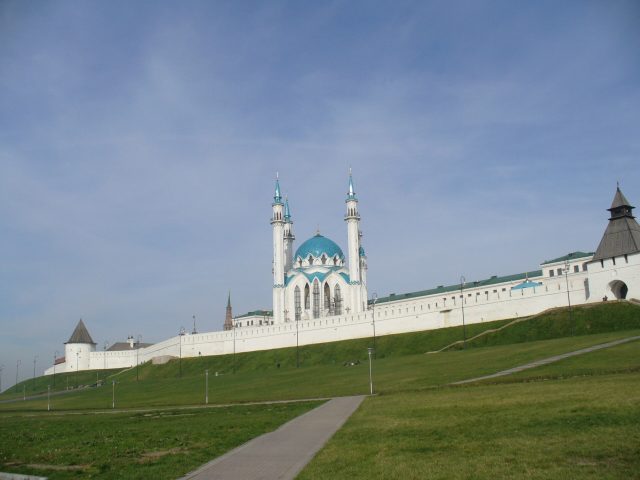
The tower is inseparable from the Kazan Kremlin, a place where Orthodox and Islamic traditions coexist in striking harmony. Within the Kremlin’s walls, the Annunciation Cathedral stands near the Kul Sharif Mosque, two monuments that might seem at odds in another city but here feel like natural neighbors. The Süyümbikä Tower embodies this duality. Its design reflects both Russian and Tatar influences, while its history speaks to the complex, often turbulent relationship between the two. Today, the Kremlin isn’t just a tourist site; it’s a living part of the city, where government offices operate alongside museums and historic landmarks.
The area around the tower is always lively. Tourists pose for photos in front of it, locals stroll through the Kremlin grounds, and in warmer months, small fairs and open-air concerts bring extra energy to the space. Unlike some historic sites that feel frozen in time, the tower feels alive, woven into the fabric of daily life. You might see students rushing to class, elderly couples out for a walk, or newlyweds capturing photos against its backdrop. It’s a place where history and modernity coexist without pretense.
The tower has survived wars, fires, and political upheavals, each era leaving its mark. During the Soviet period, it nearly met the same fate as many other religious and historic structures—destruction in the name of progress. But thanks to the efforts of preservationists, it endured. Today, as part of the Kazan Kremlin, it holds UNESCO World Heritage status, a recognition of its global significance. That designation isn’t just about architecture; it’s about what the tower represents—a symbol of resilience, adaptation, and the enduring power of place.
Climbing the tower’s staircase, you can’t help but wonder about all the people who have walked these same steps before you. Guards keeping watch, merchants passing through, scholars and artists drawn to Kazan’s unique character. Each of them left something behind, even if it’s just the echo of their footsteps. The tower doesn’t shout its history; it whispers it, in the creak of the wooden stairs, the play of light through the narrow windows, the way the wind hums around the spire.
Kazan is a city where the past and present walk side by side, and the Süyümbikä Tower is one of the places where that connection feels strongest. It’s a reminder that history is never simple, that every stone and every line in a building carries the weight of human stories. When you visit, there’s no need to rush. Sometimes the best way to understand a place is to sit quietly, watch the light change on the tower’s walls, and let the city reveal itself in its own time.