The Keizerstraat Mosque stands quietly along one of Paramaribo’s oldest streets, a place where history and daily life intersect without fuss. Built in the early 20th century, it’s one of the few wooden mosques in the world, and its presence speaks to Suriname’s layered past—a country shaped by Indigenous communities, European colonization, Dutch plantation culture, and the arrival of enslaved Africans, followed later by indentured laborers from Java, India, and the Middle East. The mosque itself is a product of that migration, erected by Javanese Muslims who came to Suriname in the late 1800s and early 1900s to work on the sugar and coffee plantations. Over time, their faith took root here, and the Keizerstraat Mosque became a focal point for the community.
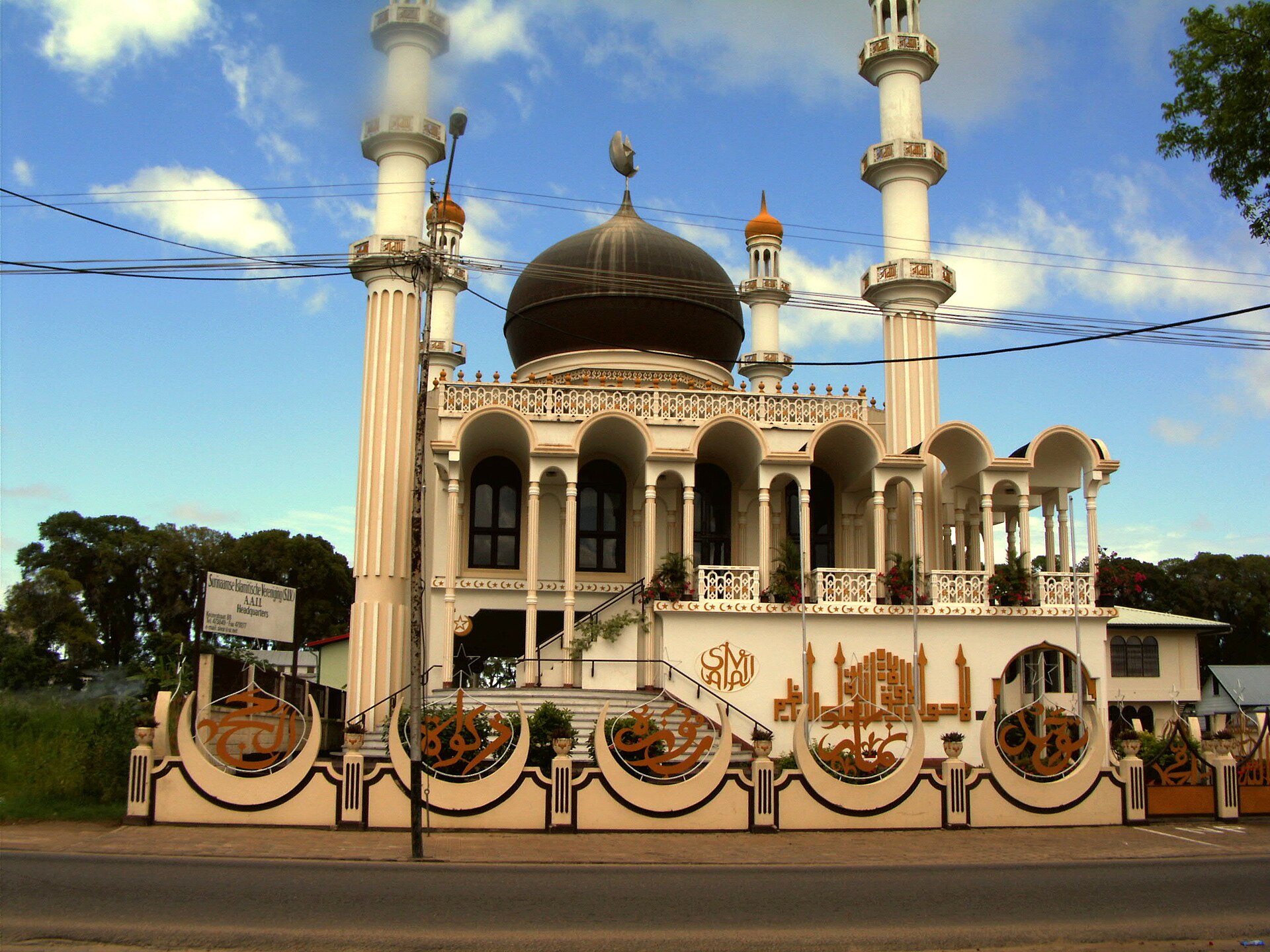
From the outside, the building doesn’t announce itself with the grand domes or towering minarets you might expect. Instead, it’s modest and unassuming, blending into the surrounding streetscape of colonial-era wooden houses and small shops. The structure is made almost entirely of wood, painted a soft green that has faded over the decades, with white trim outlining the arched windows and doors. The minaret is simple—a slender tower with a small balcony, just tall enough to call the faithful to prayer without dominating the skyline. It’s a design that feels practical, built for function rather than spectacle, and that understatement gives the mosque a certain warmth. You don’t visit it to marvel at opulence; you come to understand how faith adapts to place.
Inside, the space is open and airy, with high ceilings and wooden floors that creak underfoot. The prayer hall is divided by a central aisle, with rows of woven mats laid out for worshippers. The walls are plain, painted white, and the only real decoration comes from the natural light filtering through the windows, casting shifting patterns across the floor as the day goes on. There’s no elaborate ornamentation, no gilded calligraphy or intricate tilework—just a sense of quiet purpose. The mihrab, the niche indicating the direction of Mecca, is simple, framed in wood, and the mimbar, the pulpit where the imam delivers sermons, is equally unadorned. It’s a space that feels lived-in, not staged, and that simplicity makes it feel more intimate.
What’s striking about the Keizerstraat Mosque is how it fits into the rhythm of the neighborhood. Paramaribo’s streets are lively, especially in the mornings and late afternoons, when vendors set up stalls selling fresh fruit, roti, and cold drinks. The mosque isn’t set apart from this; it’s part of it. On Fridays, the call to prayer drifts through the open windows, mingling with the sounds of passing cars and the chatter of people going about their day. Worshippers arrive in small groups, some in traditional clothing, others in everyday wear, and the mosque becomes a gathering place not just for prayer but for conversation. After services, you’ll often see people lingering outside, catching up with neighbors or sharing news. It’s a reminder that in Suriname, religion isn’t something separate from daily life—it’s woven into it.
The mosque’s history is also a story of resilience. When Javanese laborers first arrived in Suriname, they were brought under harsh conditions, and their cultural and religious practices were often suppressed. Building a mosque in those early years wasn’t just an act of faith; it was an assertion of identity. The original structure was smaller, more makeshift, but over time, as the community grew, so did the mosque. The current building dates back to the 1930s, though it has been repaired and expanded in the decades since. It’s survived hurricanes, economic shifts, and the slow changes of a country finding its footing after independence. That it still stands, still serves its purpose, is a testament to the people who have cared for it over generations.
For visitors, the Keizerstraat Mosque offers a glimpse into Suriname’s multicultural fabric. The country is often described as a melting pot, and nowhere is that more evident than in Paramaribo, where mosques, synagogues, Hindu temples, and Christian churches exist side by side. The mosque isn’t a tourist attraction in the traditional sense—there are no guided tours or gift shops—but it’s open to those who approach with respect. If you visit during prayer times, you’ll likely be welcomed with quiet hospitality, though it’s best to observe from the back and avoid disrupting the service. Outside of prayer times, the doors are often open, and you can step inside to sit for a moment, taking in the stillness of the space.
The neighborhood around the mosque is worth exploring, too. Keizerstraat is one of Paramaribo’s oldest streets, lined with wooden houses that date back to the 18th and 19th centuries. Many of them are painted in bright colors—blues, yellows, greens—with intricate fretwork along the eaves and balconies. The architecture is a mix of Dutch colonial and Caribbean influences, with wide verandas and high ceilings designed to catch the breeze. Walking down the street, you’ll pass small shops selling everything from spices to secondhand clothes, and the occasional stray dog napping in the shade. It’s a place where the past and present coexist, where the rhythms of daily life haven’t been polished away for tourists.
If you’re in Paramaribo, the Keizerstraat Mosque is one of those places that doesn’t demand attention but rewards those who take the time to notice it. It’s not grand or flashy, but that’s part of its charm. It’s a building that has grown alongside the community it serves, shaped by the hands of those who built it and the generations who have prayed within its walls. In a country as diverse as Suriname, where so many cultures and histories have come together, the mosque stands as a quiet reminder of how faith, identity, and place intertwine. You don’t need to be Muslim to appreciate its significance—just willing to pause and listen to the stories it holds.