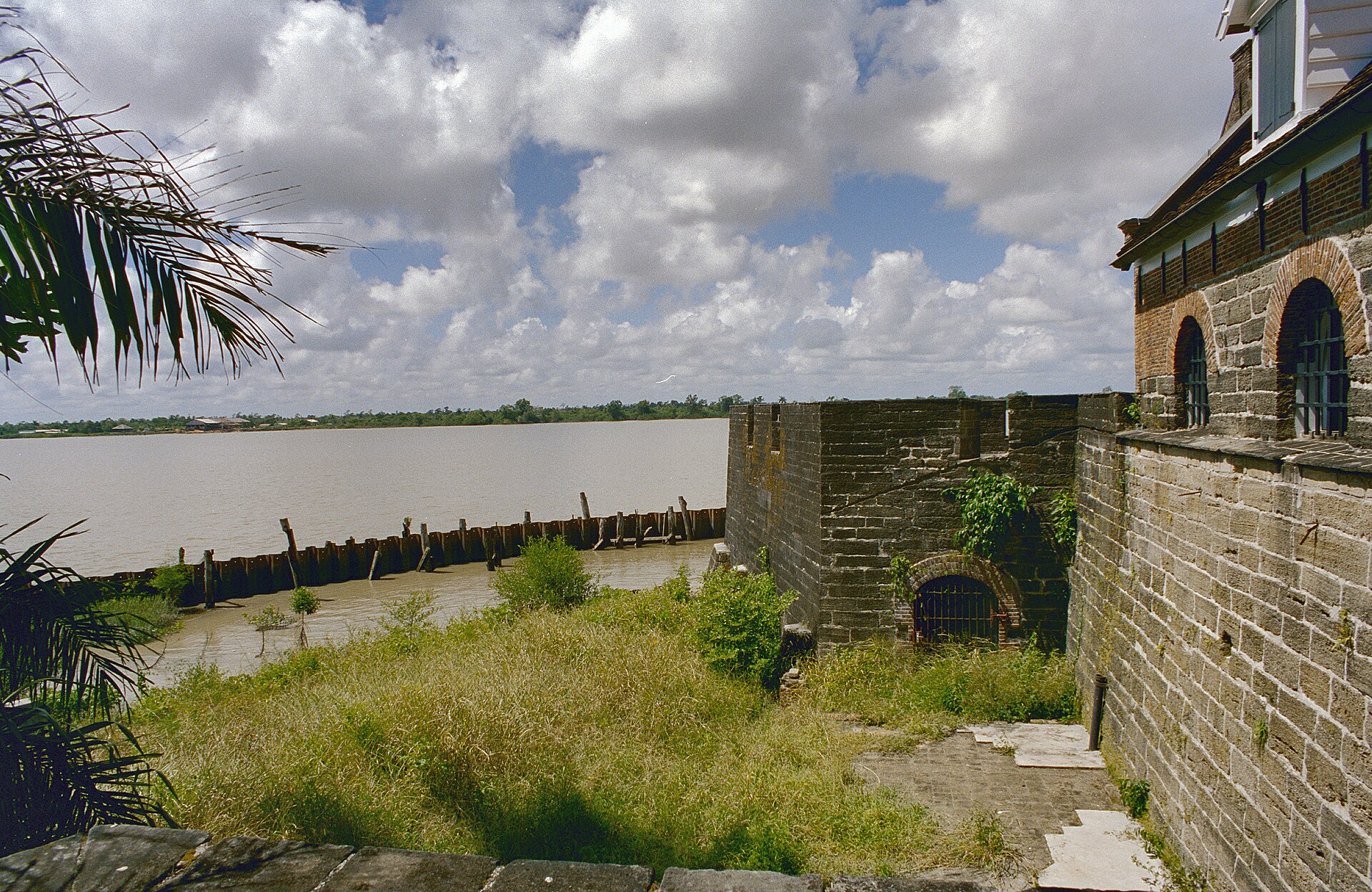
Fort Zeelandia stands on the banks of the Suriname River, outside Paramaribo. The Dutch built it in the late 17th century as a wooden fortification to protect the colony from European rivals and local resistance. Over time, brick and stone replaced the wood, turning it from a military stronghold into a symbol of colonial power. Its walls and cannons still overlook the water, though the river’s current and palm trees soften its edges.
The fort’s design reflects Dutch practicality. Thick walls, strategic gun placements, and a defensive layout defined its structure. Inside, the courtyard is open, surrounded by low buildings that once held soldiers, supplies, and a prison. The central tower offered views of the river and surrounding land. While much of the original wood is gone, the brickwork remains, marked by time and humidity.
For centuries, Fort Zeelandia was more than a military post. It held enslaved people before they were sold or sent inland. During political unrest, it imprisoned those who opposed colonial rule. In the 1980s, it became a site of detention and execution under military dictatorship. These layers of history aren’t visible in the quiet corridors, but they remain.
The fort now operates as a museum. Visitors walk through old barracks, where colonial-era artifacts, maps, and photographs are displayed. The grounds themselves are the main attraction—the mix of Dutch engineering and tropical decay creates a quiet atmosphere. Cannons, now rusted, point toward the river. From the ramparts, boats pass by, carrying goods as they have for centuries.
It sits on a small peninsula, with the river on one side and the city’s outskirts on the other. The area is quiet, with scattered houses and fishermen along the shore. There’s no grand entrance, just a simple gate leading to the walls. This lack of fanfare adds to its appeal.
Fort Zeelandia isn’t just about history. It invites reflection. A place that once enforced control now watches over Suriname’s evolving identity. The Dutch left their mark, but so did the enslaved, the displaced, and those who came after. The fort doesn’t offer answers, but it doesn’t hide its past either.
If you visit, go early or late to avoid the heat. There’s no need to rush. The fort’s power is in its details—the light through the windows, the river’s sound, the sense of stepping into history that isn’t finished. The past feels close here, not as a relic, but as something still alive.