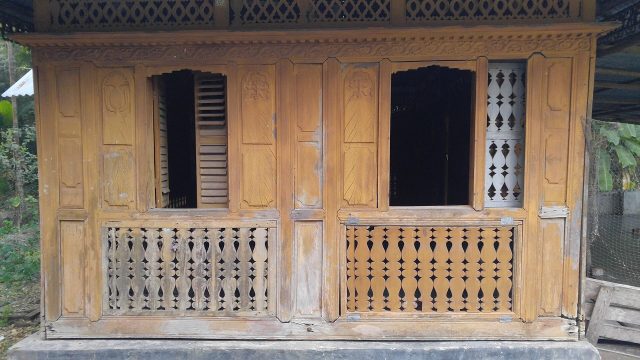
Kazi Mosque sits quietly on the banks of the Bhaola River in Mathbaria Upazila, far from the well-trodden paths of Bangladesh’s more famous landmarks. It’s the kind of place that doesn’t make it into glossy travel brochures, yet it offers something those often miss—a sense of everyday life in a country shaped by faith, water, and time. The mosque is small, unassuming even, but its presence is deeply felt in the community. On Fridays, the area around it fills with people gathering for prayers, their voices blending with the rustle of palm leaves and the distant murmur of the river. For the rest of the week, it remains a quiet corner where locals stop to talk, share news, or simply sit in reflection.
The history of Kazi Mosque is woven into the broader story of the region. Mathbaria lies in the vast delta where the Ganges and Brahmaputra rivers meet the Bay of Bengal, a landscape that has long been a crossroads of trade, culture, and religion. Islam arrived here centuries ago, carried by traders, Sufi mystics, and later, the Mughal rulers who left their mark on Bengal. While the exact origins of the mosque are unclear, it likely dates back to the 18th or 19th century, a time when the Nawabs of Bengal patronized religious architecture across their domains. Many mosques from that era still stand today, their walls holding stories of the people who built and maintained them over generations.
The architecture of Kazi Mosque is simple, almost austere, but there’s a quiet elegance in its design. Built from red brick, the structure has softened over time, its edges worn smooth by decades of monsoon rains and tropical sun. The roof rests on four sturdy pillars, a common feature in rural Bengali mosques, while the walls are adorned with modest geometric patterns—no grand calligraphy or intricate carvings, just the kind of understated craftsmanship that speaks of practicality and devotion. Inside, the mihrab, which points toward Mecca, is similarly unadorned, its lines clean and purposeful. The small minaret rises just enough to be seen above the surrounding homes, a subtle reminder of the mosque’s role in the community.
For the people of Mathbaria, Kazi Mosque is more than a place of worship. It’s a gathering spot, a classroom, a court of sorts where disputes are settled and decisions made. In Bangladesh, where over 90 percent of the population is Muslim, mosques often serve as informal community centers, especially in rural areas. Here, after prayers, men might linger to discuss the day’s catch with local fishermen or debate the latest political news from Dhaka. Children attend Quranic lessons in the afternoons, their voices mixing with the hum of daily life. Elders sit in the shade, sharing stories of floods past or the changing tides of the river. The mosque isn’t just a building; it’s a living part of the town’s rhythm.
The river nearby plays its own role in shaping life here. The Bhaola, like so many waterways in southern Bangladesh, is both a lifeline and a challenge. In the dry season, it’s a narrow ribbon of water where boats glide between villages, carrying goods and passengers. But when the monsoon arrives, the river swells, spilling over its banks and turning the landscape into a vast, shifting wetland. During these months, Kazi Mosque can feel almost like an island, its brick walls rising from the water as if defying the flood. It’s a reminder of how precarious life in the delta can be—where land and water are in constant negotiation, and survival depends on adaptability.
Visiting Kazi Mosque isn’t about ticking off a tourist attraction. There are no guided tours, no souvenir stalls, no crowds jostling for the best photo. Instead, there’s the quiet hum of a place that exists for its own sake, not for visitors. The air carries the scent of damp earth and woodsmoke, and the only sounds are the occasional call of a kingfisher or the creak of a fishing boat. Locals are usually welcoming, though their curiosity about outsiders is tempered by the easygoing pace of life here. If you’re lucky, someone might invite you to sit and share a cup of sweet, milky tea, or point out the old tamarind tree in the courtyard where generations of children have played.
Bangladesh is home to countless mosques, from the grand Mughal-era structures of Dhaka to the ornate terracotta designs of the north. But it’s the smaller, rural mosques like Kazi that often feel the most authentic. They don’t impress with size or opulence, but with their connection to the people who use them every day. There’s no pretension here, just the quiet dignity of a place that has served its community for centuries. The bricks may be worn, the paint faded, but the sense of belonging is as strong as ever.
If you find yourself in Mathbaria, take the time to linger. Walk along the riverbank at dawn, when the mist still clings to the water and fishermen prepare their nets. Stop by a roadside stall for a plate of panta bhat, the fermented rice dish that’s a staple of rural life. Strike up a conversation with someone—maybe the imam, or an old man resting in the shade. You might not learn anything earth-shattering, but you’ll get a glimpse of a way of life that moves to its own rhythm, far from the noise of cities. Kazi Mosque is just one small part of that world, but sometimes the smallest places leave the deepest impressions.