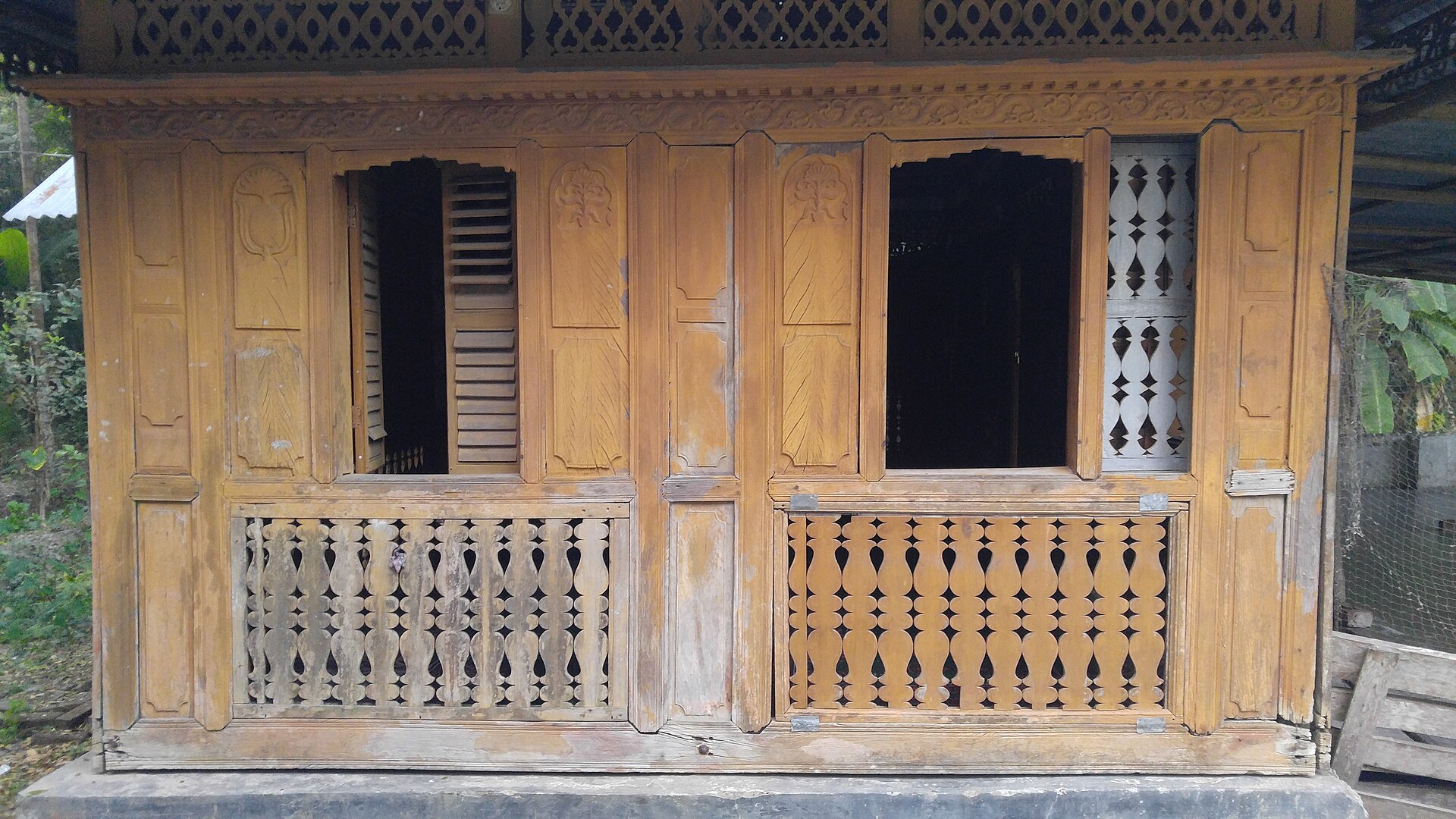
Momin Mosque sits quietly in the rural heart of Mathbaria Upazila, far from the well-trodden paths of Bangladesh’s more famous landmarks. There are no crowds here, no tour buses, just the slow rhythm of village life unfolding around it. The mosque itself is unassuming—a modest brick structure with a single dome and a slender minaret rising above the surrounding homes. It wasn’t built to impress, but to serve, and in that simplicity lies its quiet charm.
The architecture follows the familiar patterns of 19th and early 20th-century mosque design in this part of the country: a rectangular base, a central dome, and a minaret for the call to prayer. Yet there’s something distinctly local about it, as if the builders wove the spirit of the place into its very walls. The bricks might have been fired nearby, the plaster smoothed by hands that knew the land. Even the delicate carvings on the facade, though understated, carry the mark of regional craftsmanship, a subtle nod to traditions passed down through generations.
Inside, the mosque is just as restrained. The floors are tiled, the walls whitewashed, and the ceiling supported by wooden beams. There are no grand chandeliers or marble pillars, no gilded calligraphy—just a space designed for prayer and reflection. On hot days, the thick walls keep the interior cool, while soft light filters through small windows, casting gentle patterns on the floor. Locals come here not only for worship but to sit in silence, to chat with neighbors, or to discuss community matters. It’s a place where the sacred and the everyday blend seamlessly.
Mathbaria itself is a world away from the bustle of Dhaka or Chittagong. Here, life moves to the rhythm of the seasons—rice fields stretch toward the horizon, palm trees sway in the breeze, and villages of mud-and-thatch houses dot the landscape. The mosque fits naturally into this setting, its presence unobtrusive yet essential. There are no high walls or security guards to separate it from the world outside; its doors remain open to anyone who wishes to enter.
For travelers who venture this far, Momin Mosque offers a glimpse of Bangladesh beyond the guidebooks. There are no signs pointing the way, no souvenir stalls, just the chance to experience a place where time feels slower, where life is lived close to the land. If you stop by, the locals might be surprised to see a visitor, but they’ll likely welcome you with warmth, offering tea or a quiet conversation. That’s the beauty of such places—they don’t try to impress, and yet they leave a lasting impression all the same.
This mosque has stood for generations, witnessing the ebb and flow of life in Mathbaria. Its walls have heard countless prayers, its courtyard seen children grow into adults, its steps worn smooth by the passage of time. It’s not a monument to power or wealth, but a testament to the enduring need for community, for a place to gather, to pray, to simply be. In a world that often feels rushed, Momin Mosque offers a rare stillness.
If you ever find yourself in this part of Bangladesh, take a moment to step inside. Sit on the bench by the entrance, listen to the wind rustling through the trees, and let the quiet settle around you. There’s no agenda here, no scripted experience—just the chance to connect with a place and its people in a way that feels real. That’s what travel, at its best, can offer: not just sights, but moments of understanding, of shared humanity. Momin Mosque asks for nothing more than respect, and in return, it gives something far more valuable—the quiet space to reflect.