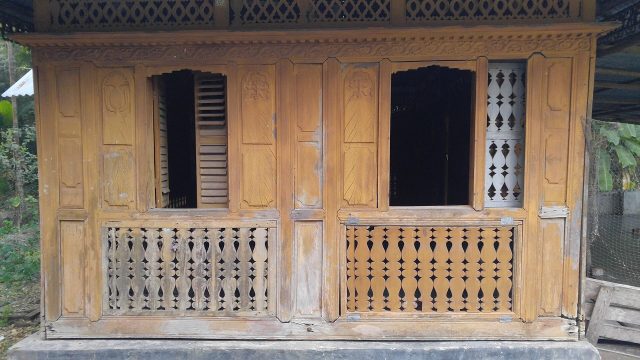
The Shahi Mosque in Mathbaria Upazila feels like a place where time has stood still. Built in the 17th century, it sits quietly on the banks of the Bhaola River, its weathered walls bearing witness to an era when this region was part of the powerful Bengal Sultanate. The architecture is a testament to the Islamic styles of the time—thick red-brick walls, pointed arches, and domes that once crowned its minarets. Though the minarets themselves are long gone, their bases remain, and the mosque still carries an air of quiet dignity, not through grandeur, but through its unaltered authenticity.
Inside, the Shahi Mosque is simple yet striking. The mihrab, which points toward Mecca, is adorned with subtle, skillfully crafted patterns, while the vaulted ceilings are supported by columns that still show traces of faded frescoes. The worn steps, uneven stone floors, and patches of grass creeping through the cracks all speak of centuries passed. The only sounds that break the silence are the rustling of leaves or the distant call of a bird. Though the mosque is no longer used for regular prayers, locals still visit during festivals or to pay their respects, treating it as a living piece of their heritage.
The surroundings are just as evocative as the mosque itself. Stretching out around it are rice fields, their green expanses broken only by the slow-moving waters of the Bhaola River. During the monsoon season, the river swells, turning the mosque into a small island, cut off from the rest of the land. Fishermen sometimes tie their boats nearby, while children play along the paths leading to old graves just beyond. The scene feels almost dreamlike, a stark contrast to the bustling cities of Bangladesh.
The history of the Shahi Mosque is intertwined with the Mughal period in Bengal, when this region was a hub of trade and culture. Mosques like this one were not just places of worship but symbols of authority, often commissioned by local rulers or wealthy merchants eager to leave their mark. In those days, they served as more than just religious sites—they were gathering places where people discussed business, settled disputes, and even celebrated together. The Shahi Mosque likely played a similar role, standing as a center of community life in its time.
Today, the mosque appears somewhat neglected, but that only adds to its charm. Time has softened its edges, with moss creeping over the bricks and grass sprouting from cracks in the walls. Yet this decay doesn’t diminish its beauty—it only makes it feel more real, as if the past is still breathing through its stones. On hot days, the thick walls keep the interior cool, and the narrow windows filter the sunlight into a gentle glow, creating a sense of peace that lingers long after you leave.
For those drawn to history and architecture, the Shahi Mosque is a rare find. There are no crowds, no tourist traps, just silence and the chance to step into the past. It isn’t one of Bangladesh’s most famous landmarks, and that’s precisely why it feels so special. It hasn’t been polished for visitors or commercialized—it remains untouched, a quiet relic of another time. Travelers who make the journey here often say it doesn’t leave them with loud, flashy memories, but rather a quiet, lasting sense of connection to something enduring.
Reaching the mosque isn’t easy. From the nearest cities, the journey involves long stretches of rural roads, and the last part may require walking or even a boat ride if the river is high. But those who make the effort rarely regret it. There are no signs, no guides, no souvenir stalls—just the ancient walls, the river, and the endless fields. That’s the magic of the Shahi Mosque: it doesn’t try to impress. It simply exists, as history itself does, patient and unchanging.