Göygöl Mosque is one of those places that doesn’t announce itself to travelers right away. Instead, it lingers in the mind quietly, almost unnoticed, like a soft echo of something familiar. Tucked in the center of town, surrounded by low houses and shaded trees, it blends into everyday life rather than standing apart as a grand monument. That might be its greatest quality—there’s no attempt to impress with scale or opulence, yet its simplicity feels strangely complete, as if it has always belonged here, among these streets and people.
The mosque’s history is woven into the story of Göygöl itself, a town once known as Khanlar. Founded in 1819 by German colonists who settled in the Caucasus at the invitation of Russian authorities, the area developed as a pocket of European culture in what was then Azerbaijani land. For decades, the town thrived with German-style houses, churches, and schools, its identity shaped by the community that called it home. But by the 20th century, the German population began to leave, and the town gradually transformed. The mosque was built in the 1980s, a time when Göygöl was already part of Soviet Azerbaijan, and it became a symbol of the town’s shifting identity—a place where the past and present quietly converged.
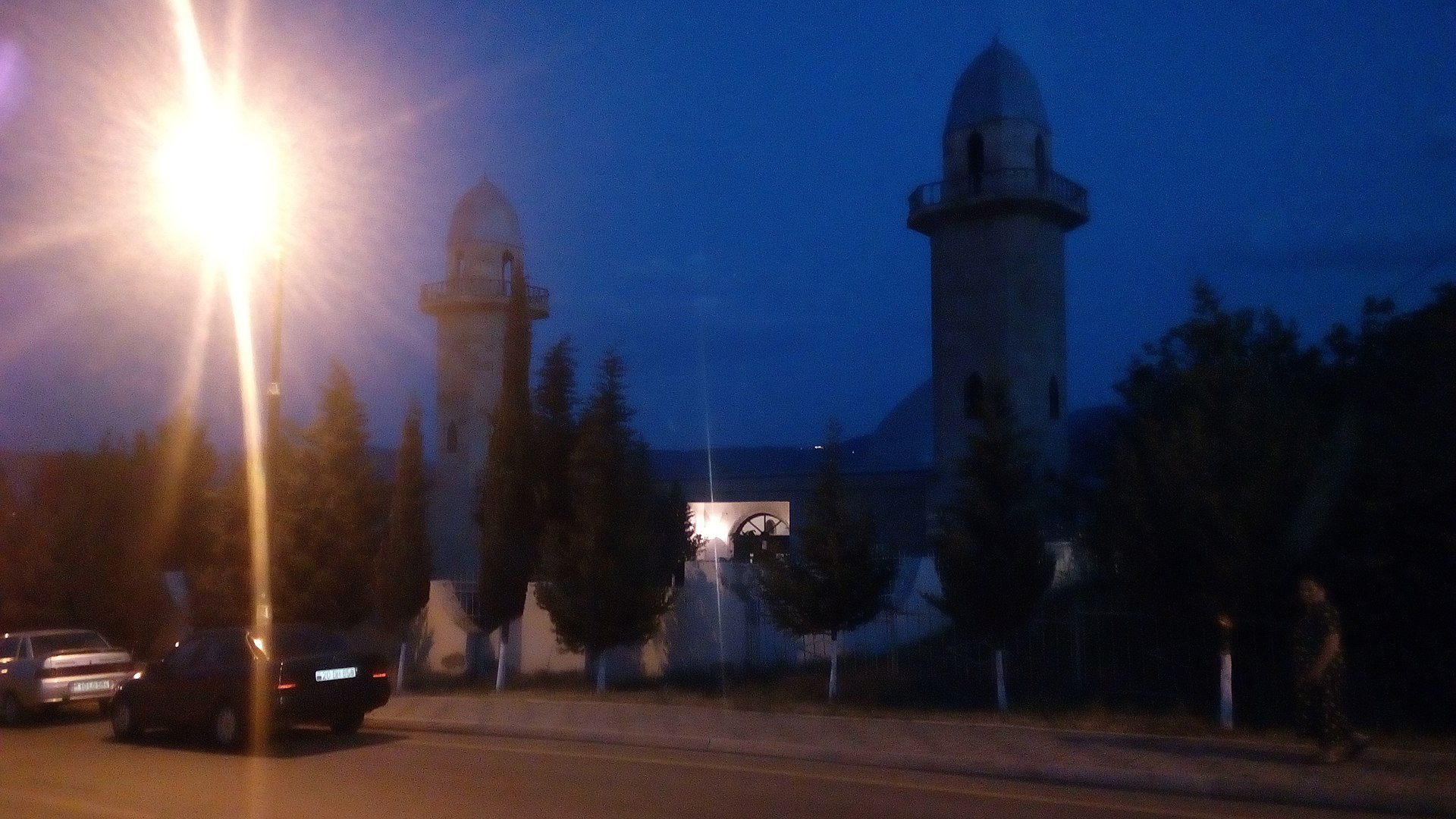
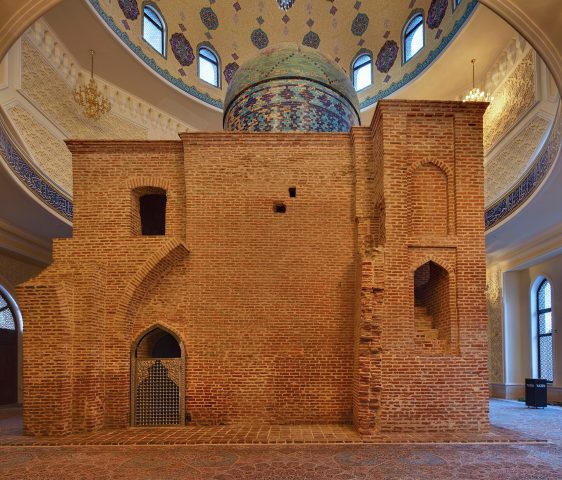
The architecture is unassuming and practical, free of the extravagance often found in religious buildings. A modest structure with a single minaret, clad in light stone, it lets in plenty of natural light through large windows. Inside, the decor is equally restrained: walls adorned with subtle patterns, the focus on creating a space that serves its purpose without distraction. There are no gilded domes or intricate mosaics, just a sense of warmth and functionality, like an old family home built to last.
Unlike the more famous landmarks in Azerbaijan, Göygöl Mosque isn’t a place that draws crowds. That might be why its atmosphere feels so different from typical tourist spots. The courtyard is rarely busy, offering a quiet bench to sit and watch locals come and go—some for prayer, others simply passing through on their daily routines. In this way, the mosque isn’t just a monument; it’s a living part of the town, where faith and everyday life intersect naturally.
Göygöl itself is unlike other Azerbaijani towns. Its history as a German colony left traces in the layout of its streets, the style of its buildings, and even the names of some places. Though few descendants of the original settlers remain, the town still carries a dual identity: the unmistakable character of Azerbaijan, layered with faint echoes of its European past. The mosque, built decades later, represents another chapter in that evolution—a time when the town was finding its new rhythm.
A small park surrounds the mosque, a favorite spot for locals to unwind in the summer. Here, you might see elderly men playing backgammon, children darting along the paths, or women chatting over tea on the benches. It’s an ordinary scene, yet there’s something comforting in its familiarity. The mosque isn’t walled off or set apart; it’s open and approachable, as if inviting visitors to step inside not just to pray, but to pause, reflect, or simply rest.
For travelers who make it to Göygöl, the mosque can be an unexpected discovery. There are no bustling bazaars like in Baku or ancient fortresses like in Sheki—just the quiet pulse of a small town where life moves at its own pace. The mosque mirrors that rhythm: unassuming, unhurried, yet meaningful in its own way. It’s a place where you can feel the heartbeat of the town, where time slows down and people live without rush.
It’s worth noting that Göygöl Mosque isn’t an ancient relic or an architectural masterpiece. But perhaps that’s its charm. It doesn’t try to be anything more than what it is, and that’s why it fits so seamlessly into the landscape. There’s no pressure to take the perfect photo or check off another sightseeing box. What matters here isn’t what you see, but what you feel—a sense of stillness, of connection to the place and the people who call it home.
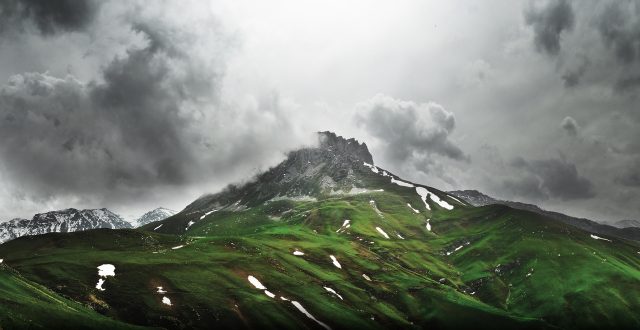
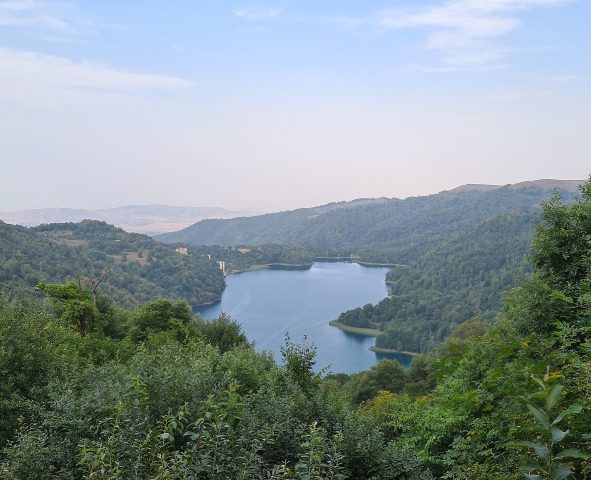
In recent years, Göygöl has started to attract travelers looking for alternatives to Azerbaijan’s more tourist-heavy destinations. Nestled at the foot of the Lesser Caucasus, surrounded by mountains and forests, the town offers a peaceful contrast to the energy of bigger cities. The mosque is just one small part of that experience, but sometimes it’s the unremarkable places that leave the deepest impression. Not because they dazzle, but because they feel real—untouched by the expectations of tourism.
If you ever find yourself in Göygöl, take a moment to step into the mosque’s courtyard. Sit on a bench, listen to the call to prayer drifting over the rooftops, and watch the town go about its day. Maybe that’s the real reason to travel—not for the grand spectacles, but for these quiet moments that remind you how people live in different corners of the world.