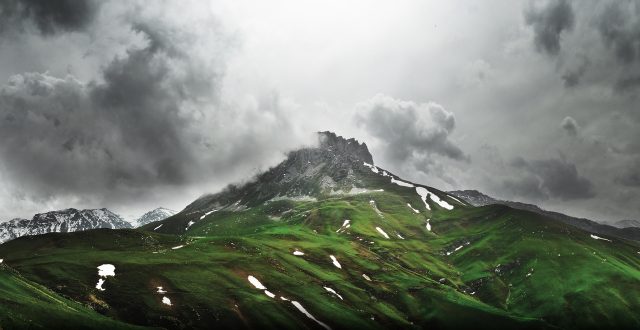
The town sits among rolling green hills and dense forests in the foothills of the Lesser Caucasus. The air carries the scent of pine and mountain streams. Though its name means "blue lake," Göygöl is a modest administrative center, with the natural wonder of the lake just beyond its borders. The town’s charm comes from its layers of history—German settlers, Soviet transformations, and the rhythm of modern Azerbaijani life.
The German Legacy
In the early 19th century, German colonists from Württemberg arrived in the region. They founded Helenendorf, named after Grand Duchess Elena Pavlovna, daughter of Russian Emperor Paul I. The settlers introduced winemaking traditions, half-timbered architecture, and an orderly way of life that shaped the town’s layout. Helenendorf became a center of viticulture in Azerbaijan, producing wines that gained recognition across the Caucasus. In 1941, the Soviet government deported the German population to Central Asia. The settlement was renamed Khanlar and only regained its original name, now pronounced in Azerbaijani as Göygöl, in 2008.
The Lutheran church, built in the late 19th century, is the most visible remnant of the German past. The red-brick structure with its tall steeple once served as the colony’s spiritual heart. Today, it stands empty on one of the town’s central streets. Nearby, a few old houses with wooden beams and tiled roofs remain, their architecture contrasting with the Soviet-era apartment blocks around them.
A Town of Slow Rhythms
Göygöl moves at its own pace. There’s no urgency here.
In summer, the bazaar fills with fresh produce. Cafés spill onto sidewalks, and families gather by the lake in the evenings. Winter brings a quiet hush, the town blanketed in snow. The population includes Azerbaijanis, Russians, and Kurds, each community adding to the town’s warm atmosphere.
Lake Göygöl and the National Park
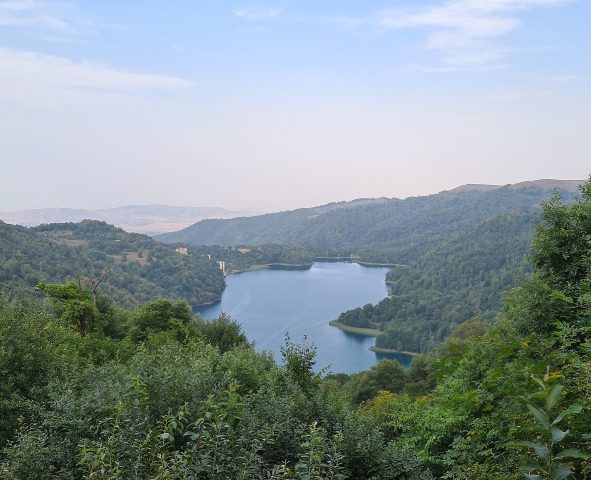
The lake formed in the 12th century when an earthquake triggered a landslide, damming a mountain river. On clear days, its waters shimmer blue, mirroring the sky. It’s the centerpiece of Göygöl National Park, where hiking trails, boat rentals, and birdwatching spots draw visitors. In summer, people from Baku and Ganja come to escape the heat. In winter, the lake freezes, framed by snow-dusted peaks.
The park is home to beech and oak forests, rare plants, and wildlife like eagles and falcons. Observation decks offer views of the landscape. Mineral springs, long believed to have healing properties, still attract locals and visitors. A few modern amenities have been added, but the tradition remains.
A Place for the Curious
Göygöl isn’t on most tourist itineraries. There are no luxury hotels or flashy attractions. That’s why it feels special.
You can wander quiet streets, browse small shops selling local honey and cheese, or watch the sunset paint the mountains gold. In the evenings, cafés serve dolma, plov, fresh lavash, and wine from nearby vineyards.
History and nature intertwine here. The town feels like a living archive, where medieval legends of the lake’s formation meet the legacy of German colonists and Soviet-era buildings. It doesn’t try to impress. It simply exists, content in its unhurried way.
If you ever visit this part of Azerbaijan, don’t rush past. Walk the streets, listen to the silence of the mountains, and wonder about the lives that have passed through this place.