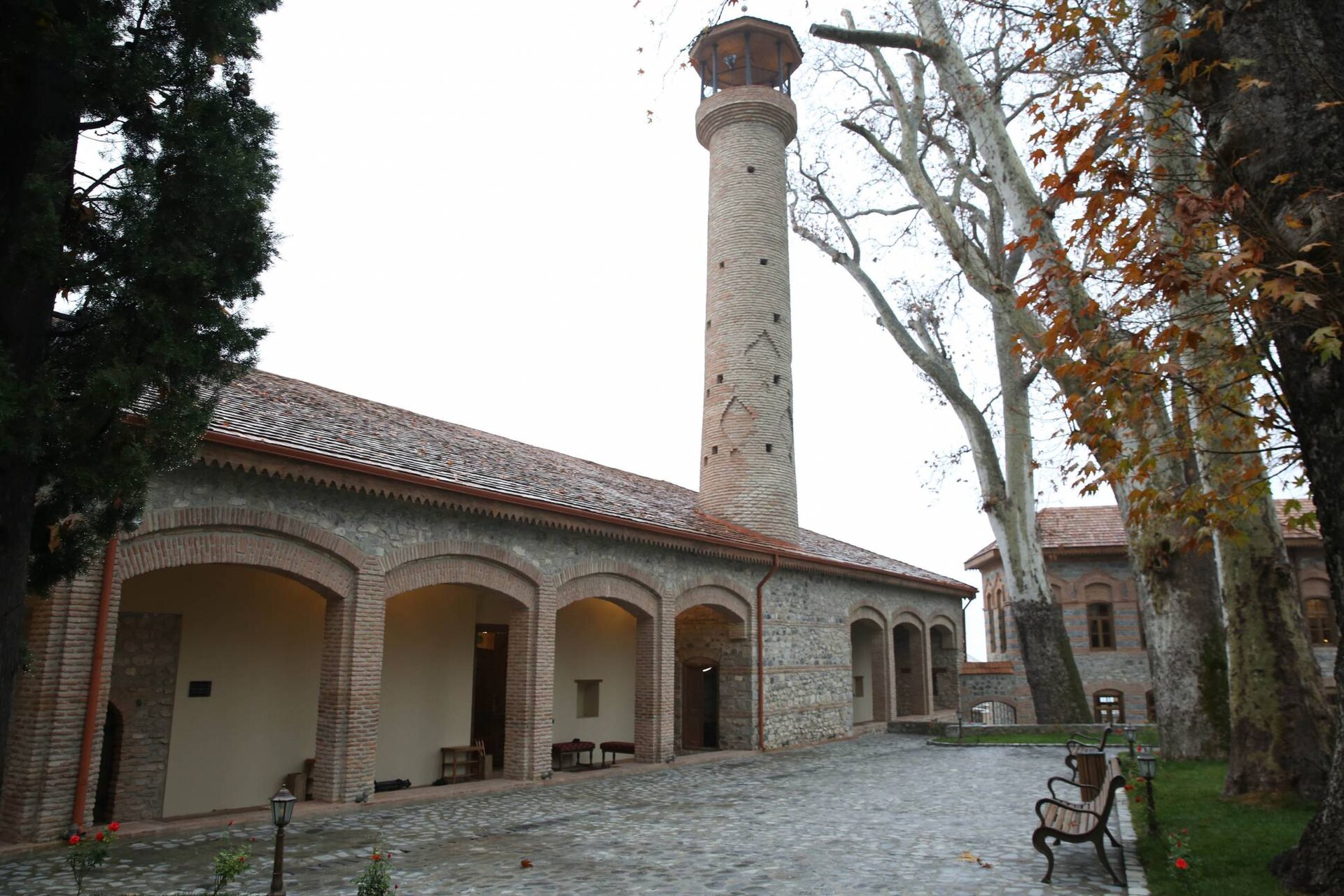
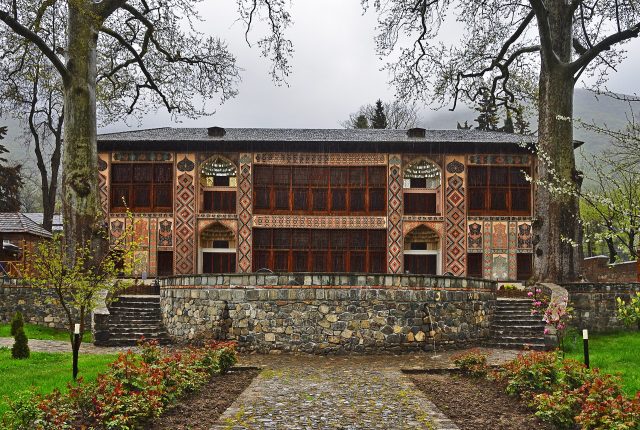
Shaki is a town where time seems to have paused, its narrow streets winding between old houses with intricately carved wooden balconies, their tiled roofs crowned by the slender minarets of mosques. Nestled in the foothills of the Greater Caucasus, the past lingers here in every corner, and nowhere is it more tangible than at the Juma Mosque. Built in the 18th century, this structure is more than a place of worship—it’s a testament to the fusion of Islamic architectural traditions and local craftsmanship, standing as a quiet witness to the town’s layered history.
Perched on a gentle rise in Shaki’s historic center, the Juma Mosque overlooks the town and the rolling green hills beyond. Its name, meaning "Friday Mosque," reflects its primary role as a gathering place for communal prayers on Fridays. Unlike the grand mosques of larger cities, it doesn’t dominate the skyline with imposing scale. Instead, its modest size and understated elegance make it feel like a natural part of the landscape, as if it has always belonged here, rooted in the earth and the rhythm of daily life.
The mosque’s architecture is a blend of influences that defined 18th-century Azerbaijani design. The main structure is built from fired brick, its warm, golden hues softening with age. The mihrab, the niche indicating the direction of Mecca, is adorned with delicate stone carvings, while the minaret—though not towering—rises gracefully above the entrance, its proportions perfectly balanced. Inside, the simplicity of the space is striking: wooden beams support the ceiling, and light filters through tall windows, casting shifting patterns across the walls. There’s a sense of tranquility here, a place where time slows and the outside world fades.
The history of the Juma Mosque is intertwined with that of Shaki itself. Once a thriving stop on the Silk Road, the town was known for its skilled artisans and merchants, its prosperity peaking during the era of the Sheki Khanate. The mosque was constructed at a time when the khans patronized the arts, and it became one of the symbols of the town’s golden age. Over the centuries, it has weathered wars and political shifts, yet its original character remains intact, preserved through careful restorations. The walls seem to hold the echoes of generations who have prayed here, their stories etched into the brick and stone.
Today, the mosque continues to serve its religious purpose, drawing worshippers from near and far. But it also welcomes visitors, offering a glimpse into the spiritual and cultural life of the town. Inside, a small museum displays ancient Quran manuscripts and everyday objects that once belonged to Shaki’s residents, each item a thread in the tapestry of local history. Guides, often locals with deep ties to the place, share stories that go beyond dates and facts—tales passed down through families, blending history with personal memory.
Shaki moves at its own unhurried pace, and the Juma Mosque embodies that rhythm. There’s no rush here, no crowds jostling for space. Instead, there’s a stillness broken only by the call to prayer or the rustle of leaves in the old garden beside the mosque. Visitors often linger in the courtyard, watching the sunlight play across the brickwork or observing the townspeople who come not just to pray but to sit in the shade, chat with neighbors, or simply escape the heat. It’s a place where the past and present coexist effortlessly, where the weight of history feels light, almost comforting.
More than just a historic landmark, the Juma Mosque is a living part of Shaki’s daily life. It reminds you that history isn’t confined to textbooks or museum displays—it’s alive in the stones laid centuries ago, in the hands that shaped them, and in the people who still gather here. For travelers, it’s often the starting point for exploring the town, a quiet introduction to its culture and traditions. For locals, it’s a place to pause, to reconnect with something deeper than the demands of modern life.
The mosque is surrounded by the old quarter of Shaki, where narrow streets wind past houses with latticed wooden windows and hidden courtyards. Walking these lanes, it’s easy to imagine the town as it was in the 18th century, when the mosque was new and the air hummed with the sounds of workshops and market stalls. The Juma Mosque isn’t just a relic of the past—it’s a thread in the ongoing story of Shaki, a place where history isn’t just remembered but lived, day after day.