The Palace of the Shaki Khans is one of those rare places where history doesn’t just linger in stone—it breathes, unfolds, and speaks to anyone who steps across its threshold. Nestled in the heart of Shaki, an ancient city in northern Azerbaijan, this palace stands apart from the grand European royal residences or the opulent gilded palaces of the East. There’s no excess here, no marble halls or gold leaf, yet what remains is no less striking. The wooden latticework known as *shebeke*, the painted ceilings, the delicate stucco, and the intricate patterns all seem to echo the landscapes of the Caucasus, blending human craftsmanship with the natural world.
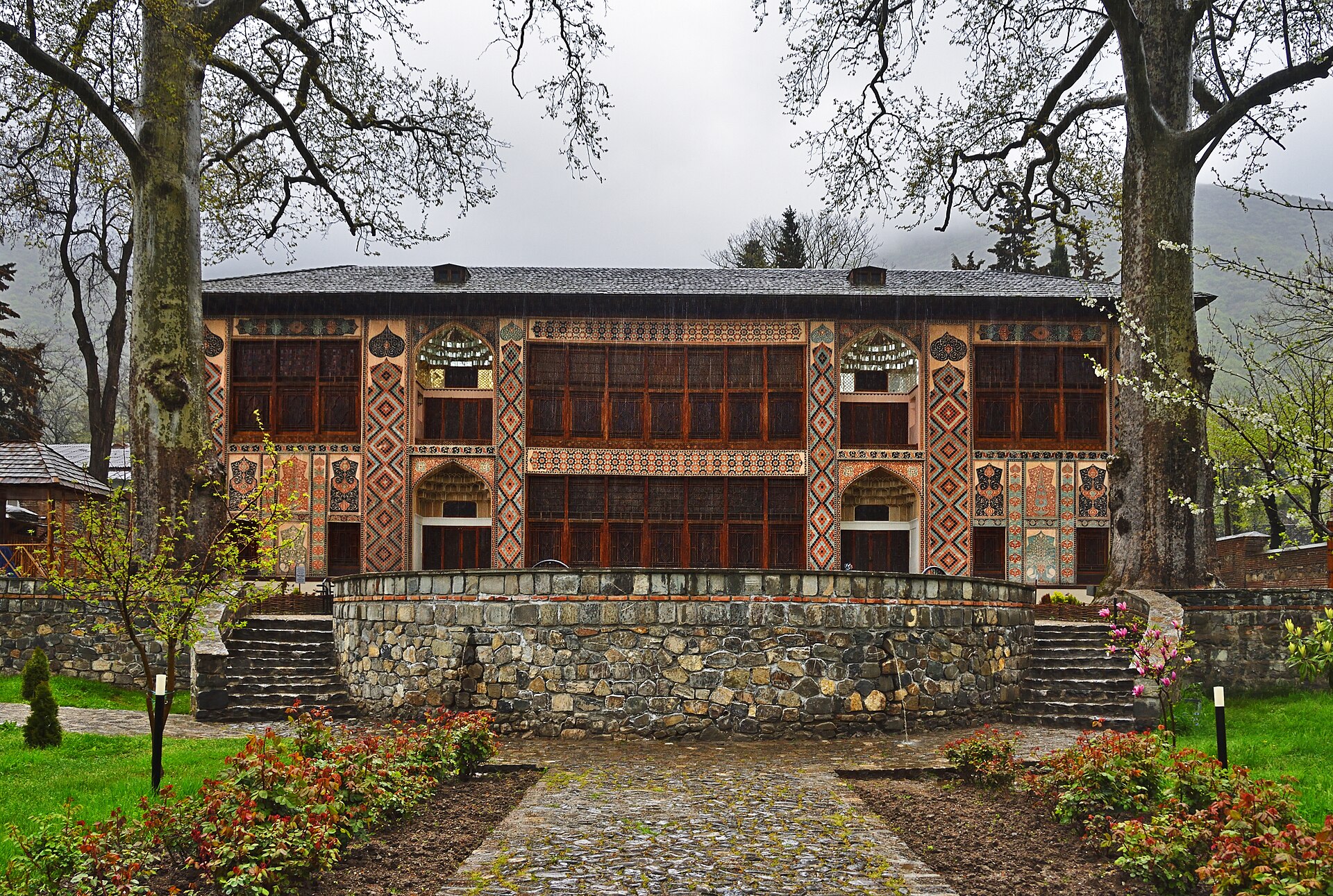
Built in the mid-18th century, the palace emerged during a time when Shaki was the capital of its own khanate—a small but influential state in the region. Hussein Khan, the ruler at the time, wanted a residence that would reflect not only his authority but also the cultural traditions of the land. The architect, a local master named Haji Zeynalabdin, created a structure that harmonized with its surroundings. Perched on a hill, the palace overlooks the city and the valley below, its two-story design with slender balconies and latticed windows giving the impression that it floats above the earth. The building’s proportions and details reveal an understanding of both aesthetics and climate, designed to offer shade in summer and warmth in winter.
What truly captivates visitors, however, is the palace’s interior. Each room feels like a separate chapter in a story, with the throne hall standing out as the most vivid. Here, the walls and ceilings are covered in frescoes depicting scenes of hunting, feasts, and courtly life. The colors, remarkably preserved over centuries, bring the images to life—horsemen against mountain backdrops, musicians playing traditional instruments, gardens in full bloom. The style borrows from Persian miniature painting, yet it carries a distinct local flavor, less rigid and more spontaneous, as if the artists allowed themselves to be guided by the rhythms of daily life rather than strict conventions.
The palace’s windows are another marvel, adorned with *shebeke*—wooden latticework assembled without a single nail from thousands of tiny, hand-carved pieces. This technique, unique to Azerbaijani craftsmanship, demands extraordinary skill. Each fragment is meticulously shaped before being fitted into intricate geometric patterns that filter light and air. The *shebeke* isn’t merely decorative; it serves a purpose, casting shifting shadows that cool the rooms in summer and create a play of light in winter, when snow blankets the ground outside. The effect is mesmerizing, turning the palace into a living canvas where sunlight and woodwork collaborate to shape the atmosphere.
Unlike many royal residences, the palace was never a permanent home for the khans. It served as a summer retreat, a place where rulers spent a few months each year hosting receptions, conducting state affairs, or simply escaping the heat of the lowlands. The surrounding gardens, once filled with fountains and pavilions, have long since faded, though traces of the palace’s past grandeur remain. There are underground passages, for instance, that once connected the palace to other buildings in the khan’s complex—reminders that life here wasn’t just about ceremony but also intrigue and strategy.
After the khanate fell, the palace endured various transformations. In the 19th century, when Shaki became part of the Russian Empire, the building was repurposed as an administrative center before eventually becoming a museum. Soviet-era restorations were not always kind to the original details; some frescoes were repainted, and certain elements were lost. Yet even today, the palace retains a powerful presence. It’s not the scale that impresses but the sense of time suspended—the way footsteps echo in the empty halls, the way sunlight spills through the *shebeke*, painting the floors with fleeting patterns.
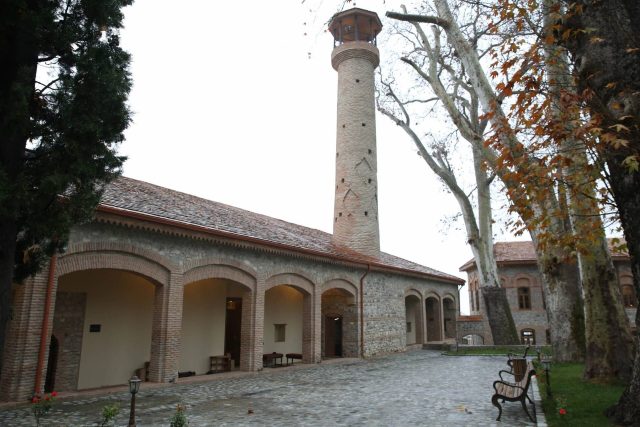
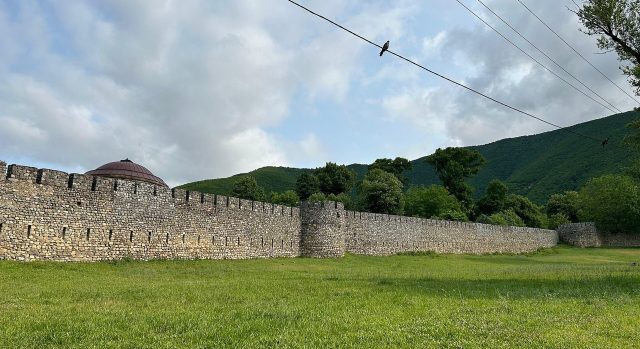
Shaki itself is a city with a distinct character, one of the oldest in the Caucasus, where history is woven into the fabric of its streets. Caravanserais, ancient bathhouses, mosques, and traditional wooden houses with carved balconies all contribute to its unique atmosphere. But the Palace of the Shaki Khans remains its crowning jewel, a testament to how art and power can merge into something truly enduring. Visiting it, you realize that history doesn’t always need grandeur to leave a mark—sometimes, a single building is enough to evoke the spirit of an era.
Today, the palace is open to visitors, offering a quiet, unhurried experience. There are no crowds here, no rush—just the chance to wander through its rooms, run your fingers over the carved doors, or sit on a bench in the courtyard, gazing out at the city below. It’s a place where time seems to stand still, where the past feels tangible without being overwhelming. Perhaps that’s why the palace lingers in memory long after you’ve left: it doesn’t demand attention but simply exists, inviting each visitor to discover something personal within its walls.