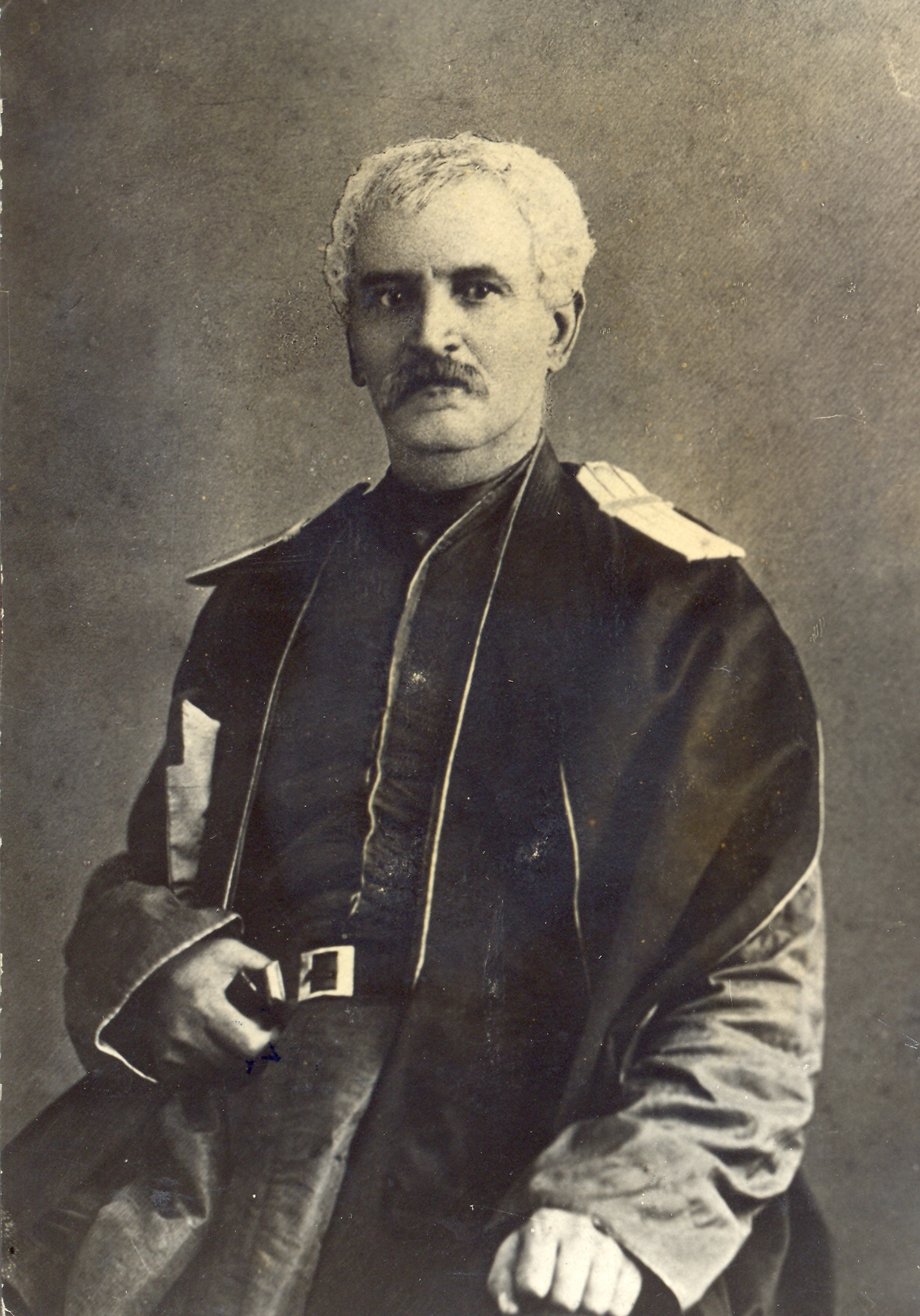
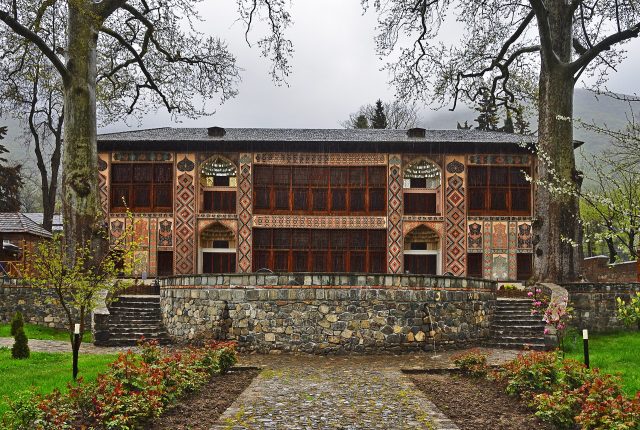
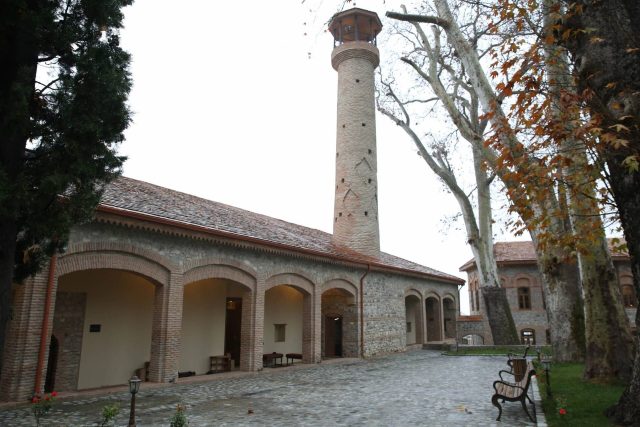
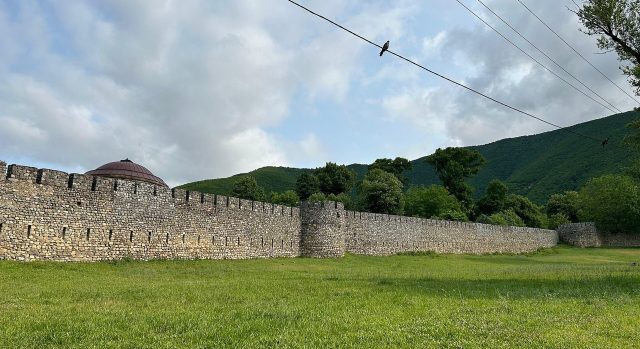
Shaki is a town where time seems to slow down, especially as you wander through the narrow streets of its old quarter. The whitewashed houses with their carved wooden balconies and brightly colored rugs hanging on the walls make it feel as though history isn’t just preserved in museums but lives alongside you. One place where the past feels particularly vivid is the house museum of Mirza Fatali Akhundov, a towering figure in Azerbaijani literature, philosophy, and one of the founders of modern Azerbaijani writing.
The museum itself is housed in a building that tells its own story. Constructed in the traditional style of Shaki, it features high ceilings, spacious rooms, and large windows that let in soft, diffused light. The interior has been carefully restored to reflect the atmosphere of the 19th century, when Akhundov lived and worked here. The furniture, household items, books, and personal belongings of the writer transport visitors back to an era when Shaki was a cultural hub in the South Caucasus, and Enlightenment ideas were just beginning to take root in local society.
Mirza Fatali Akhundov was born in Shaki in 1812 into the family of an impoverished nobleman. Though his life took him to Tiflis, Persia, and even Russia, he always returned to this town. It was here that his worldview took shape, where he wrote his earliest works, and where he spent his final years. Akhundov lived during a time of great change, advocating for educational reforms, criticizing feudal traditions and religious fanaticism. His literary works, such as the comedies *The Sugar Dealer* and *Haji Kara*, became classics of Azerbaijani drama, blending sharp satire with social commentary.
The museum offers more than just a glimpse into Akhundov’s personal life. Visitors can see his writing desk, eyeglasses, and original manuscripts, as well as rare editions of his works in multiple languages. Akhundov was a polyglot, fluent in several Eastern and European languages, and he dedicated much of his life to translating and adapting classical texts for Azerbaijani readers. Among the exhibits are his translations of Krylov’s fables, which he rendered from Russian while preserving the wit and satirical edge of the original.
Beyond the literary artifacts, the museum paints a picture of how educated people lived in 19th-century Shaki. One room recreates Akhundov’s study, with its low divan covered in a traditional rug, a small writing table, and shelves lined with books. This was where he worked, where he met with fellow intellectuals, poets, and travelers. Another room displays everyday household items—copper trays, clay pitchers, embroidered tablecloths—objects that weren’t just tools but witnesses to the daily rhythms of life over a century and a half ago.
Shaki has long been known for its craftsmen, and Akhundov’s house is no exception. The wooden shutters with their intricate carvings, the ceiling beams adorned with geometric patterns—all were crafted by local artisans. The museum subtly reveals how traditional motifs intertwine with European influences, a reflection of the cultural exchange that defined the era. Akhundov, a man of broad intellectual horizons, likely appreciated this blend, as he himself sought to merge the best of different cultures in his own work.
A visit to the museum is more than just an encounter with the life and legacy of one of Azerbaijan’s most brilliant 19th-century intellectuals. It’s also a chance to feel the spirit of Shaki itself—a town that was once a center of silk production and trade, and today carefully preserves its past. Walking through the rooms, you can’t help but reflect on how the world has changed, how the ideas Akhundov championed gradually took hold, and how important it is to remember those who laid the groundwork for that progress.
Today, the house museum of Mirza Fatali Akhundov is not just a pilgrimage site for literature lovers but a vital part of Shaki’s cultural landscape. The town, which was inscribed on UNESCO’s World Heritage List in 2019, continues to surprise visitors with its authenticity. Every stone, every house, every street here breathes history, and Akhundov’s museum is one of those places where that history becomes tangible. When you visit, take your time. Sit in the shade of an old tree in the courtyard, listen to the quiet, and let yourself be carried back to a time when the voices of the past were very much alive.