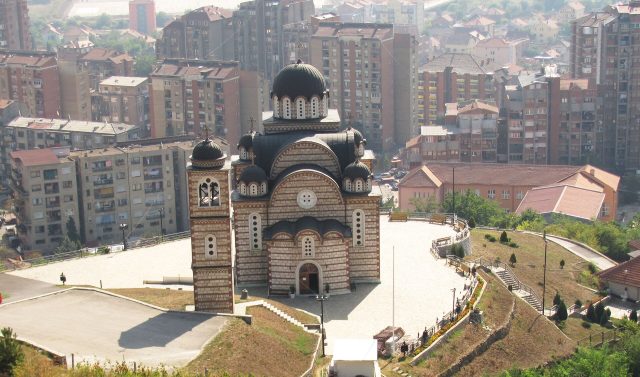
Bajrakli Mosque sits by the Ibar River, where the city splits into north and south. Built in the 17th century, it has seen cultures and histories pass through its courtyard. It was never meant to be a monument—just a place where people gather.
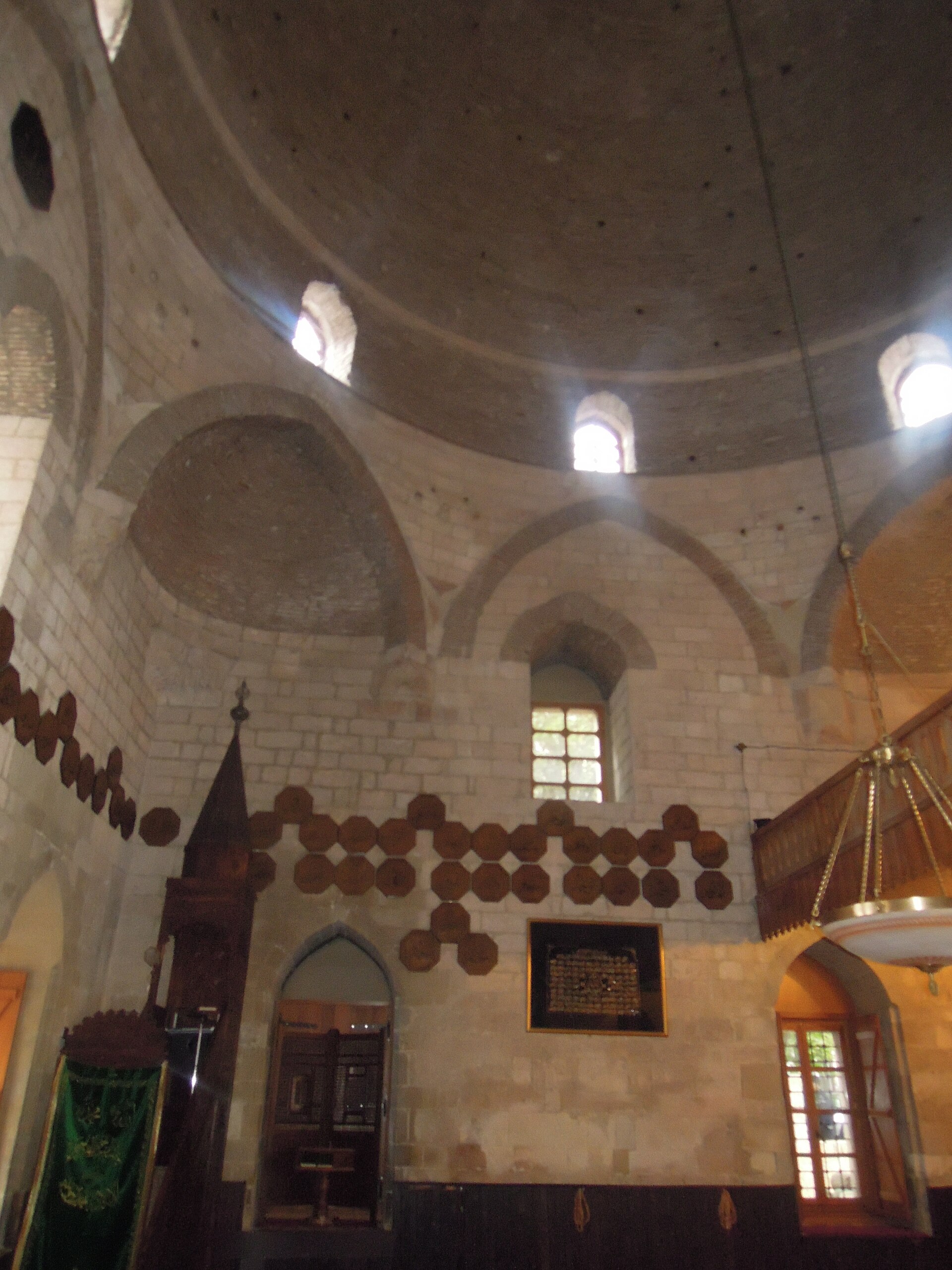
The mosque’s stone walls and tiled roof follow Ottoman design. The minaret rises thin against the sky. Inside, carpets cover the floor, and a plain mihrab points to Mecca. Wooden beams hold up the ceiling, their edges carved with simple patterns. Stained glass softens the light, turning the prayer hall quiet.
During the 1990s conflict, the mosque stood near the front lines. Locals repaired it afterward, scrubbing soot from the walls and replacing broken tiles. The streets around it still show damage: cracked plaster, missing roof slates, doors nailed shut.
In a city divided by the river, Bajrakli does not take sides. Muslims pray here. Others come to sit under the trees, listening to the wind and the call to prayer drifting over the rooftops. The mosque does not ask for attention—it waits, patient, as it always has.
The old quarter’s streets are narrow, paved with uneven stone. Some houses still have Ottoman-era facades, their wooden balconies sagging slightly. A few fountains remain, though most no longer work. In summer, children chase each other around the plane trees while old men play backgammon on benches.
Bajrakli is not a tourist site. No one sells postcards at the entrance. No guidebooks list its opening hours. It stands because people still use it—because someone sweeps the courtyard each morning, because the imam unlocks the doors at dawn, because the call to prayer still sounds over the river.
When you visit, you notice the details. The way the light falls through the windows. The worn spots on the prayer rugs. The names scratched into the wooden doorframe. The mosque does not explain itself. It lets you look, and listen, and decide what it means.
The river flows past. The minaret stands. The city breathes around it, slow and uneven, like a man waking from a long sleep.