Al-Akram Mosque in Kota Bima is one of those quiet places that doesn’t demand attention but lingers in the mind long after you’ve left. Tucked away on the edge of the city, where the hum of traffic fades into the steady rhythm of local life, it stands unassuming, far removed from the grandeur of Jakarta’s or Yogyakarta’s famous mosques. There are no gilded domes or marble facades here—just a simple structure that feels more like a natural part of the neighborhood than a monument. What makes Al-Akram special isn’t its architecture, but the way it blends faith and daily life without pretense.
The mosque’s story is woven into the fabric of Kota Bima itself. This small city on Sumbawa Island has long existed in the shadow of Indonesia’s more famous destinations, lacking the grand sultanates of Java or Sumatra but carrying its own distinct identity. Islam arrived here through traders and preachers, shaping the local culture in subtle ways. Al-Akram was built in the mid-20th century, a time when Kota Bima was slowly expanding, and the community needed a place to gather for prayer and discussion. Funded by local residents, it quickly became more than just a religious site—it turned into a hub for the neighborhood, where decisions were made and connections strengthened.
The architecture is practical and unadorned. The building is low, with a flat roof and a minaret that looks more like a traditional tower than a classic Islamic spire. The facade is clad in light stone, and the windows feature simple geometric latticework, a nod to local craftsmanship. Inside, the prayer hall is spacious and clean, with carpets covering the floor and no unnecessary decorations. There’s no opulence, just a sense of order and care—proof that the mosque is well-used and well-loved.
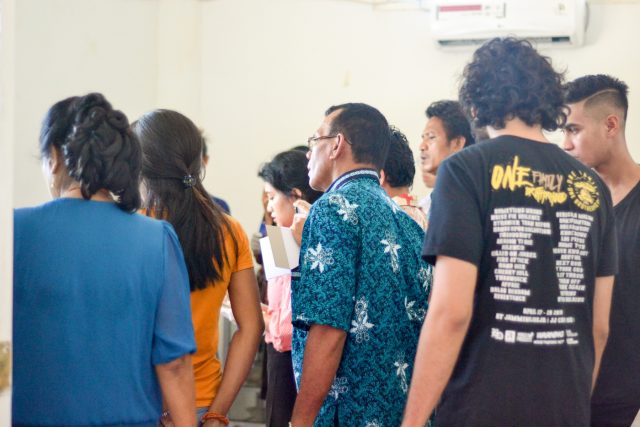
The atmosphere around Al-Akram is calm and unhurried. In the mornings, elderly men arrive for the first prayer, while during the day, women and children come and go. By evening, groups of men gather to talk, their conversations blending with the quiet rustle of leaves from the trees in the courtyard. On Fridays, the mosque fills with worshippers, and the courtyard becomes a place for greetings and shared moments. There’s no noise or rush here, just the soft murmur of prayers and the quiet footsteps of those who’ve come to worship or simply sit in the shade.
For travelers passing through Kota Bima, Al-Akram might not seem like an obvious stop. It’s not a place for photos or guided tours, but that’s exactly why it’s worth visiting. There are no crowds, no vendors, no performances—just a quiet space where the mosque has long been part of everyday life. If you step inside at the right time, you might witness a service, hear the recitation of the Quran, or see locals preparing for prayer. It’s a rare chance to observe a community in its most natural setting.
Kota Bima itself is an unassuming city, and that’s part of its charm. It doesn’t try to impress; it simply exists, and Al-Akram is one of those places where that quiet existence is most visible. The mosque doesn’t pretend to be anything more than what it is—a modest but meaningful space for those who believe in it. That lack of pretense is what makes it special. Here, there’s nothing staged, nothing exaggerated—just the kind of authenticity that’s hard to find in more tourist-heavy destinations.
If you find yourself in this part of Indonesia, visiting Al-Akram isn’t about ticking off a sightseeing box. It’s about stepping into a slower pace of life, where faith and community intertwine without fanfare. You won’t leave with dramatic stories or postcard-perfect images, but you might carry away something quieter—a sense of how life unfolds in a place far from the well-trodden paths. The mosque won’t redefine your idea of Indonesia, but it might add a layer of understanding, a reminder of the simplicity and stillness that define so many corners of this vast country.