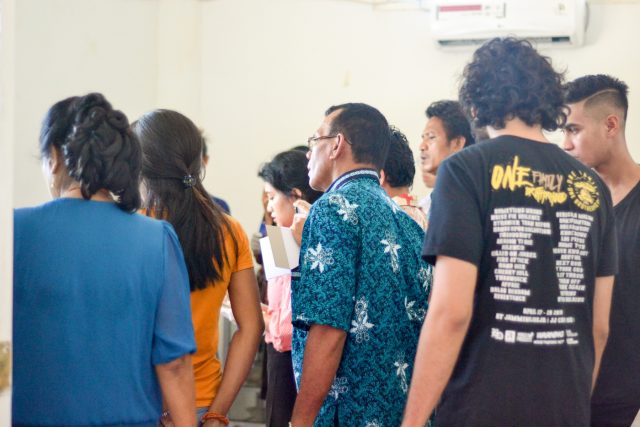
Pasar Baru isn’t just a market in the heart of Kota Bima—it’s where the city’s daily rhythm plays out in full, unfiltered motion. There’s no tourist spectacle here, no staged exoticism. The place hums with the kind of authenticity that can’t be manufactured: the clatter of metal bowls, the shouts of vendors calling out prices, the scent of spices and frying oil hanging thick in the air. Mornings are the liveliest, when the sun is still low and the market pulses with energy as locals stock up for the day. By midday, the pace slows slightly, but the activity never really stops—traders adjust their displays, bargain over prices, and share stories between sales.
The architecture is unassuming, built for function rather than beauty. Low-slung roofs shelter rows of stalls, their wooden frames weathered by years of use. The layout feels organic, shaped by decades of trade rather than any grand design. Narrow alleys wind between the vendors, just wide enough for two people to pass if they turn sideways. There’s no air conditioning, but the open sides and high ceilings keep the heat from becoming oppressive. It’s not a place that tries to impress—it simply exists, as it has for generations.
What makes Pasar Baru special isn’t the goods on offer, though there’s plenty to see. It’s the way people move through the space, the easy familiarity between neighbors, the way a transaction can turn into a conversation. Women in vibrant sarongs balance baskets of fruit on their hips, elders sip coffee at makeshift stalls, and children dart between the aisles, sometimes helping, sometimes just watching. Even if you don’t buy anything, standing at the edge of the crowd offers a glimpse into the city’s heartbeat.
The market is a living catalog of local life. Spice vendors pile their wares in colorful mounds—turmeric, coriander, dried chilies—while fishermen lay out their catch on beds of ice, from tiny sardines to whole tuna. The meat section might surprise visitors with cuts that aren’t common elsewhere, a reminder of how food here is shaped by tradition rather than global trends. Seasonal fruits take over entire corners when they’re in abundance: mangosteens with their deep purple skins, rambutans with their spiky exteriors, durians that announce themselves long before you see them.
Handicrafts have their own quiet corner of the market, though they’re not sold as souvenirs. Woven baskets, carved wooden utensils, and simple pottery are made for everyday use, not for tourists passing through. If you’re lucky, you might see an artisan at work—someone twisting rattan into a basket or painting a length of fabric with the intricate patterns of batik. These items don’t come with price tags meant to haggle over; they’re part of the fabric of local life, bought by people who know their value.
Food is where the market truly comes alive. Small stalls serve meals cooked right in front of you—skewers of satay sizzling over charcoal, steaming bowls of soup, rice wrapped in banana leaves with fragrant spices. The most famous dish here is *ayam taliwang*, a local specialty of grilled chicken slathered in a fiery sauce, best eaten with a mound of steaming rice. The flavors are bold, the portions generous, and the prices low enough that no one thinks twice about stopping for a meal. What makes the food special isn’t just the taste, but the fact that these recipes have been passed down for decades, unchanged by time.
Pasar Baru’s history is woven into Kota Bima’s past. The city was once a key trading post between Sulawesi and the eastern islands, and the market grew up around that commerce. Even now, when modern supermarkets have sprung up on the city’s edges, the market hasn’t lost its purpose. For many, it’s still the only place to find fresh, affordable goods—and the only place where shopping feels like more than just a transaction. The market has adapted over the years, but its core remains the same: a place where people come not just to buy, but to connect.
There’s no scripted way to experience Pasar Baru. You might wander into a section selling nothing but dried fish, or stumble upon a stall where an elderly woman sells medicinal herbs she’s gathered herself. The market doesn’t cater to visitors; it simply exists as it always has, and if you want to understand it, you have to let it unfold at its own pace. Sit at a plastic stool by a food stall, order a cup of strong coffee, and watch the crowd move past. The scene isn’t picturesque in the way postcards are—it’s messy, loud, and real.
If you visit Kota Bima, the usual sights will only tell you part of the story. Pasar Baru offers something different: a chance to step into the city’s daily life, even if just for a few hours. You won’t find anything staged or polished here. What you will find is the raw, unfiltered pulse of the place—people going about their routines, traditions being kept alive, and a sense of community that doesn’t need an audience. The market doesn’t ask for your attention. It’s too busy being itself.