Aga Bozorg Mosque stands quietly in the heart of Kashan, a city where the desert meets the foothills of the Zagros Mountains. Built in the late 18th century, it was designed not just as a place of worship but as a center of learning, a madrasa where theology and philosophy could be studied under the same roof as daily prayers. The mosque’s name, meaning "the great lord," hints at its origins—it was commissioned by a wealthy merchant, Haj Mohammad Taghi Khanban, who wanted to leave behind something that would serve both God and the community. Over the centuries, it has done exactly that, surviving earthquakes, political upheavals, and the slow march of time with a dignity that feels almost deliberate.
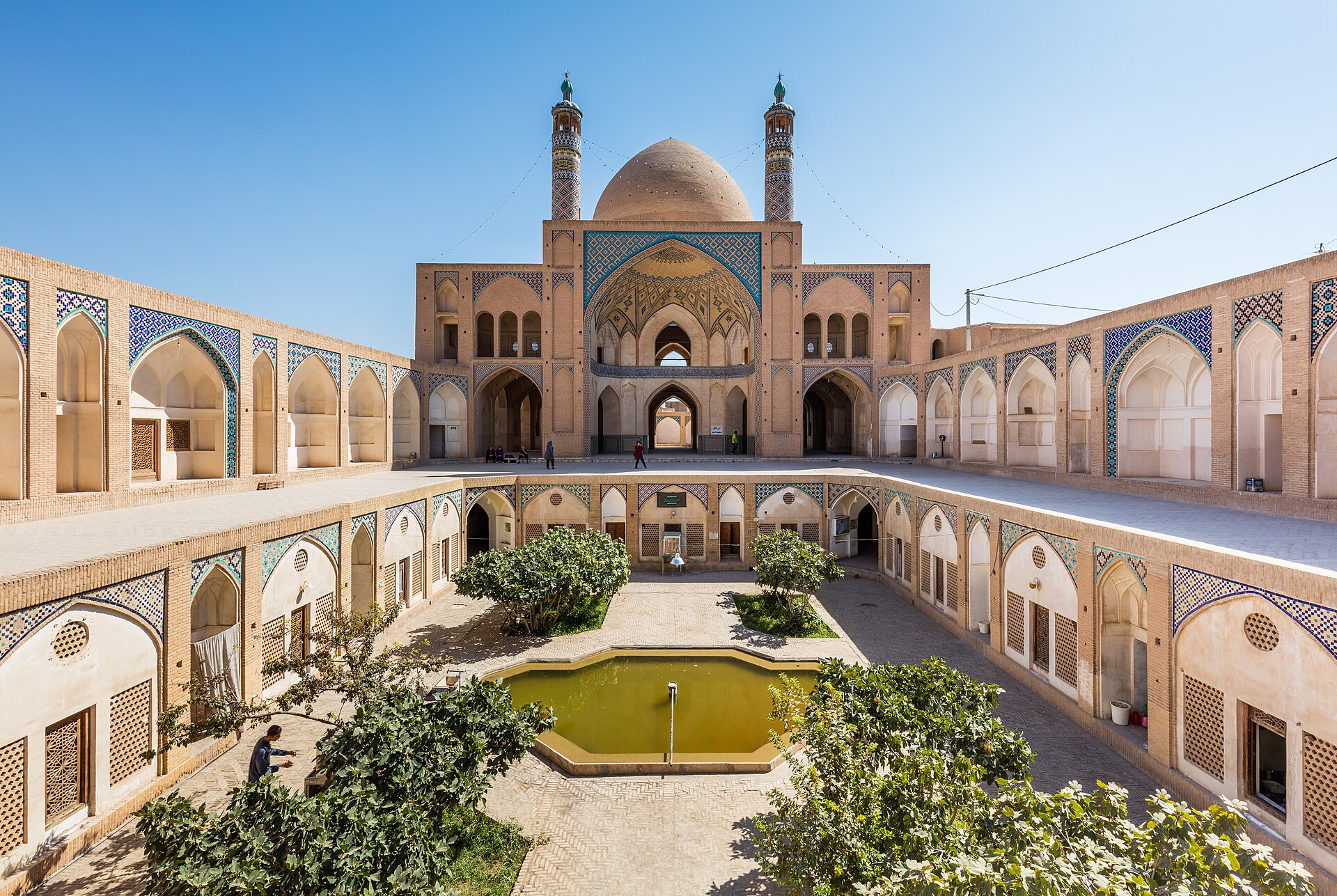
The architecture here is a conversation between earth and sky. The mosque’s most striking feature is its sunken courtyard, a design choice that does more than just catch the eye. By sinking the central space below street level, the architects created a natural insulation against Kashan’s scorching summers and chilly winters. The courtyard is framed by two-story arcades, their brickwork arranged in patterns that shift with the light—sometimes sharp and geometric, other times soft and almost fluid. The minarets, slender and unadorned, rise from the corners like silent sentinels, their height just enough to call the faithful to prayer without overwhelming the rest of the structure.
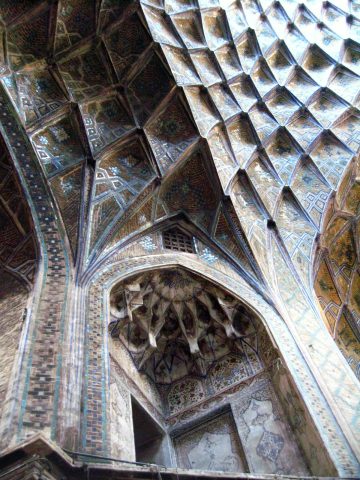
At the heart of the mosque is the domed sanctuary, its interior a study in restraint. The dome itself is a masterpiece of Persian engineering, its bricks laid in a way that makes the space feel both vast and intimate. Light filters through small windows near the apex, casting shifting patterns on the walls below. The mihrab, the niche indicating the direction of Mecca, is carved from stucco and painted in muted blues and golds, a quiet reminder of the divine in the midst of human craftsmanship. Unlike the grand, gilded mosques of Isfahan or Shiraz, Aga Bozorg doesn’t rely on opulence to impress. Its beauty lies in its proportions, in the way every element—from the height of the arches to the width of the doorways—feels precisely measured, as if the builders knew exactly how much space the soul needed to breathe.
The mosque’s role in Kashan’s life has always been more than religious. For generations, it was a gathering place where merchants, scholars, and ordinary townspeople could debate ideas, settle disputes, or simply escape the heat of the day. The madrasa attached to the mosque was once one of the most respected in central Iran, drawing students from as far as Yazd and Kerman. Even today, the courtyard is often filled with the murmur of conversation, the sound of footsteps on stone, the occasional laughter of children playing near the fountain. It’s a place where the past and present overlap seamlessly, where a 200-year-old inscription on a wall can sit comfortably beside a modern prayer rug.
Kashan itself is a city that rewards those who take the time to look beyond its surface. Known for its rosewater, its ancient qanats (underground water channels), and its role as a stop on the Silk Road, it has always been a place of trade and exchange—not just of goods, but of ideas. Aga Bozorg Mosque reflects that history. The bricks used in its construction were likely fired in local kilns, the wood for its doors and beams sourced from the nearby mountains. The craftsmen who built it were part of a tradition that stretched back centuries, one that valued both functionality and beauty. Even the garden that once surrounded the mosque, now mostly gone, was designed to be a small oasis, a place where the faithful could pause before or after prayer to reflect.
What makes Aga Bozorg special is how unassuming it is. There are no grand entrances, no towering gates to announce its importance. You might walk past it without realizing what it is, its modest facade blending into the surrounding streets. But step inside, and the world outside falls away. The courtyard’s stillness, the play of light on brick, the way the air seems to hum with centuries of whispered prayers—it all feels like a secret shared only with those who take the time to notice. In a country where so many historical sites are crowded with tourists, Aga Bozorg remains a place of quiet reverence, a reminder that some of the most profound experiences come not from spectacle, but from stillness.
The mosque has seen its share of hardship. Kashan sits on a fault line, and earthquakes have damaged it more than once. Each time, the community has rebuilt it, not as a replica of what was lost, but as a continuation of what was always meant to be. The repairs are visible if you look closely—the slightly mismatched bricks, the patches where stucco has been reapplied—but they don’t detract from the overall effect. If anything, they add to it, a testament to the mosque’s resilience. It’s a place that has been loved and cared for, not as a museum piece, but as a living part of the city.
Visiting Aga Bozorg is less about ticking off a landmark and more about stepping into a rhythm that has existed for centuries. The call to prayer still echoes across the courtyard five times a day, just as it has since the mosque was first built. The students who once filled the madrasa’s classrooms may be gone, but the space is still used for gatherings, for lectures, for quiet study. On Fridays, the mosque is at its busiest, filled with worshippers who come not just to pray, but to connect with something larger than themselves. Even on quieter days, there’s a sense of continuity here, a feeling that the mosque is not just a relic of the past, but a thread in the fabric of Kashan’s present.
If you find yourself in Kashan, it’s worth lingering here for a while. Sit in the courtyard and watch the light change over the brickwork. Listen to the sound of water in the fountain, the distant call of a vendor in the bazaar, the rustle of leaves in the few remaining trees. Aga Bozorg Mosque isn’t a place that demands attention—it earns it, quietly, through the weight of its history and the grace of its design. In a world that often feels rushed, it offers a rare chance to slow down, to remember that some things are meant to be experienced, not just seen.