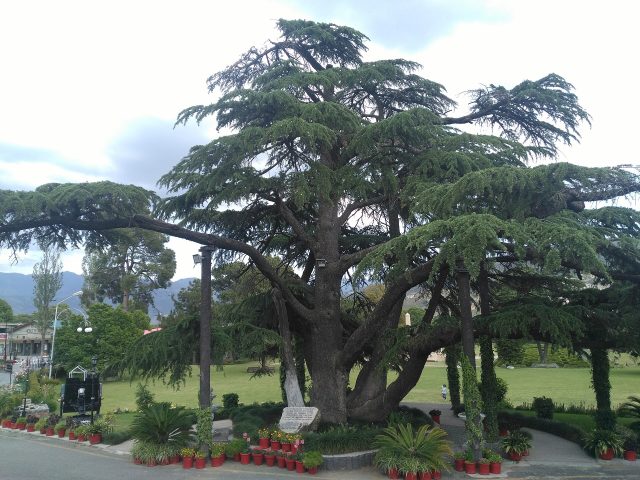
The shrine of Baba Hafiz in Abbottabad is one of those quiet places that doesn’t announce itself to travelers but lingers in the mind long after you’ve left. It isn’t grand like the Mughal tombs or the ornate shrines of Sufi saints scattered across Pakistan. There are no crowds of pilgrims, no fluttering flags, no chants rising into the air. Instead, there’s a modest structure of gray stone, shaded by old trees, where even the wind seems to move more gently, as if reluctant to disturb the stillness.
Baba Hafiz, whose full name was Hafiz Muhammad Saeed, was a local saint who lived in the late 19th and early 20th centuries. Little is known about his life, but in Abbottabad and the surrounding villages, stories of his wisdom and kindness have been passed down through generations. He was said to help the poor, heal the sick, and offer guidance to those who sought his counsel. After his death, his grave became a place of quiet devotion, and over time, a small mausoleum was built to honor his memory. For many in the region, it remains a symbol of spiritual continuity, a link to a simpler, more contemplative way of life.
The architecture of the shrine is as unassuming as the man it commemorates. Built from local stone, the building has weathered into a soft, golden hue over the years. Its dome is low and almost flat, and the walls are adorned with only the simplest of geometric patterns—motifs common in the folk art of Khyber Pakhtunkhwa. Inside, there are no lavish carpets or gilded inscriptions, just a plain sarcophagus draped in green cloth and a few well-worn prayer books. The space feels intimate, almost personal, as if designed more for reflection than for display.
Abbottabad itself is a city with a layered history. Founded in the mid-19th century by British officer James Abbott, it served as an important military and administrative hub during colonial rule. Its location made it a crossroads for travelers heading toward Kashmir, Peshawar, or Islamabad, while its cool, misty climate made it a favored retreat. But the city is perhaps best known for a more recent and somber event: in 2011, Osama bin Laden was found and killed in a compound on its outskirts, an incident that brought global attention to Abbottabad. Yet the shrine of Baba Hafiz remains untouched by that notoriety, a quiet counterpoint to the city’s more turbulent associations.
Most visitors to the shrine are locals who come to pray, sit in the shade, or simply find a moment of peace. Occasionally, travelers interested in Pakistan’s Sufi traditions stop by, but they are few. Unlike the bustling bazaars or crowded mosques, this is a place where you can spend an hour—or several—in near solitude, watching sunlight filter through the leaves or listening to the murmur of the wind through the trees. The shrine is surrounded by a small garden, where fruit trees and flowers grow wild, and the air carries the scent of earth and herbs.
For the people of Abbottabad, Baba Hafiz is more than just a historical figure. He represents faith, hope, and the enduring power of kindness. In difficult times, many come here to seek solace or guidance, drawn by stories of his compassion. There’s a local belief that if you make a wish at his grave and truly believe in it, it will come true. Whether or not that’s the case, the legend speaks to the trust and reverence the community holds for this place.
The shrine sits on the edge of the city, far from the noise of traffic and the rush of modern life. You can reach it on foot or by rickshaw, but the best way is by car, allowing time to take in the surroundings. The area is hilly, with forests and fields stretching into the distance, and on clear days, the snow-capped peaks of the Himalayas are visible in the distance. It’s a landscape that invites slowing down, a place where the usual distractions of daily life seem to fade into the background.
Time moves differently here. The hours spent at the shrine feel longer, more deliberate, as if the quiet has a way of stretching moments into something deeper. There are no tour guides reciting rehearsed facts, no signs dictating how to behave. Just the old walls, the trees, and the wind rustling through the leaves, as if whispering stories from another time. For some, it’s just another stop on a journey. For others, it’s a place where the ordinary gives way to something more meaningful.
The shrine of Baba Hafiz isn’t the kind of place that dazzles at first glance. Its beauty reveals itself slowly, like a story that needs to be read carefully to be understood. There are no bold colors or dramatic declarations, but there is something far more valuable: a sense of authenticity, a quiet reminder of what it means to pause and reflect. That’s why those who visit once often find themselves returning, drawn back by the unspoken promise of stillness in a world that rarely offers it.