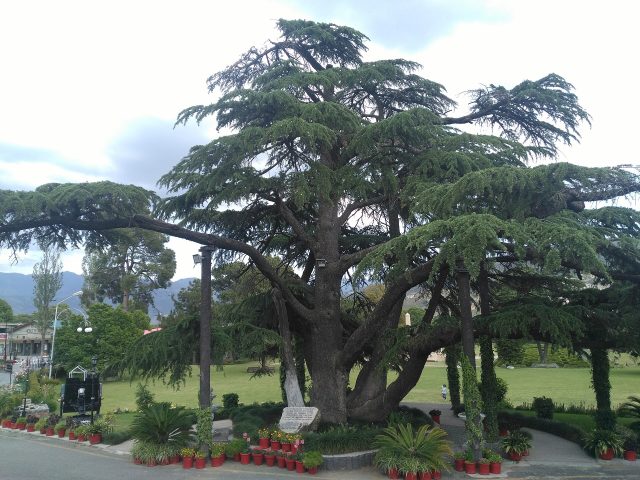
Illachi Park in Abbottabad is the kind of place that doesn’t announce itself with fanfare but lingers in memory long after you’ve left. Tucked away in the heart of the city, it offers a quiet retreat from the noise of daily life—a place to sit on a bench, listen to birdsong, or stroll beneath the shade of old trees. The park isn’t large, but it’s well-kept, with neatly trimmed lawns, flowerbeds, and a handful of mature trees that cast cooling shadows even on the warmest days. Locals come here with their families to picnic, let their children play, or simply enjoy the fresh mountain air.
Abbottabad itself is a city with a distinct character, nestled in the foothills of the Himalayas at an elevation of around twelve hundred meters. The climate here is gentler than in much of Pakistan, the air crisper, making it a favored spot for those seeking respite from the heat. Illachi Park, though not the city’s most famous landmark, embodies this sense of calm and unhurried living. It’s not the kind of park you’d find in a bustling metropolis—no amusement rides, no cafes, no crowds of tourists—just an unassuming space where life unfolds at its own pace.
The park’s history is intertwined with that of Abbottabad. The city was founded in the mid-19th century by British officer James Abbott, who chose the location for its strategic position and pleasant climate. Over time, it grew into a residential and administrative hub, and eventually, parks like Illachi took shape. The name translates to "cardamom," though no spice grows here today—perhaps a nod to the fragrant mountain forests that once surrounded the area. The park likely emerged in the 20th century, as Abbottabad developed into a center for education and leisure.
There’s nothing grand about Illachi Park’s design. It doesn’t boast monumental structures or elaborate landscaping; its charm lies in its simplicity. A small fountain sits at its center, surrounded by a few pavilions with carved wooden railings. The pathways are paved, the benches functional, and the playground modest. Some of the old lampposts hint at the colonial era, while newer additions blend seamlessly into the scene. It all feels unpretentious, like a well-loved backyard rather than a manicured public space.
For Abbottabad, parks like Illachi serve a vital role. In a country where public gathering spots are often limited, green spaces become essential for community life. There are no sprawling malls or entertainment complexes here, so parks become the default setting for socializing, relaxation, and connection. Illachi Park is no exception. Mornings bring elderly men playing chess or sipping tea, afternoons see mothers with strollers and children at play, and evenings draw groups of young people wandering the paths. It’s a place where people of all ages and backgrounds come together, and that’s its greatest strength.
The park’s atmosphere shifts with the seasons. In spring, it bursts into color as flowers bloom and birds fill the air with song. Summer turns it into a cool refuge from the heat, while autumn paints the trees in gold and russet hues. Winter brings a quiet stillness, the bare branches creating a different kind of beauty. It’s during these colder months that the park feels most intimate, as if time itself has slowed down.
For travelers, Illachi Park might seem too modest compared to Pakistan’s grander attractions—the Mughal wonders of Lahore or the ancient fortresses of Peshawar. But that’s precisely what makes it special. There are no crowds, no guided tours, no must-see checklists—just a quiet corner where you can experience the rhythm of everyday life in a Pakistani city. If you find yourself in Abbottabad, it’s worth stopping by for even half an hour, just to see how people live when no one’s watching.
In recent years, Abbottabad has been thrust into the global spotlight for reasons unrelated to its parks. Yet places like Illachi remain untouched by that notoriety, continuing to serve as a backdrop for ordinary life. There are no headline-grabbing events here, no film crews, no festivals—just a simple green space where people go about their days. That’s what makes it meaningful. In a world that often feels like it’s moving too fast, Illachi Park is a reminder that some places still exist where time moves at its own pace, and where the smallest moments can bring the greatest joy. It doesn’t need grand descriptions; it just is.