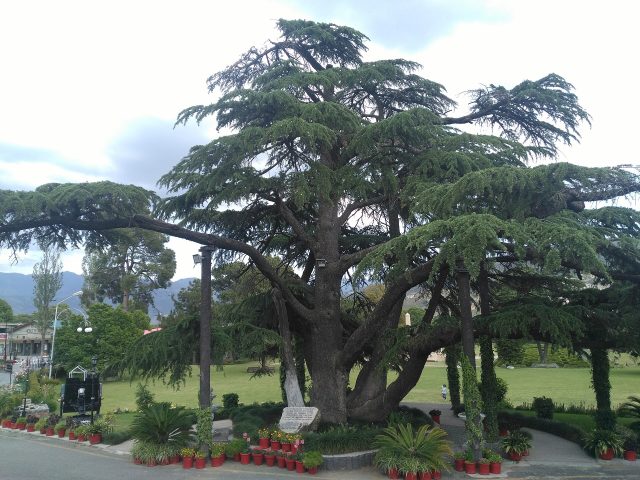
This park doesn’t shout for attention. Instead, it waits—quiet, green, and unassuming—until you notice the way sunlight filters through the leaves or how the air smells of damp earth after rain. It sits in the middle of Abbottabad, a place where families come to breathe, friends meet without hurry, and old men play chess on stone tables.
The city was founded in the 1850s by James Abbott, a British officer who picked this spot for its cool air and views of the hills. The park followed, built as a retreat for colonial officials and local elites. Now, the same paths they walked are used by schoolchildren racing to the swings and women in bright shalwar kameez carrying bags of fresh fruit. The trees are older than anyone alive, their roots twisting under benches where people sit and talk.
The design is simple. Wide walkways curve around manicured lawns. A small pond with a sputtering fountain sits at the center, where kids throw pebbles and giggle when the water splashes. Pavilions with peeling paint offer shade, their wooden beams groaning in the wind. In the evenings, the park fills with sounds: the thwack of a cricket bat, a baby crying, the clink of tea glasses from a nearby stall.
For locals, this is where life happens.
On Fridays, families arrive early to claim the best spots. Mothers unpack lunches of roti and curried potatoes while fathers nap under the trees. Teenagers loiter near the entrance, sneaking glances at each other. Old men argue about politics, their voices rising and falling like the hum of the city beyond the park’s walls.
The park sits on a gentle slope. From here, you can see the mountains that circle Abbottabad, their peaks sharp against the sky. The air is thinner, cleaner. In summer, the heat presses down by midday, but by evening, a breeze stirs the leaves, and the temperature drops like a stone. On clear nights, the Himalayas glow in the distance, their snowcaps catching the last light.
The park changes with the seasons. During Eid, it becomes a market. Stalls sell bangles, henna, and sticky sweets wrapped in paper. Children ride rickety Ferris wheels while mothers bargain for embroidered dupattas. In winter, the crowds thin. A few men walk briskly, their breath visible in the cold air. The fountain is turned off, its basin empty except for a layer of fallen leaves.
Tourists rarely come here. Abbottabad isn’t on the usual route—no ancient ruins, no famous shrines. But those who do visit find something unexpected: a place that doesn’t try to impress. No grand monuments, no carefully arranged flowerbeds. Just grass worn down by footsteps, benches polished by years of use, and the quiet rhythm of a city that has made this park its own.
You could spend an hour here and leave with nothing but the memory of a child’s laughter or the weight of a stranger’s gaze as they nod in greeting. Or you could stay longer, watch the light change, and realize that the best places aren’t always the ones that dazzle. Sometimes, they’re the ones that let you sit still and listen.