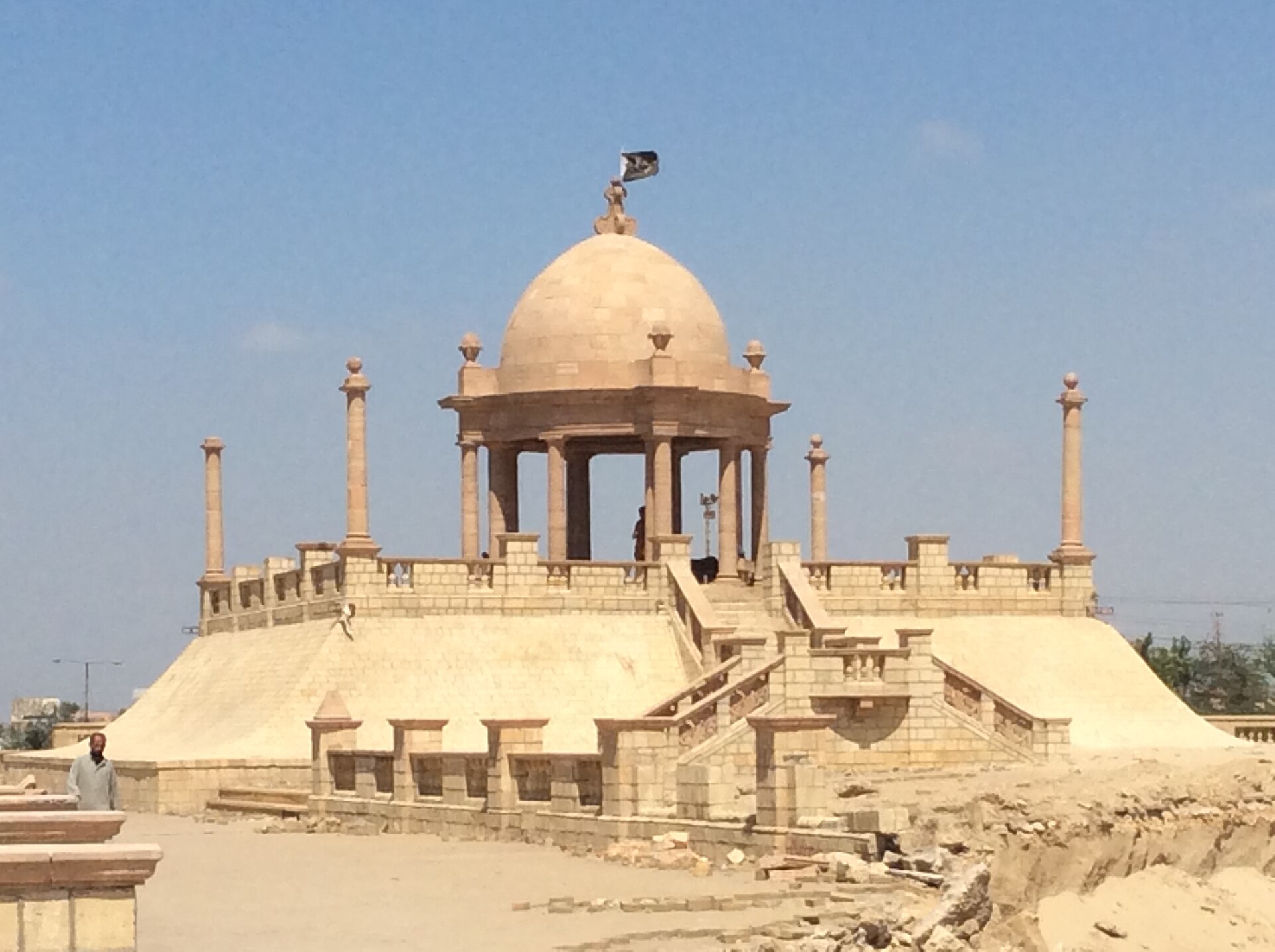
Perched on a small hill overlooking the Arabian Sea, the shrine of Abdullah Shah Ghazi stands as one of Karachi’s most enduring landmarks. It’s a place where history, devotion, and the rhythms of daily life intersect in unexpected ways. The white-domed structure, visible from the coastline, has watched over the city for centuries, its presence a quiet counterpoint to the bustle of Pakistan’s largest metropolis. Unlike the grand Mughal mausoleums of Lahore or the ancient ruins of Mohenjo-Daro, this shrine feels deeply personal—a place where people come not just to pay respects, but to seek solace, offer prayers, or simply sit in the shade of its courtyard.
The story of Abdullah Shah Ghazi is woven into the fabric of Karachi itself. According to local tradition, he was a ninth-century Sufi saint, a descendant of the Prophet Muhammad, who arrived in the region during a time when the area was little more than a fishing village. His mission, as the legends tell it, was to spread Islam through compassion rather than conquest, a philosophy that resonated with the coastal communities. Over time, his reputation as a protector grew, particularly among sailors and fishermen who believed he could calm the seas and ward off storms. Even today, many in Karachi attribute the city’s relative safety from cyclones to his spiritual guardianship.
The architecture of the shrine reflects the layered history of the region. The main structure, with its simple white dome and arched entrance, is modest compared to the ornate tombs of the Mughal era, yet it carries a distinct character. The building has been expanded and renovated over the centuries, blending elements of traditional Islamic design with local influences. The courtyard, lined with trees and benches, offers a rare open space in a city where public squares are scarce. Inside, the tomb itself is draped in green cloth, a common practice in Sufi shrines, and surrounded by devotees who come to tie threads to the latticework, a symbolic gesture of their wishes and prayers.
What makes the shrine particularly striking is its role as a living space rather than a static monument. Unlike museums or preserved ruins, it remains an active center of devotion, where the boundaries between the sacred and the everyday blur. Early mornings and evenings are the busiest times, with qawwali performances filling the air, their rhythmic chants drawing crowds of worshippers and curious onlookers alike. The scent of incense mingles with the sea breeze, and the sound of the azaan from nearby mosques drifts over the hill. For many, the shrine is a place of refuge—a spot to escape the chaos of the city, even if just for a few moments.
The shrine’s significance extends beyond religion. It has long been a gathering place for people from all walks of life, a rare neutral ground in a city often divided by class, ethnicity, and politics. Fishermen, traders, students, and laborers all find their way here, whether to seek blessings, share a meal at the langar (free community kitchen), or simply rest. The annual urs, or death anniversary, of Abdullah Shah Ghazi is one of Karachi’s most vibrant festivals, drawing thousands who come to celebrate his life with music, food, and prayer. The event is a testament to the shrine’s enduring appeal, a reminder that in a rapidly changing city, some traditions remain steadfast.
Yet the shrine is not without its contradictions. It sits in a city that has grown around it, its once-isolated hill now surrounded by the sprawl of Clifton and Defence, Karachi’s upscale neighborhoods. The contrast between the shrine’s humble origins and the modern high-rises nearby is stark, a visual representation of the city’s own evolution. Some visitors come out of curiosity, drawn by the shrine’s reputation as a cultural landmark, while others arrive with deep reverence, their visits a part of a lifelong devotion. The shrine, in its own way, mirrors Karachi itself—chaotic, diverse, and full of stories waiting to be discovered.
For those who take the time to visit, the shrine offers more than just a glimpse into Karachi’s spiritual life. It’s a place where the past and present coexist, where the sea breeze carries whispers of centuries-old traditions, and where the city’s relentless energy momentarily slows. Whether you come to pray, to listen to the qawwali, or simply to watch the sunset over the Arabian Sea, the shrine of Abdullah Shah Ghazi leaves an impression that lingers long after you’ve descended the hill. In a city of millions, it remains one of those rare places where time seems to stand still.