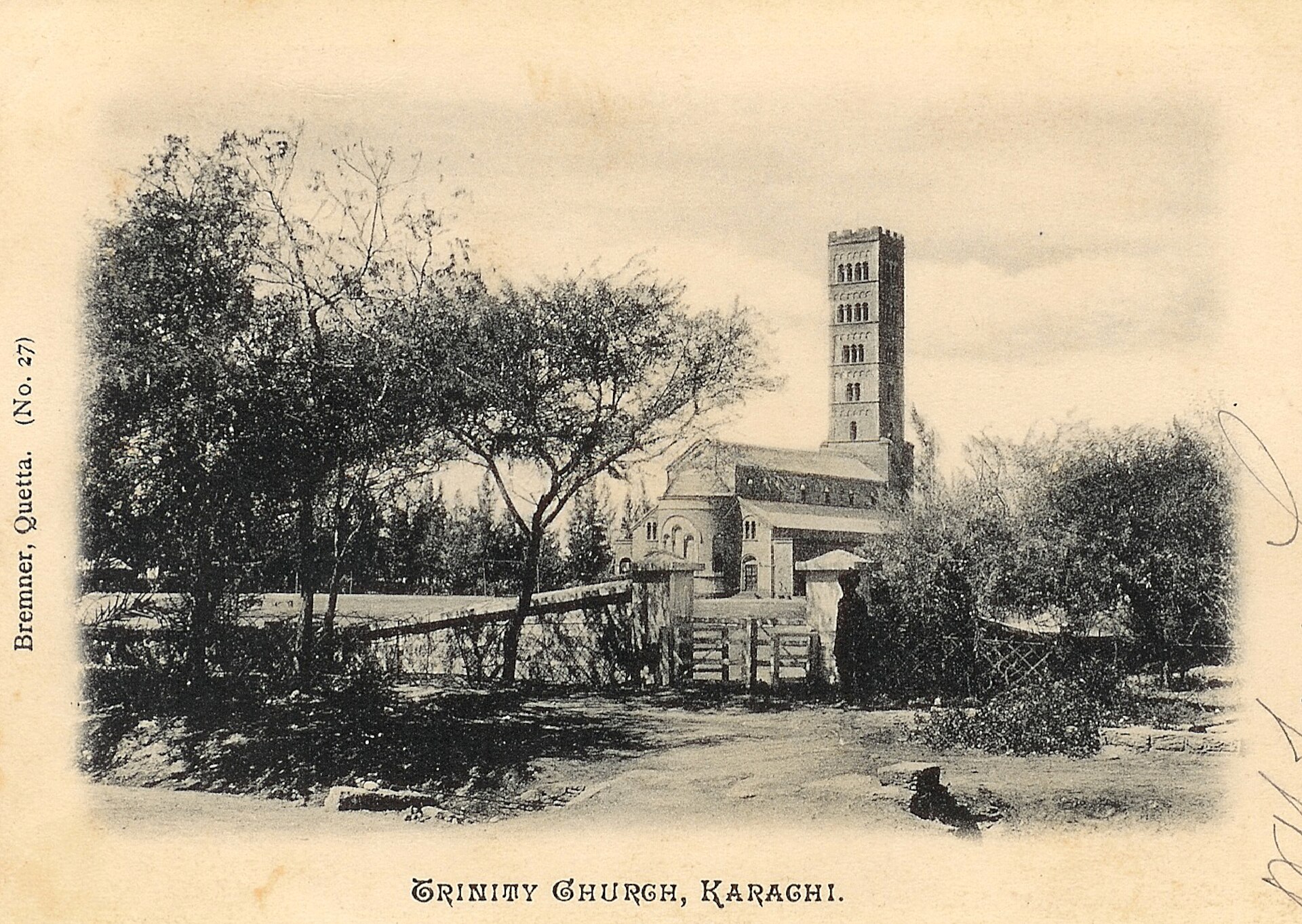
Standing on Abdullah Haroon Road in Karachi, the Holy Trinity Cathedral feels like a quiet relic of a city that no longer exists. Built in the mid-19th century, when Karachi was little more than a strategic British outpost, the cathedral arrived not just as a place of worship but as a statement—one of many that marked the colonial reshaping of the region. Back then, the city was a patchwork of communities, where Islam, Hinduism, and Christianity coexisted in ways that were sometimes uneasy but always intertwined. The cathedral became a focal point for the British expatriate population, a place where they could gather, pray, and, in some ways, assert their presence in a land that was never truly theirs.
The building itself is a study in Victorian Gothic revival, a style that Britain often exported as a symbol of its imperial ambition. Tall, pointed arches stretch toward the sky, while buttresses brace the walls like silent sentinels. The stained-glass windows, though not as elaborate as those in European cathedrals, cast a soft, colored light over the wooden pews inside, where scenes from the Bible unfold in muted hues. The clock tower, once a navigational aid for ships approaching Karachi’s harbor, still stands as a reminder of the cathedral’s practical role in the city’s early days. It’s easy to imagine sailors glancing up at it as they docked, a small but reassuring landmark in an unfamiliar place.
The cathedral wasn’t always the imposing structure it is today. Originally, it was a modest church, expanded over time as Karachi’s British community grew. By 1855, it had taken on its current form, just in time for the turmoil of 1857, when the Indian Rebellion swept across the subcontinent. For many British residents, the cathedral became a refuge—a place where they could seek solace amid the chaos. That period left its mark, not just in the building’s history but in the way it’s remembered: as a symbol of endurance in a time of upheaval.
Now, the cathedral exists almost as an anomaly in Karachi, a city that has long since outgrown its colonial past. The streets around it pulse with life—vendors selling spices, rickshaws weaving through traffic, the hum of a metropolis that never slows down. Yet within the cathedral’s small garden, the noise of the city fades. Visitors, whether they come to pray, to explore, or simply to escape the heat, often linger here, drawn by the sense of stillness. It’s one of the few places in Karachi where the past doesn’t feel distant but tangible, as if the walls themselves could tell stories of the people who have passed through over the decades.
For Karachi’s Christian community, the cathedral remains a vital gathering place. Though Christians make up a small fraction of Pakistan’s population, their roots in the region run deep, and the cathedral has been a constant in their religious life. Services, weddings, and baptisms still take place here, as do occasional interfaith events, where representatives from different religions come together for dialogue. In a country where faith often shapes public life, such moments feel especially significant. The cathedral isn’t just a place of worship; it’s a space where different threads of Karachi’s identity intersect.
The area around the cathedral offers a glimpse into the city’s layered history. Nearby, old colonial buildings stand alongside newer structures, their facades weathered by time. Some have been repurposed into offices or apartments, while others retain their original grandeur, if only just. The contrast is striking—between the Gothic arches of the cathedral and the modern glass towers rising in the distance, between the quiet of the garden and the clamor of the streets just beyond. This juxtaposition is Karachi in miniature: a city where the past and present coexist, sometimes uneasily, but always in conversation with each other.
Visiting the Holy Trinity Cathedral isn’t like stepping into a museum. There are no guided tours, no gift shops, no crowds jostling for the best photo. Instead, there’s a sense of stepping into a living space, one that has adapted to the changing city around it without losing its essence. The cathedral doesn’t demand attention; it simply exists, offering a moment of reflection in a city that rarely slows down. For those who take the time to wander inside, it’s a chance to see Karachi not just as a bustling modern hub but as a place with a rich, complicated past.
Over the years, many of Karachi’s colonial-era buildings have been demolished or altered beyond recognition. The cathedral, however, has endured, its structure largely unchanged. It’s a rare survivor, a building that has witnessed the city’s transformation from a small port town to a sprawling megacity. In a place where so much has been lost to time and development, the cathedral stands as a quiet reminder of what remains. It’s not just a monument to the past; it’s a bridge between then and now, a place where history isn’t just remembered but still felt.