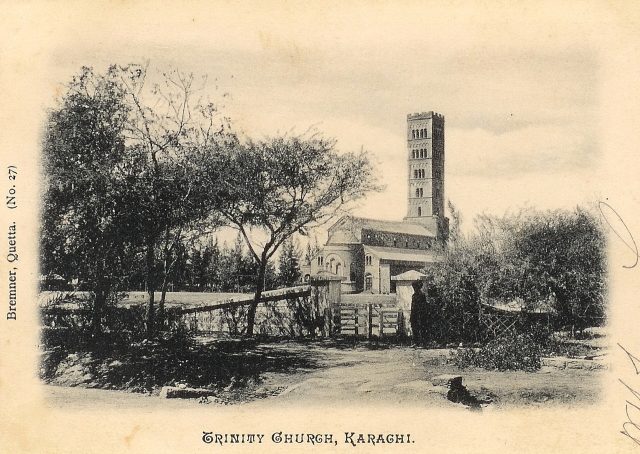
St. Patrick’s Cathedral stands quietly in the heart of Karachi, a place where time seems to slow down. Built in the mid-19th century, it carries the weight of the city’s layered history, a remnant of the colonial era when British influence shaped the architecture and culture of the region. Unlike the bustling streets outside, the cathedral offers a sense of stillness, a rare pause in a city that never stops moving. It has witnessed Karachi’s transformation from a small port town to a sprawling metropolis, yet it remains unchanged, a silent observer of the decades that have passed.
The building itself is a blend of Gothic revival and local craftsmanship. Tall, pointed arches frame the windows, while the spires reach toward the sky, giving the structure an airy, almost delicate appearance despite its solid stone construction. Inside, the high ceilings and slender columns create a sense of openness, and the light filtering through the stained glass casts soft, muted colors across the walls. The design is simple but deliberate—every element, from the wooden pews to the carved altar, reflects a careful attention to detail. There is no excess here, just a quiet dignity that suits the space.
Karachi’s history is woven into the cathedral’s walls. When the British East India Company took control of the city in 1843, a small Catholic community already existed, made up of local converts and European settlers. The first church on this site was built in 1845, but as the congregation grew, it became clear that a larger space was needed. The current cathedral was completed in 1881, designed by architect Wilfred Louis, who envisioned it not just as a place of worship but as a symbol of unity in a diverse colonial society. The use of local limestone and sandstone gave the building a sense of belonging to the land, grounding it in the landscape of Karachi.
Over the years, St. Patrick’s has been a witness to some of the most pivotal moments in the city’s history. When Pakistan gained independence in 1947 and Karachi became its first capital, the cathedral remained a place of refuge for people of all backgrounds. In the decades that followed, despite political upheavals and social changes, it continued to serve as a spiritual center, though the Catholic community in Pakistan has always been small. Today, the cathedral hosts not only religious services but also concerts, charity events, and gatherings that bring together people from different walks of life.
The atmosphere inside is one of quiet reflection. The noise of Karachi—the honking horns, the calls of street vendors, the hum of traffic—fades away as soon as you step through the heavy wooden doors. The cool stone walls offer respite from the heat, and the soft light from the stained glass creates a peaceful glow. In the summer, the interior remains refreshingly cool, while in the winter, sunlight streams in, warming the space. It’s a place where the outside world feels distant, where the only sounds are the occasional rustle of prayer books or the distant murmur of a choir.
Outside, a small garden surrounds the cathedral, a green oasis in the middle of the city. Palm trees sway gently, and flowering shrubs add splashes of color. Visitors often linger here, sitting on the benches beneath the trees—students reading, elderly locals enjoying the shade, or travelers admiring the architecture. The garden is modest but well-tended, mirroring the care given to the cathedral itself. There’s no grandeur, just a sense of tranquility that feels almost out of place in a city as busy as Karachi.
For many in Karachi, St. Patrick’s is more than just a church; it’s a piece of the city’s cultural heritage. It serves as a reminder of a time when Karachi was a melting pot of cultures, a port city where people from all over the world came together, bringing their traditions, languages, and beliefs. Today, the cathedral remains a meeting point for different stories—those of families who have lived in the city for generations, descendants of Portuguese sailors who settled here centuries ago, and local Catholics whose ancestors converted during the colonial era. They all come here to pray, to remember, or simply to find a moment of peace.
Despite being in a country where Islam is the dominant faith, St. Patrick’s has never been a source of tension. Instead, it is seen as part of the city’s shared history, a place that belongs to everyone, regardless of religion. This openness is part of its legacy—over the years, the cathedral has hosted interfaith services, gatherings of religious leaders, and community events that welcome people of all backgrounds. In a society as diverse and complex as Pakistan’s, St. Patrick’s stands as a quiet reminder that dialogue and understanding are still possible.
The cathedral doesn’t draw crowds like Karachi’s famous mosques or historic landmarks, but for those who seek it out, it offers something rare. There are no tourist traps, no pushy vendors, no commercialization—just a quiet space where the past and present coexist. The building has stood for over a century, a testament to the people who built it, worshipped here, and called this city home. In a place where time moves quickly, St. Patrick’s remains a steady presence, a small island of calm in the relentless flow of life.